How often you should change guitar strings depends on how much you play, where the guitar is stored, the condition of the strings, and the sound or feel you want. There is no universal replacement schedule that applies to every player. Start with the strings in front of you: check for visible wear, tuning behavior, feel changes, and whether the guitar still has the response you want.
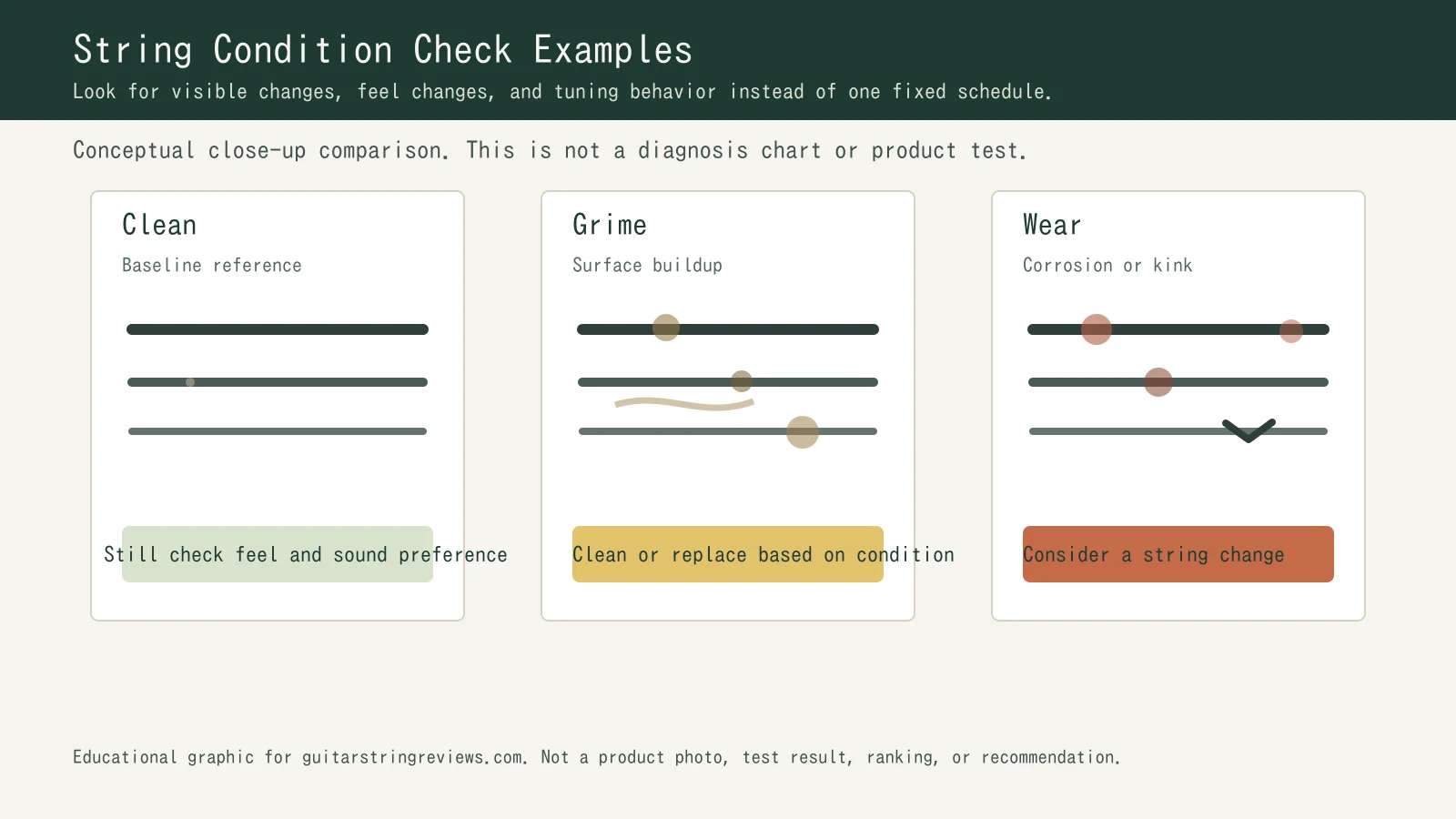
If the strings look corroded, feel grimy, have kinks or flat spots, unwind, break, need frequent retuning, or have lost the sound you prefer, it may be time for a new set.
Why There Is No Single Schedule
Two players can install the same set of strings on the same day and need different replacement timing. One player may practice daily, play shows, sweat heavily, or keep the guitar in a humid environment. Another may play occasionally and store the guitar in steadier conditions. Their strings will not necessarily age the same way.
Replacement timing also depends on preference. Some players like the brighter response of a fresh set. Others prefer a more settled-in feel. Because that preference is personal, a fixed calendar rule can be misleading.
Signs Your Strings May Need Changing
Use condition checks before relying on the calendar. Look and listen for:
- Corrosion, rust, tarnish, or discoloration
- Grime buildup that does not feel right under the fingers
- Kinks, flat spots, or visible damage
- Unwinding or separation on wound strings
- More frequent retuning than usual for that guitar
- String breakage
- Loss of the tone, brightness, or response you prefer
One sign does not diagnose the whole guitar by itself. Tuning problems, for example, can also involve setup, nut slots, winding technique, or hardware. But worn strings are a reasonable maintenance item to check before assuming the problem is somewhere else.
Playing Frequency Matters
The more often you play, the more often you should check string condition. Regular practice, rehearsals, recording sessions, and live playing can expose strings to more contact, sweat, grime, and tuning cycles. Occasional playing may allow a set to stay acceptable for longer, but storage conditions and personal sound preference still matter.
Instead of asking for one number, ask:
- Do the strings still sound the way I want?
- Do they feel clean enough for comfortable playing?
- Are there visible signs of corrosion or damage?
- Is the guitar needing more retuning than usual?
- Is there an event, recording, or performance where fresh strings matter to me?
Environment And Storage Matter
Humidity, sweat, grime, and general storage conditions can affect string condition. A guitar kept in a stable environment may age differently from one exposed to damp rooms, heavy handling, or frequent temperature and humidity changes.
This does not mean a string change can solve every environment or setup issue. It means environment is part of the maintenance picture. If strings show corrosion or feel unpleasant quickly, review both replacement habits and storage conditions.
When To Change Strings Before A Recording Or Show
Some players prefer to install fresh strings before recording, a performance, or an important rehearsal. Others avoid changing strings immediately before an event because they prefer a settled-in feel. Know how your guitar behaves after a string change, then plan around the sound and feel you want.
If you are trying a new gauge, material, or coated/uncoated category, leave enough time to evaluate the feel before relying on it for an event.
String Changes, Gauge, And Coating
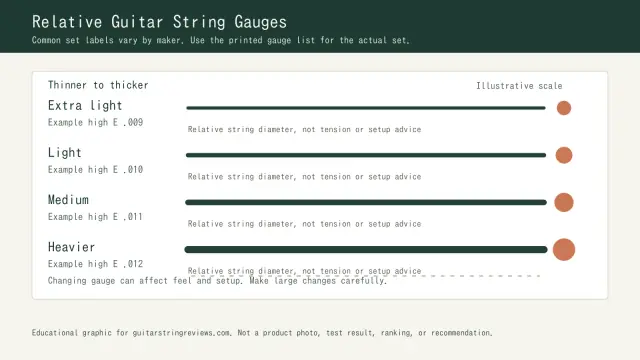
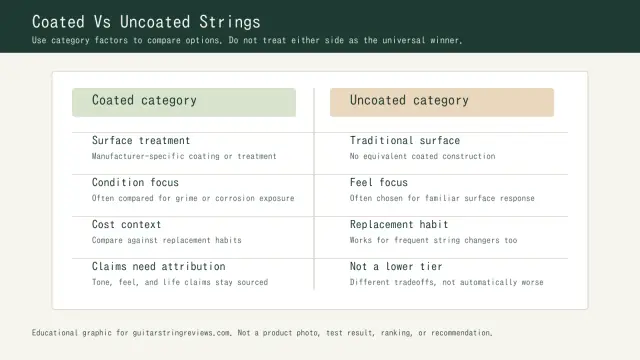
Replacement timing is related to, but separate from, string gauge and coating. Gauge affects string thickness and feel. Coating changes the string category and manufacturer claims around protection or corrosion resistance. Replacement timing is about the actual condition of the strings and the player’s sound preference.
For those related decisions, see:
What A String Change Cannot Promise
A new set of strings can address string condition, but it cannot promise perfect tuning stability, repair a setup issue, stop breakage forever, or make an unsuitable guitar setup feel right. If a guitar continues to have tuning or playability problems after a string change, the cause may be outside the strings.
String replacement is maintenance, not a full diagnosis.
Sources Used
Sources consulted for string-change and maintenance context: Fender Support on string-change timing, Taylor Guitars on changing guitar strings, and Martin Guitar FAQs. The guidance is condition-based and preference-based rather than a fixed replacement schedule for every player.