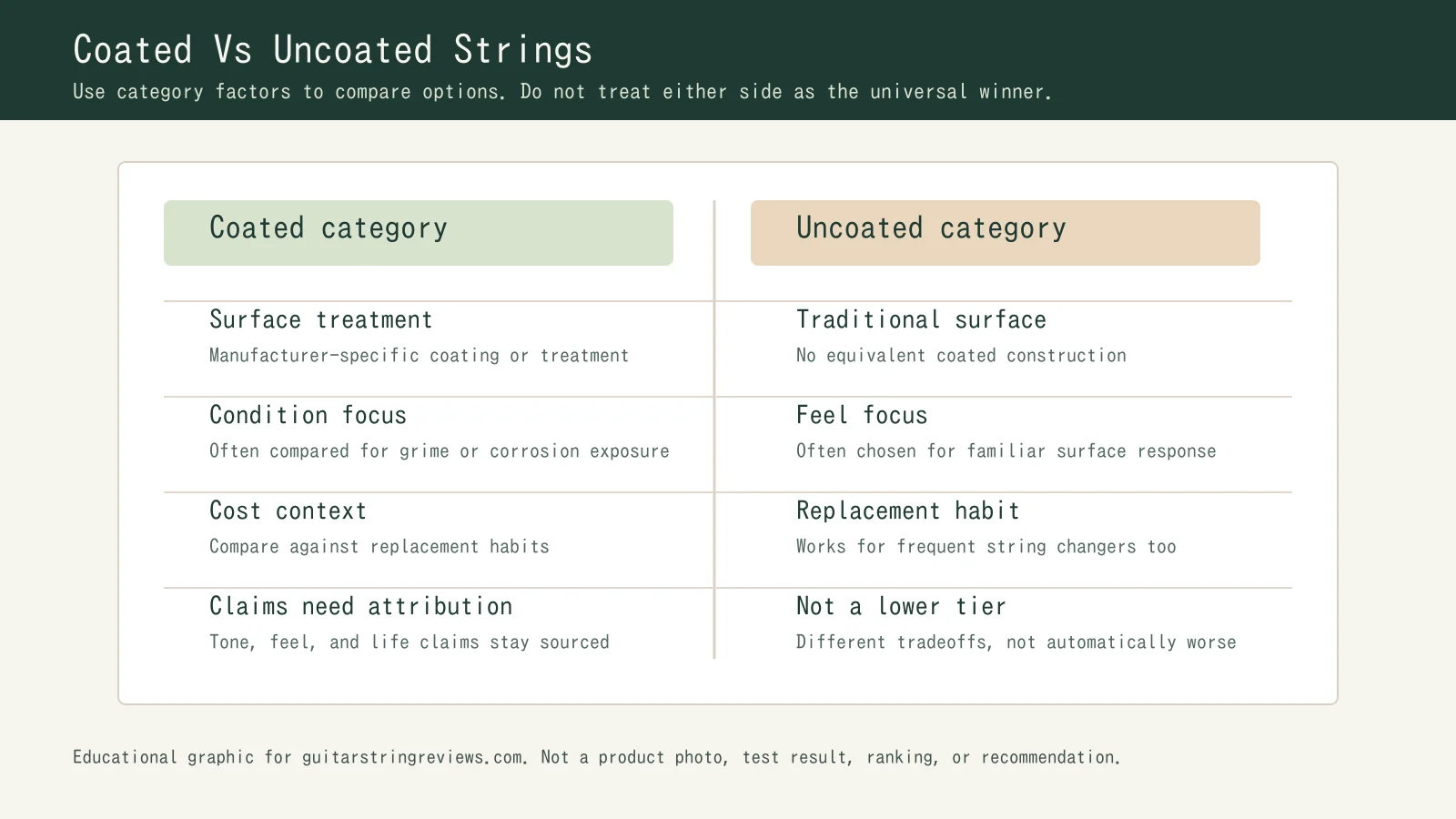
Coated guitar strings use a protective coating or treatment, while uncoated strings do not use the same kind of coated construction. Neither category is right for everyone. The choice depends on how the strings feel to you, how quickly your strings show wear, the sound you prefer, your replacement habits, and whether the cost difference makes sense for your use.
Manufacturer pages describe coated strings with claims around protection, corrosion resistance, and feel, but those claims should stay attributed unless there is a documented comparison behind them. Elixir and D’Addario examples are used only to explain the category, not to rank or recommend products.
What Coated Strings Are
Coated strings add a protective layer or treatment to the string. The exact construction depends on the manufacturer and product line. Elixir describes different coating options such as POLYWEB, NANOWEB, and OPTIWEB. D’Addario describes coated or treated lines such as XS and XT.
Those examples show that “coated” is not one single design. A coated acoustic set and a coated electric set can be built for different instruments and player expectations. Read the specific set details rather than assuming every coated string has the same feel or response.
What Uncoated Strings Are
Uncoated strings do not use the same coated construction described above. They remain a common choice for players who prefer that category’s feel, response, cost, or replacement routine. In a comparison article, the important point is not to treat uncoated strings as a lower-quality default. They are a different category with different tradeoffs.
Main Tradeoffs To Consider
The coated vs uncoated decision usually comes down to a few practical questions:
- Do you prefer the feel of a coated or uncoated surface?
- Do your strings show corrosion, grime, or unwanted feel changes quickly?
- Do you change strings often enough that coating matters less to you?
- Are you choosing acoustic or electric strings?
- Are manufacturer coating claims relevant to your playing environment?
- Does the cost difference fit your replacement habits?
Use questions like these to keep the choice tied to the player and instrument instead of turning it into a ranking.
Feel And Sound Claims Need Care
Manufacturers may describe coated strings with feel or tone language. That language can help explain how the company positions a product, but it should not become an editorial finding without a documented comparison.
For example, if a manufacturer says a coating is designed for a certain feel, the article can attribute that description to the manufacturer. It should not say that all players will hear or feel the same result.
Corrosion And Replacement Habits
Coated strings are often marketed around protection from sweat, grime, and corrosion-related wear. That can make them relevant for players whose strings change condition quickly. But the article should avoid saying coated strings last longer for every player or save money in every case.
Ask whether your strings tend to show visible wear or lose the feel and response you prefer before you want to replace them. If they do, coated strings may be a category to compare. If you already change strings frequently or prefer uncoated feel, uncoated strings may still make sense.
Acoustic Vs Electric Context
Coated and uncoated options exist for both acoustic and electric guitar, but the decision may feel different on each instrument. Acoustic players may focus on how the string interacts with the guitar’s response. Electric players may focus on feel, bending, tuning, and how the string works with the rest of the setup.
Because coated and uncoated options exist for both acoustic and electric strings, this article keeps the comparison at the category level. It does not recommend a specific line for a specific player type.
How To Decide Between Coated And Uncoated Strings
Use this comparison sequence:
- Decide whether you are trying to solve a condition problem, a feel preference, or a replacement-frequency problem.
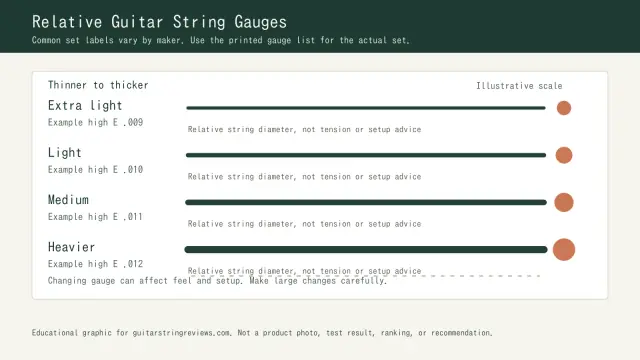
- Keep gauge separate from coating so you do not change too many variables at once.
- Read manufacturer descriptions as manufacturer claims, especially around coating type, feel, and corrosion resistance.
- Compare the cost against your own replacement habits without assuming one category is automatically better value.
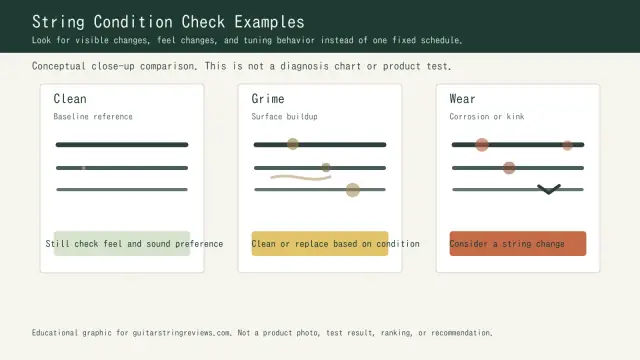
- Reevaluate after a normal playing period and watch for condition signs such as corrosion, grime, kinks, flat spots, tuning behavior, and loss of the response you prefer.
How This Relates To Gauge And Replacement Timing
Coating does not replace the gauge decision. A coated .010 set and an uncoated .010 set may share a gauge label, but coating is a separate category choice. Likewise, coated strings still need condition checks. If strings are damaged, visibly corroded, breaking, or no longer giving the sound and feel you want, replacement timing still matters.
For those related decisions, see:
Sources Used
Sources consulted for coating and string-family context: Elixir coating type guidance, Elixir electric string selection guidance, D’Addario XS electric strings, D’Addario XS Phosphor Bronze, and D’Addario XT Phosphor Bronze. Brand language around coating, tone, feel, corrosion, and lifespan is treated as product positioning rather than a guaranteed result.