Guitar strings differ by material, gauge, winding, coating, and core. Those details change tone, feel, lifespan, and price. If two sets look similar on the package but feel completely different on the guitar, the answer is usually in one of these details.
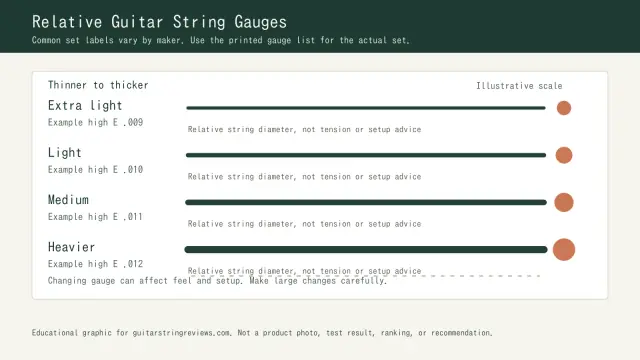
If the main question is string thickness, start with the guitar string gauge guide. If the main question is coating, use the coated vs uncoated guitar strings comparison.
The main differences to understand are winding style, coating, acoustic alloy, and core shape. Once those are clear, choosing strings becomes less random.
Roundwound, Halfwound, And Flatwound
Roundwound strings are the most common. They usually sound bright and lively, but they can create more finger noise because the surface is textured.
Halfwound strings sit between roundwound and flatwound. They feel smoother than roundwounds while keeping more brightness than many flatwounds.
Flatwound strings are smoother and warmer. Jazz and vintage-style players often like them, but they are not only for old-school tones.
Roundwound is the safest default for most acoustic, electric, and bass players because it gives a familiar attack and broad availability. Flatwound is more specialized, but it can be excellent when you want reduced squeak, a polished feel, and a more controlled top end.
Halfwound or groundwound strings are useful when you want a compromise. They can reduce some finger noise without moving all the way into the darker flatwound feel.
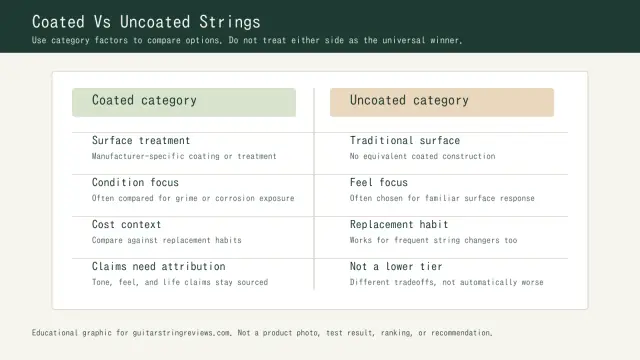
Coated Vs Uncoated
Coated strings use a protective layer to slow down corrosion and grime buildup. They often cost more, but they can save money if they last much longer for your playing habits.
Uncoated strings usually feel more direct and traditional. They are also cheaper per set, which is useful if you like changing strings often.
The biggest coated-string benefit is lifespan. Sweat, oil, dust, and humidity all reduce string life. A coating helps protect the winding so the string can keep a useful tone longer.
The tradeoff is feel. Some coated strings feel slicker. Some players like that because it reduces squeak, while others miss the raw texture of uncoated roundwounds. Neither side is automatically right. It depends on your hands, your guitar, and how often you want to change strings.
Acoustic Materials
80/20 bronze strings tend to sound bright and crisp. Phosphor bronze strings tend to sound warmer and more balanced. Neither is automatically better. The better choice depends on the guitar and player.
80/20 bronze is often a good test when an acoustic sounds too dark or dull. Phosphor bronze is often the safer everyday starting point because it balances brightness with body. If your guitar is already bright, phosphor bronze may keep it from becoming too sharp.
Material descriptions are useful, but they are not absolute. A dark guitar with bright strings may still sound warm, and a bright guitar with warm strings may still cut through. Use the material as a direction, then listen to the instrument.
Core Shape
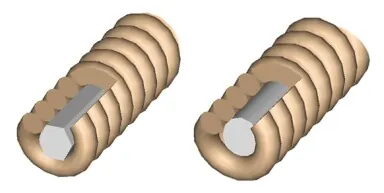
Hex core strings are common and stable. Round core strings can feel more flexible and vintage, but they often require more careful stringing and trimming.
Hex core strings grip the wrap wire strongly, which helps consistency and manufacturing stability. Round core strings usually feel a little more flexible under the fingers and are often associated with older-style response.
If you are new to changing strings, hex core is the easier default. If you experiment with round core strings, follow the maker’s stringing instructions because some round core strings can be sensitive to trimming before they are brought to tension.
Practical Choice
Change one variable at a time. If your strings feel rough, try coated or flatwound. If the guitar sounds too dark, try a brighter material. If it feels too stiff, drop the gauge.
For most acoustic players, start with light phosphor bronze. For most electric players, start with nickel-plated steel in a comfortable gauge. For bass players, start with the winding style that matches the sound you want: roundwound for bite, flatwound for smoothness.