Guitar string material names are useful, but only if you keep them in the right bucket. Players often compare 80/20 bronze, phosphor bronze, nickel-plated steel, stainless steel, or silk and steel as if they all belong to one flat category. They do not. Some of those names live in acoustic-string conversations, some are mainly part of electric-string families, and some are easier to understand once you separate material from gauge, winding, and coating.
That separation is the point of this guide. It is not here to rank every material. It is here to show how the common names relate so you can read other string advice with less confusion.
The Short Answer
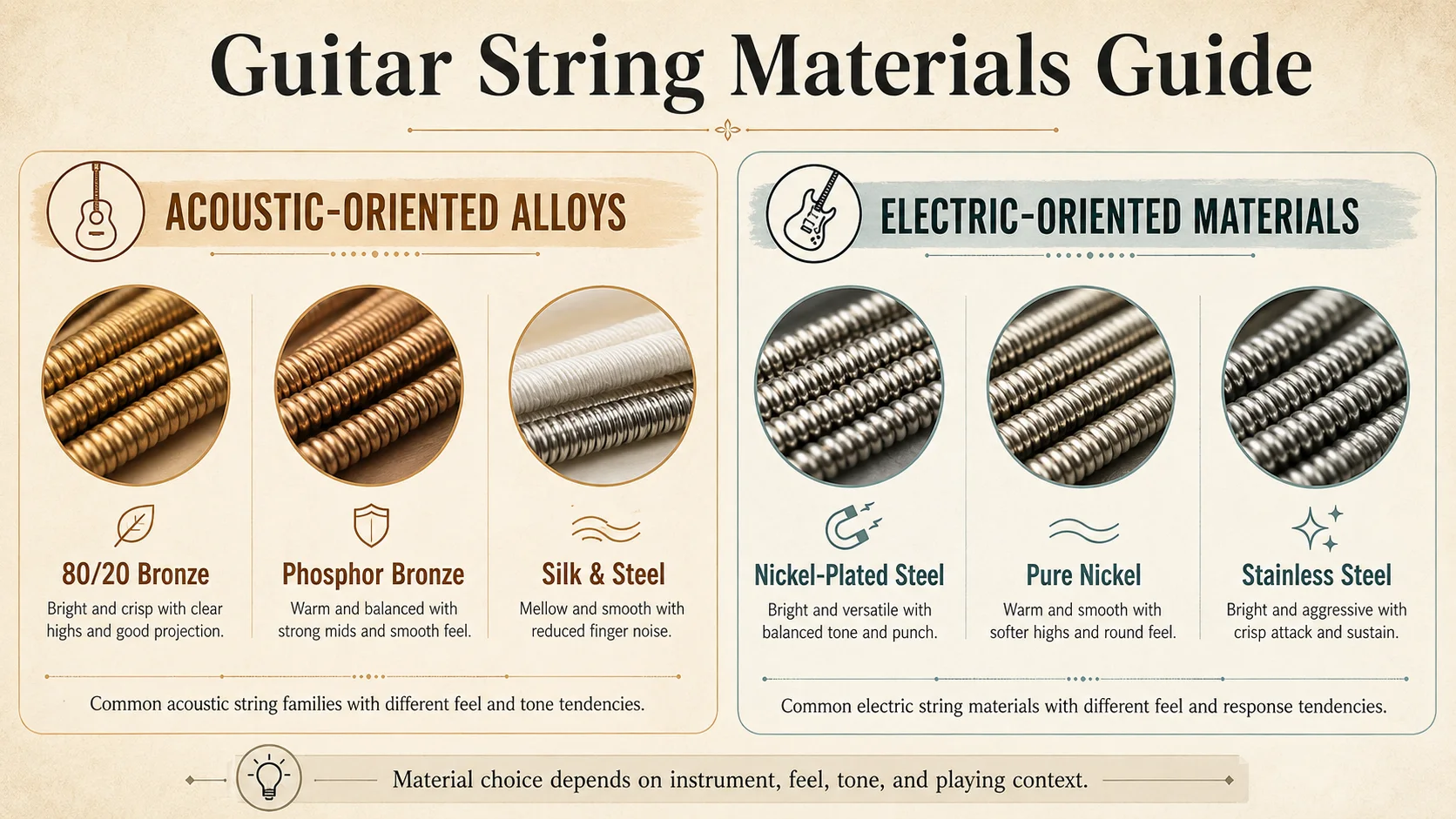
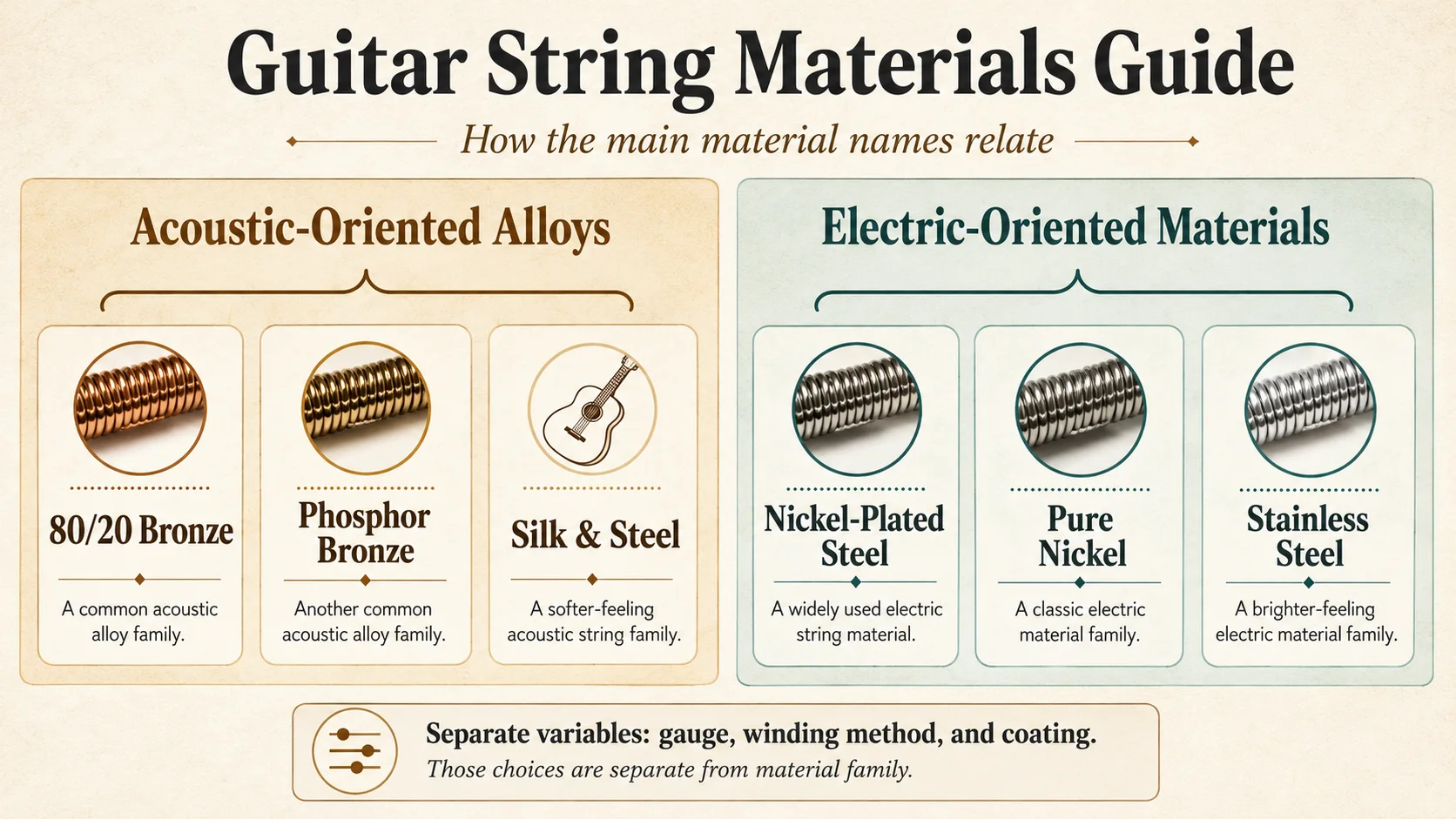
The main guitar string material families in this guide split into two broad lanes. The acoustic-oriented lane includes 80/20 bronze, phosphor bronze, nickel bronze, and silk and steel. The electric-oriented lane includes nickel-plated steel, vintage nickel, and stainless steel. Manufacturer guides describe those families with different tone, feel, and corrosion language, but that language is best treated as source-owner positioning rather than as an objective winner chart.
The cleanest way to compare materials is to keep instrument type first, material family second, and gauge, winding, or coating as separate follow-up variables.
Why Material Names Get Confusing
A material name sounds precise, but it rarely acts alone in real use. Fender’s electric-string guide separates gauge, material, core, and winding method into different decisions. D’Addario’s acoustic guides do the same in practice by discussing bronze families, gauge, and coated versus uncoated as separate factors. That is why a material guide should not pretend to answer everything about feel, output, longevity, or genre fit by itself.
Material gives you one lane of the conversation. It does not replace the rest of the setup.
The Main Acoustic-Oriented Material Families
D’Addario’s acoustic-alloy and acoustic-string guides support four clear acoustic-oriented names for this article:
80/20bronze- phosphor bronze
- nickel bronze
- silk and steel
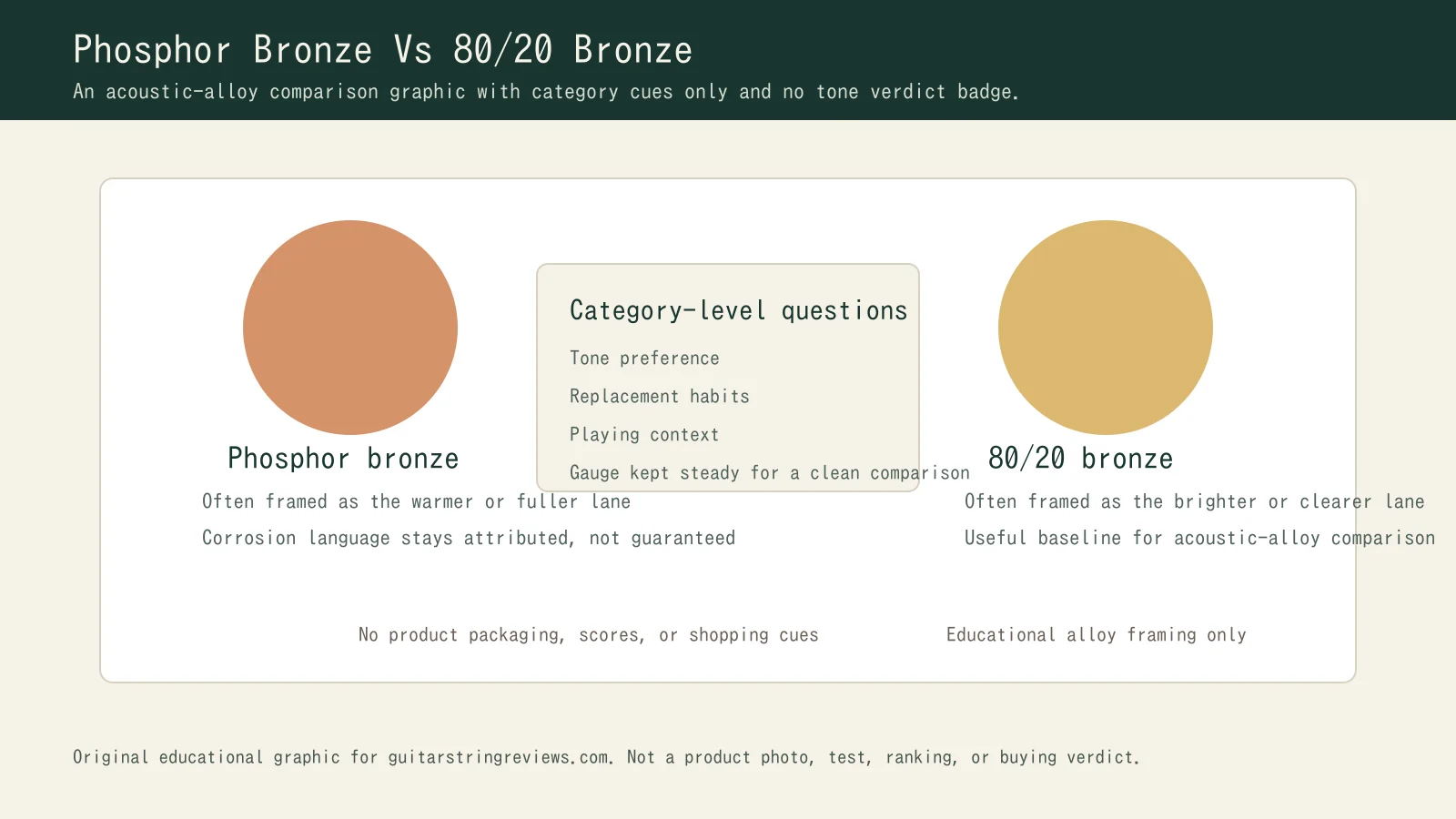
In D’Addario’s acoustic guides, 80/20 bronze is framed as the brighter, crisper lane with a more vintage edge, while phosphor bronze is framed as warmer, balanced, and common for everyday play. Nickel bronze is positioned as a natural-sounding acoustic option. Silk and steel is described as a lighter-tension, mellow acoustic alternative.
Those descriptions are useful as map labels. They should not be treated as promises about every guitar, room, or player.
The Main Electric-Oriented Material Families
Fender’s electric-string guide gives a narrower material list for the electric lane:
- nickel-plated steel
- vintage nickel
- stainless steel
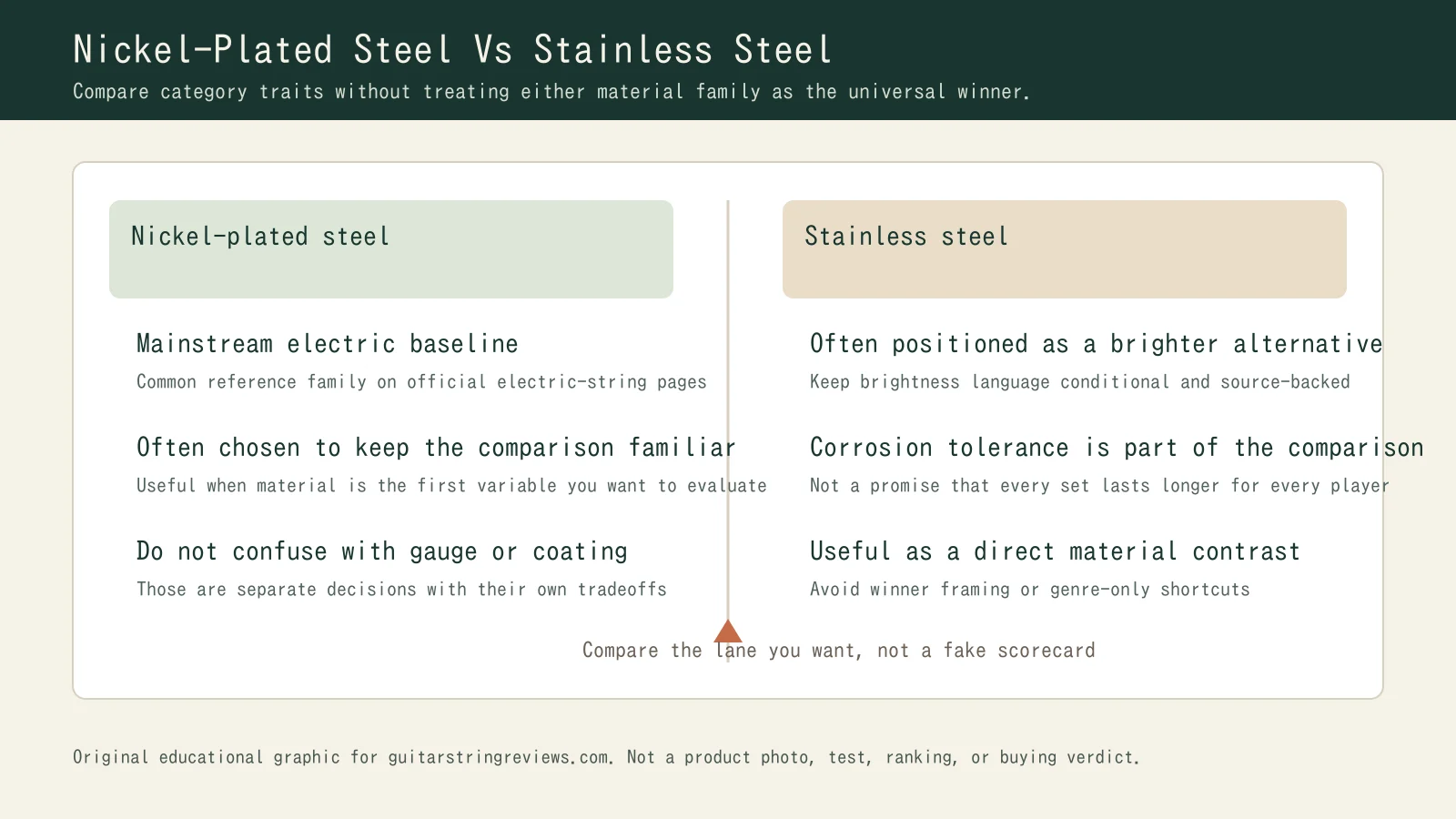
In that source, nickel-plated steel is positioned as a balanced option between warmth and brightness, vintage nickel is framed as warmer than nickel-plated steel, and stainless steel is framed as very bright with strong sustain and good corrosion resistance. Fender also separates these materials from winding method, which matters because electric-string discussions often blend the two together too quickly.
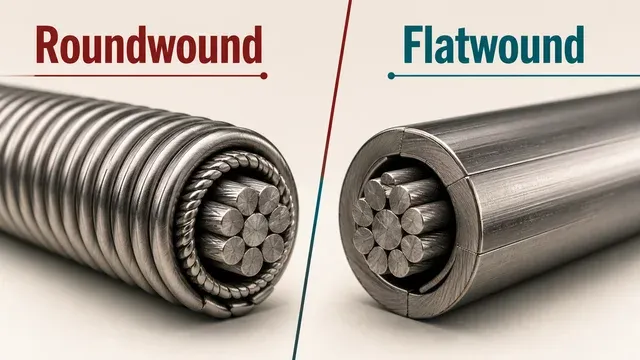
That separation helps keep the guide honest. A stainless steel roundwound conversation is not identical to a vintage nickel flatwound conversation, even though both include a material label.
What About Coated Strings?
Coating is not a material family in the same sense as bronze or nickel-plated steel. It is an additional construction and longevity decision layered on top of the base string family. D’Addario’s acoustic guide frames coated strings as designed to resist corrosion and maintain tone longer than uncoated strings, while Elixir’s FAQ describes the company’s wound strings as coated and uses that to explain its long-life positioning.
That means coating can matter a lot, but it should not replace the material conversation. If you compare a coated phosphor bronze set to an uncoated 80/20 bronze set, you changed more than one variable.
Why Gauge And Winding Still Matter
The sources used here also make it clear that material is only one part of the story. Fender’s electric guide says gauge affects tension, feel, sustain, and ease of bending. The same guide separately defines roundwound and flatwound as winding-method choices rather than material labels. On the acoustic side, D’Addario’s guides discuss custom light, light, and medium gauges apart from the bronze-family conversation.
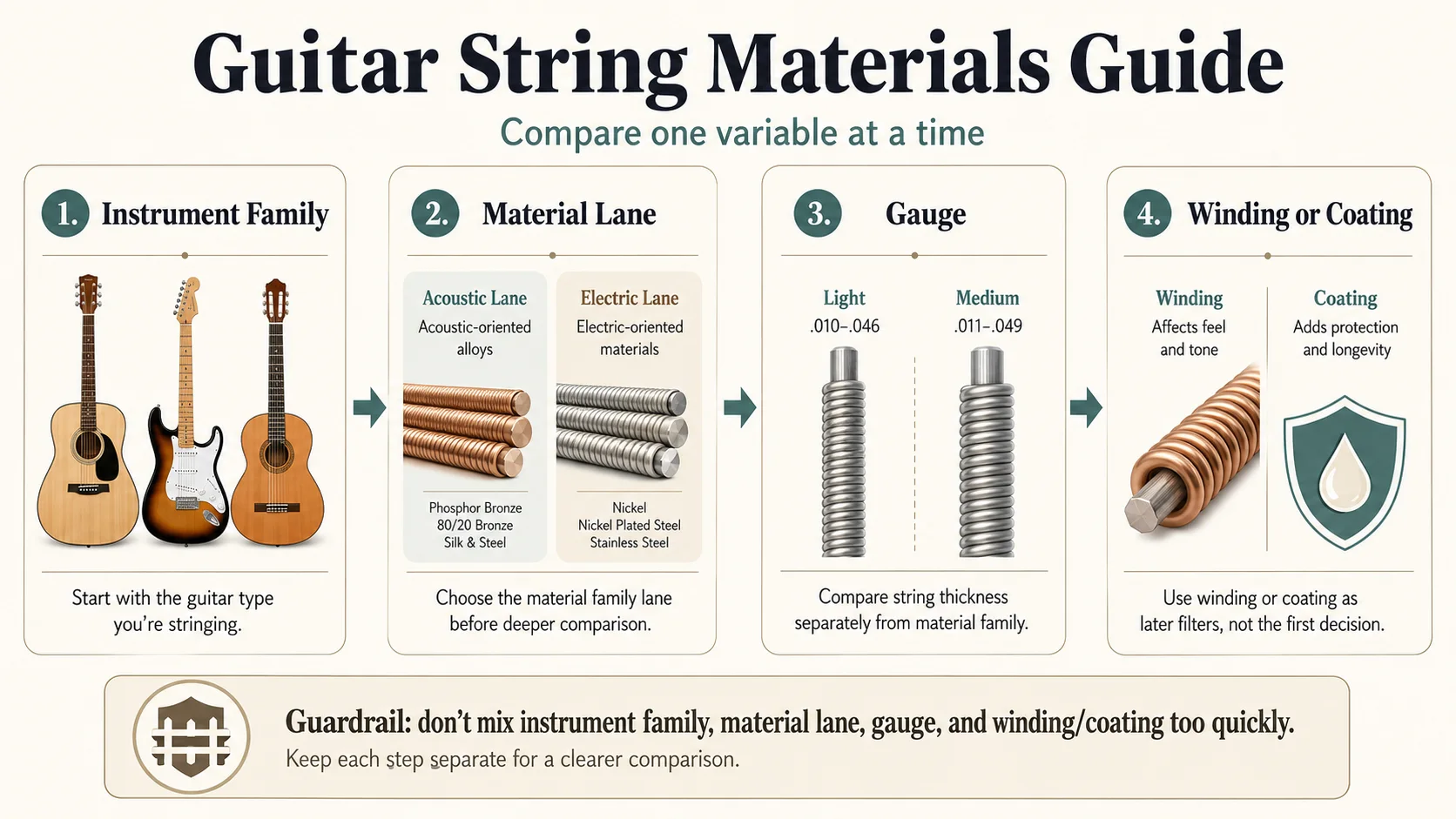
That is why a clean material comparison should follow this order:
- Confirm the instrument family.
- Compare the material lane inside that family.
- Keep gauge as steady as possible.
- Check whether winding method or coating changed too.
If you skip those guardrails, the material label gets blamed or praised for things another variable actually caused.
A Practical Way To Use This Guide
Use material names as a way to narrow the field, not as a shortcut to certainty.
If you are looking at steel-string acoustics, start by deciding whether the broader source-backed lane sounds more like 80/20 bronze, phosphor bronze, nickel bronze, or silk and steel. If you are looking at electric strings, stay in the electric lane and compare nickel-plated steel, vintage nickel, and stainless steel before you move on to gauge or winding method.
That process is slower than asking which material is best, but it is also much more accurate.
Common Mistakes To Avoid
- Comparing acoustic-oriented alloys and electric-oriented materials as if they are interchangeable categories.
- Treating source-owner tone language as a universal scientific result.
- Letting gauge changes distort the material comparison.
- Forgetting that winding method and coating can reshape the feel of the same base material family.
Related Guides
- Nickel Vs Stainless Steel Guitar Strings
- Phosphor Bronze Vs 80/20 Bronze Strings
- Roundwound Vs Flatwound Guitar Strings
- Coated Vs Uncoated Guitar Strings
FAQ
What are the main guitar string material types?
The main acoustic-oriented names here are 80/20 bronze, phosphor bronze, nickel bronze, and silk and steel. The main electric-oriented names are nickel-plated steel, vintage nickel, and stainless steel.
Is one guitar string material best?
No. The manufacturer guides used here describe different material lanes differently, but they do not support a universal winner claim.
Are acoustic and electric guitar string materials the same thing?
Not exactly. Acoustic-oriented alloys and electric-oriented materials are best compared inside their own instrument context.
Does string material mean the same thing as gauge or winding?
No. Gauge is thickness, while winding method and coating are separate choices that can change the comparison even when the base material family stays similar.
Sources Used
This guide draws on D’Addario’s acoustic alloys explainer, D’Addario’s guide to acoustic guitar strings, D’Addario’s acoustic string selection guide, Fender’s electric guitar string guide, and the Elixir Strings FAQ. Material, gauge, winding, and coating language stays educational and source-backed. No hands-on testing, prices, ratings, affiliate CTAs, or universal rankings are included.