Choosing acoustic guitar strings as a beginner gets confusing when several questions collapse into one. People ask for the best beginner strings, but that usually mixes together instrument type, gauge, material, and coating before a player even knows which variable matters most.
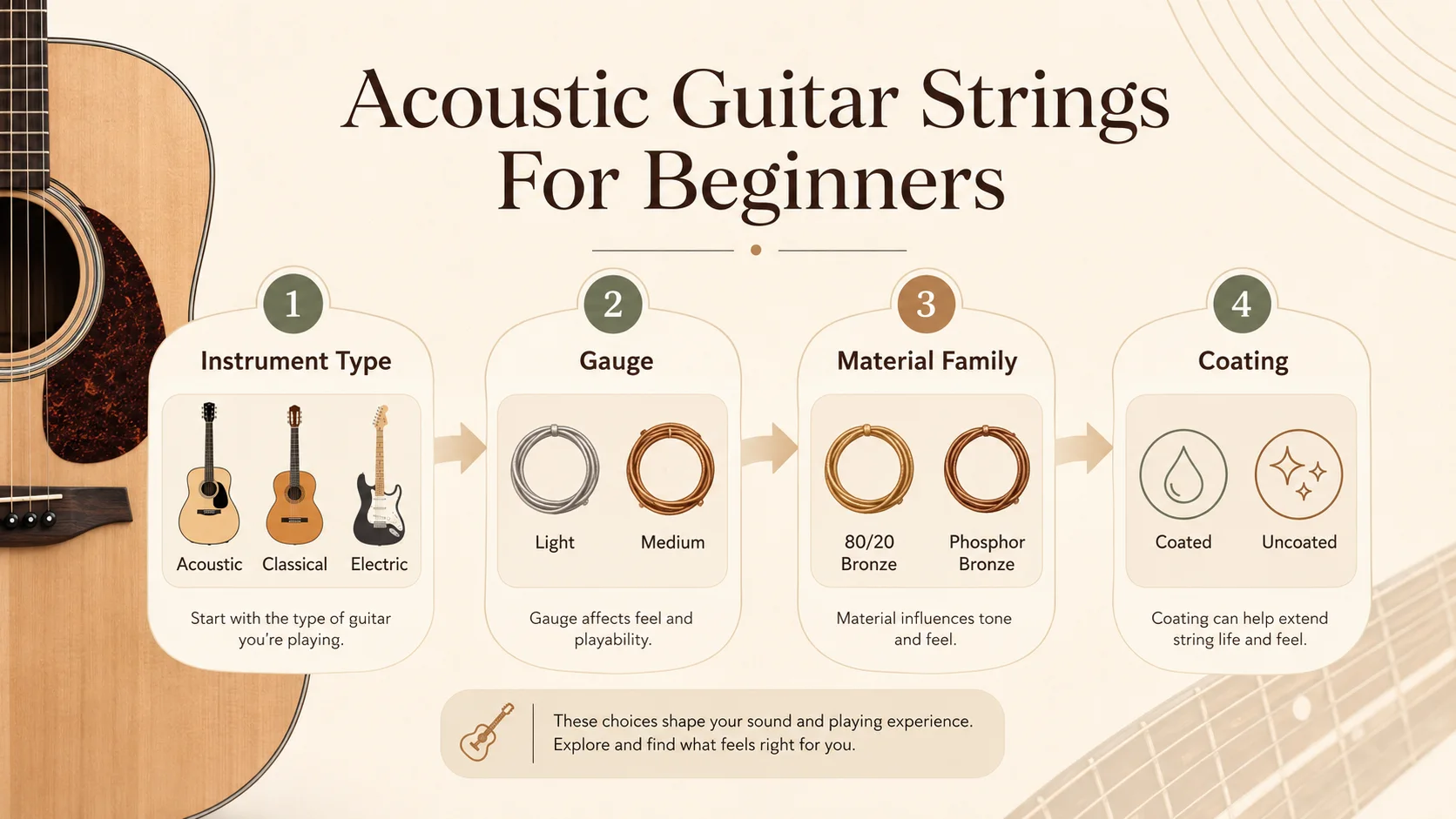
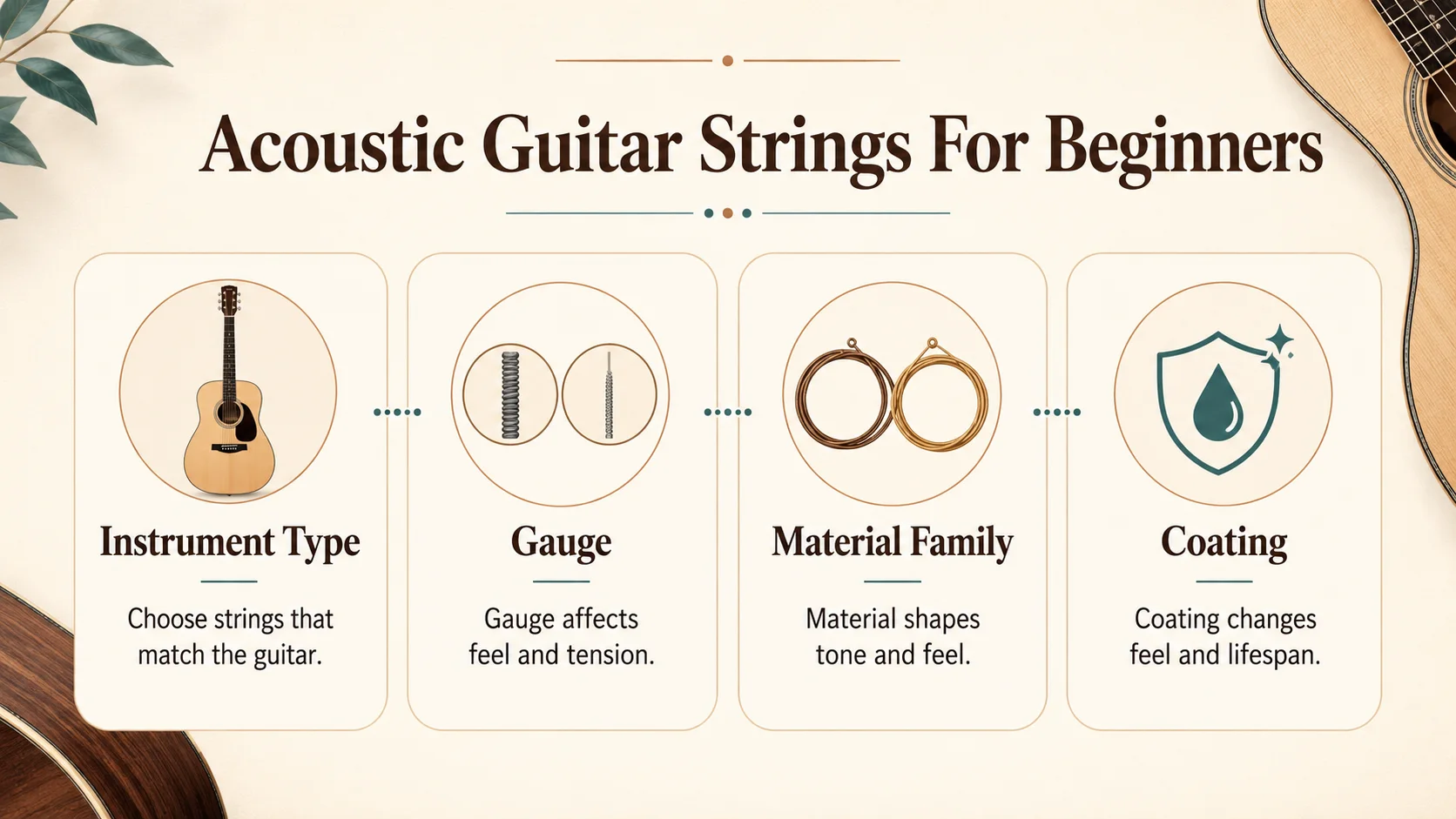
The cleaner approach is slower and simpler. First, match the strings to the instrument. Then start with a beginner-friendly gauge range. After that, compare common acoustic material lanes such as 80/20 bronze and phosphor bronze. Coating can come later as a separate decision.
The Short Answer
For most beginners, the safest starting path is to confirm whether the guitar takes steel strings or nylon strings, then start in a lighter acoustic gauge range before comparing material families. D’Addario’s beginner guidance points to extra light, custom light, and light gauges as easier to play than heavier sets, while its broader acoustic-string guides describe 80/20 bronze as the brighter lane and phosphor bronze as the warmer, more balanced lane. Coated strings are best treated as an optional maintenance choice rather than a rule.
That does not produce one universal winner. It gives you a low-risk first choice you can actually understand.
Start With The Instrument, Not The Marketing
Before you compare gauges or materials, make sure the string family matches the guitar. Fender’s beginner acoustic guide explicitly treats nylon-string instruments as a separate lane from mainstream steel-string acoustics, while D’Addario’s beginner guide focuses on acoustic-string choices such as phosphor bronze, coated options, and common acoustic gauges.
That is why “best acoustic strings for beginners” is too broad on its own. A steel-string acoustic and a nylon-string guitar do not ask the same string question. If you skip that distinction, every later choice gets harder to interpret.
Why Lighter Gauges Usually Make More Sense At First
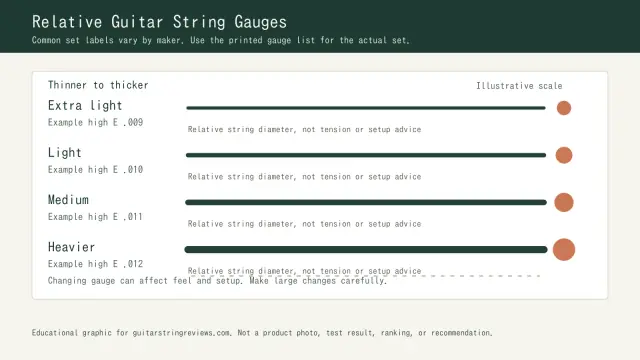
Gauge is one of the first practical decisions because it changes how the strings feel under the fingers. In D’Addario’s acoustic guide, custom light strings are described as easier to fret and bend, and light gauge is presented as the most popular balanced option. The related beginner-facing lesson article also recommends starting with extra light, custom light, or light sets because they are easier to play than medium gauges.
That makes lighter gauges a useful starting point for many new players. It does not mean heavier strings are wrong. It means beginners often benefit from starting with a lower-friction option before deciding they need more volume, projection, or resistance.
What The Common Acoustic Material Names Usually Mean
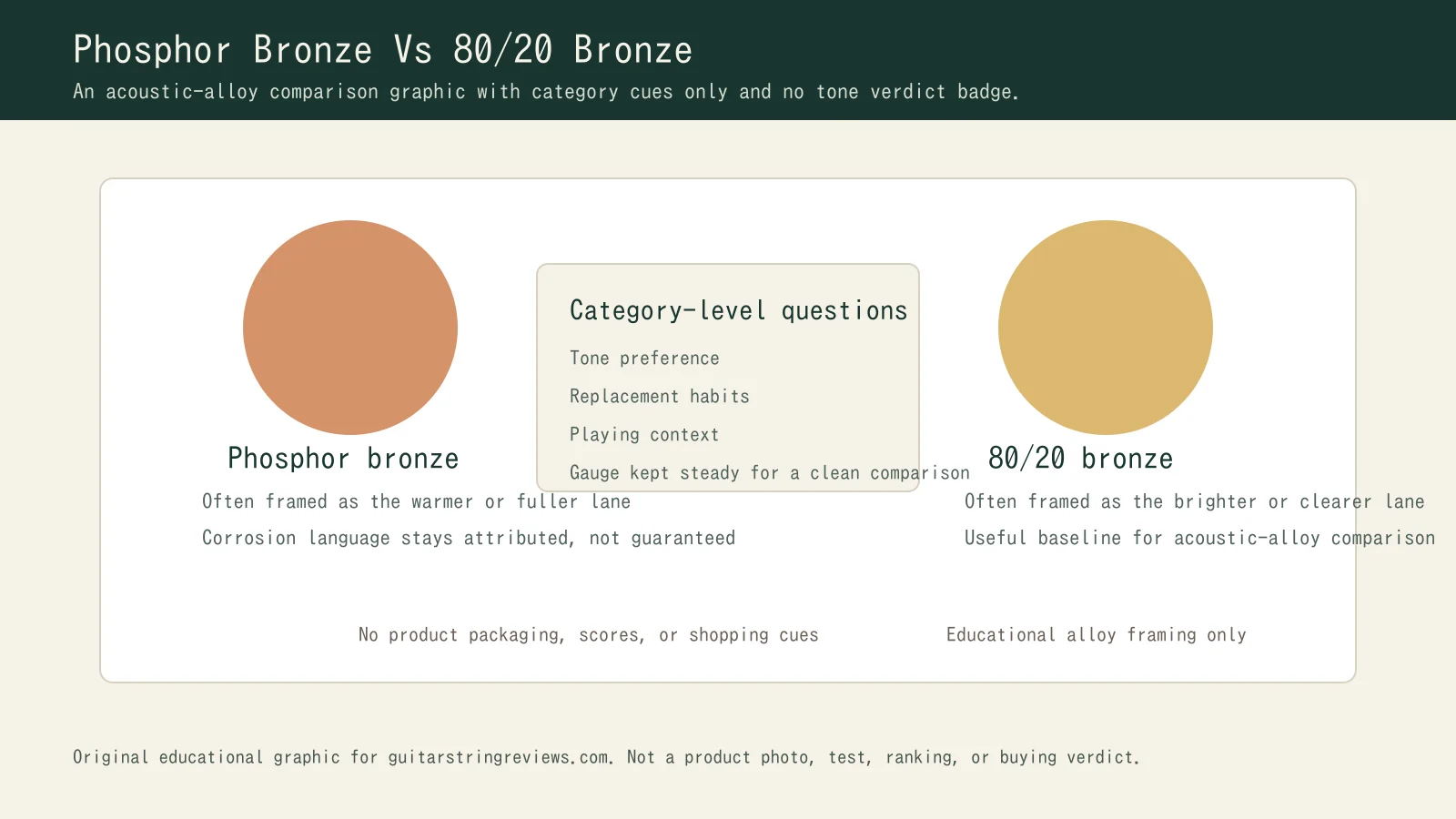
Once the instrument match and gauge range are in place, the main material comparison becomes easier to read. In D’Addario’s acoustic guides, 80/20 bronze is framed as the brighter, crisper lane, while phosphor bronze is framed as warmer, more balanced, and common for everyday use. Those descriptions are useful because they explain why both labels keep showing up in beginner conversations.
Use them as category-level signposts rather than promises. The source-backed point is not that one material wins. The point is that the labels describe different starting directions inside the same acoustic family.
Coated Vs Uncoated Is A Separate Choice
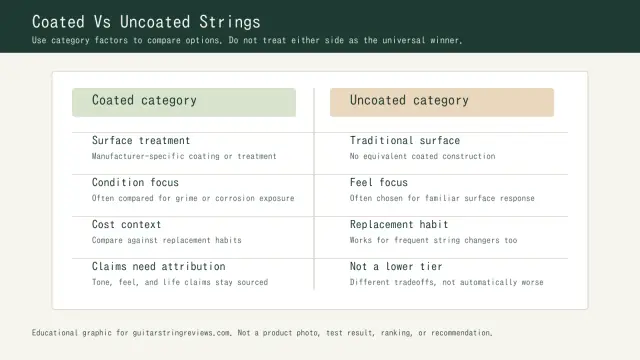
Coated strings often get mixed into the beginner question too early. In D’Addario’s acoustic guide, coated strings are described as designed to resist corrosion and maintain tone longer, while uncoated strings are framed as the more traditional-feeling option. That is helpful context, but it is still a separate decision from instrument match and gauge.
If you want to reduce the frequency of string changes, coated strings can make sense as a later filter. If you want to keep the first purchase simple, it is reasonable to start uncoated and learn what you like first. Either way, coating should not be confused with the material-family choice itself.
A Safe First-Choice Path
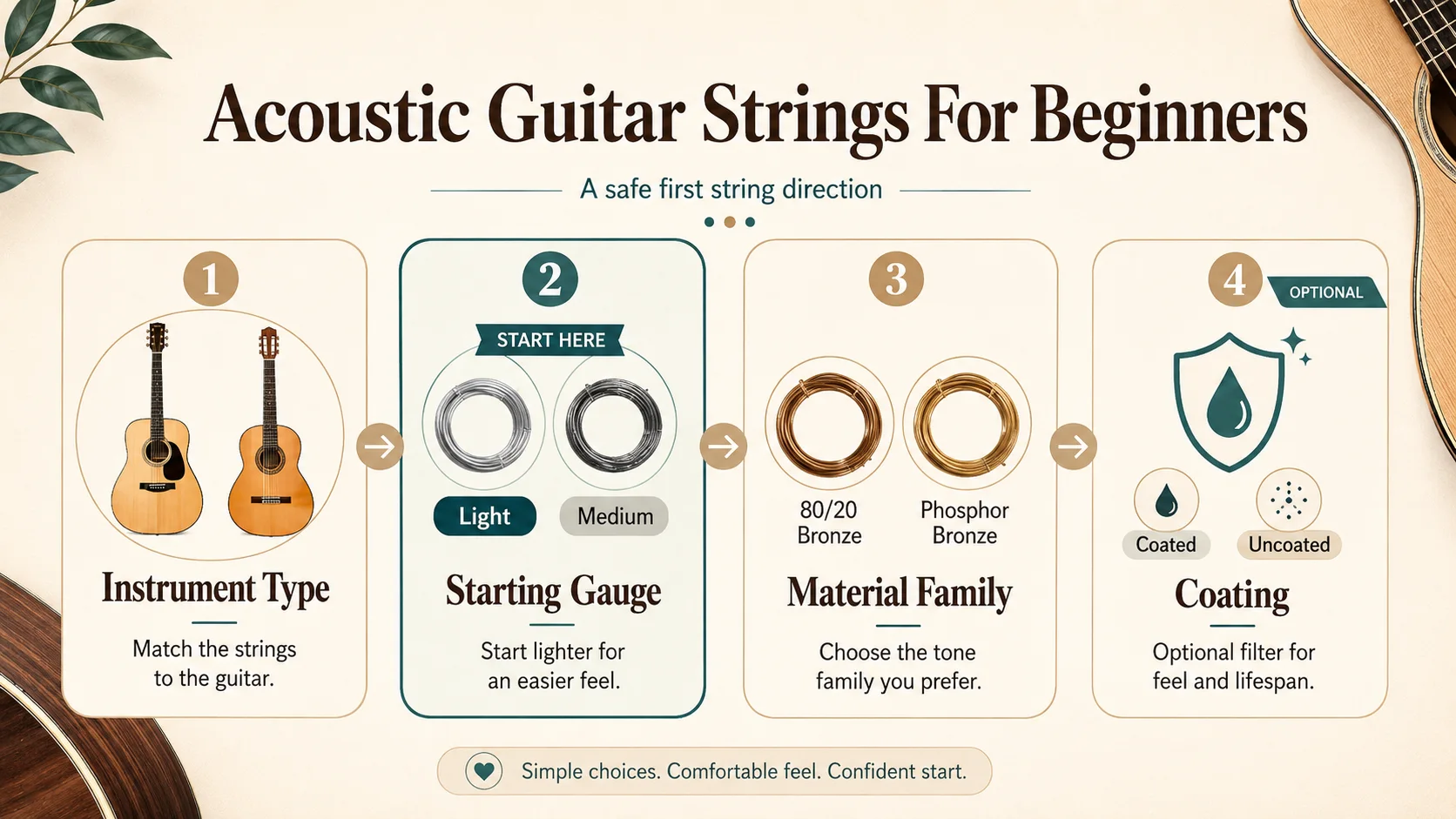
If you are buying your first set and want a neutral place to start, this sequence is the easiest one to defend:
- Confirm whether the guitar takes steel strings or nylon strings.
- Start in an easier-to-play gauge range such as custom light or light if the guitar is a steel-string acoustic.
- Choose a material lane:
80/20bronze if you want the brighter description from these guides, phosphor bronze if you want the warmer and more balanced description. - Decide whether coating matters to you for maintenance and longevity.
That path is more useful than asking for a single best beginner set because it keeps each variable in its place.
Common Mistakes Beginners Make
- Treating steel-string and nylon-string instruments as if they use the same string family.
- Assuming heavier strings are more serious and therefore automatically better.
- Reading material names as permanent skill-level labels instead of broad sound and feel categories.
- Letting coating, gauge, and material all change at the same time, which makes the result harder to judge.
When To Reconsider Your First Choice
Your first set does not need to be your forever set. The acoustic guides cited here also note that heavier gauges can bring more projection and tension, while lighter ones are easier to fret. That means the right beginner move is often to start easy, learn what bothers you or what feels missing, and then adjust one variable at a time.
If the strings feel too stiff, revisit gauge first. If they feel fine but the general category seems off, revisit material next. If you mainly want less frequent string changes, revisit coating. That order keeps the learning process clear.
Related Guides
- Acoustic Vs Electric Guitar Strings
- Phosphor Bronze Vs 80/20 Bronze Strings
- Coated Vs Uncoated Guitar Strings
- Guitar String Gauge Guide
FAQ
What acoustic guitar strings should a beginner start with?
Start by matching the strings to the instrument, then choose a lighter gauge before comparing material families. That gives you a cleaner first decision than trying to find one universal winner.
Are lighter acoustic strings better for beginners?
They are often a practical starting point because beginner-oriented manufacturer guides describe extra light, custom light, and light gauges as easier to play than heavier sets. That does not mean every player should stay there permanently.
What is the difference between 80/20 bronze and phosphor bronze acoustic strings?
Manufacturer guides commonly frame 80/20 bronze as the brighter lane and phosphor bronze as the warmer, more balanced lane. Those are category descriptions, not guarantees for every guitar or player.
Do beginners need coated acoustic strings?
No. Coated strings are better treated as an optional maintenance and longevity choice rather than as a requirement for learning.
Sources Used
This guide draws on Fender’s beginner acoustic buying guide, D’Addario’s beginner acoustic guitar string and accessories guide, D’Addario’s guide to acoustic guitar strings, and D’Addario’s acoustic string selection guide. Instrument-fit, gauge, material, and coating language stays educational and source-backed. No hands-on testing, ratings, prices, affiliate CTAs, or universal best-for-everyone claims are included.