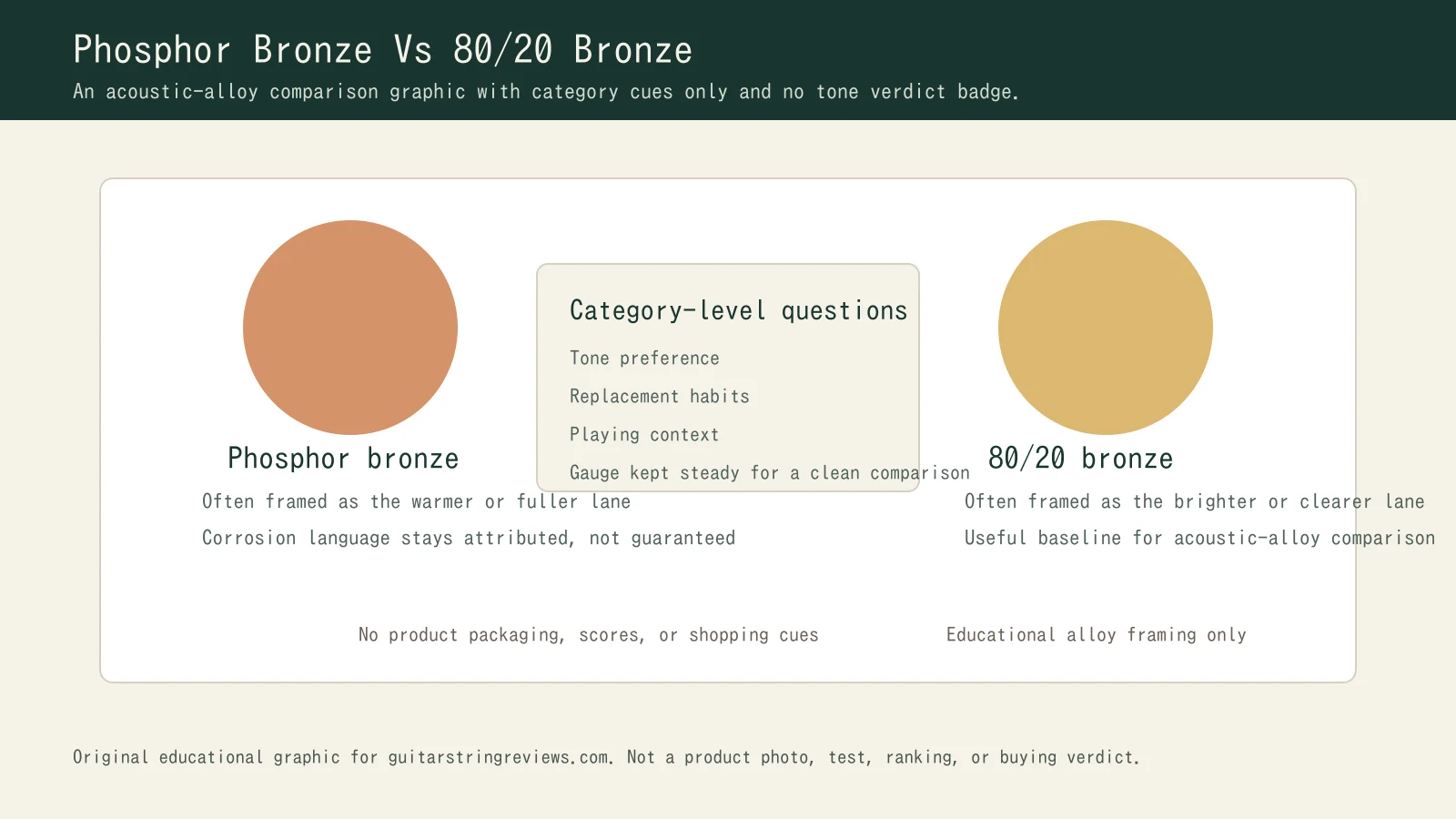
Phosphor bronze and 80/20 bronze are two common acoustic-guitar string alloy categories. Neither one is automatically the better choice for every acoustic guitar or every player. The more useful question is what kind of response, maintenance profile, and playing context you are trying to match.
In manufacturer and manufacturer-owned education sources, 80/20 bronze is commonly framed as a brighter or more articulate acoustic-string category. Phosphor bronze is commonly framed as a warmer or darker alternative and is also often positioned around corrosion resistance. Those are useful buying signals, but they should stay attributed or conditional rather than being treated as universal facts.
What 80/20 Bronze Strings Are
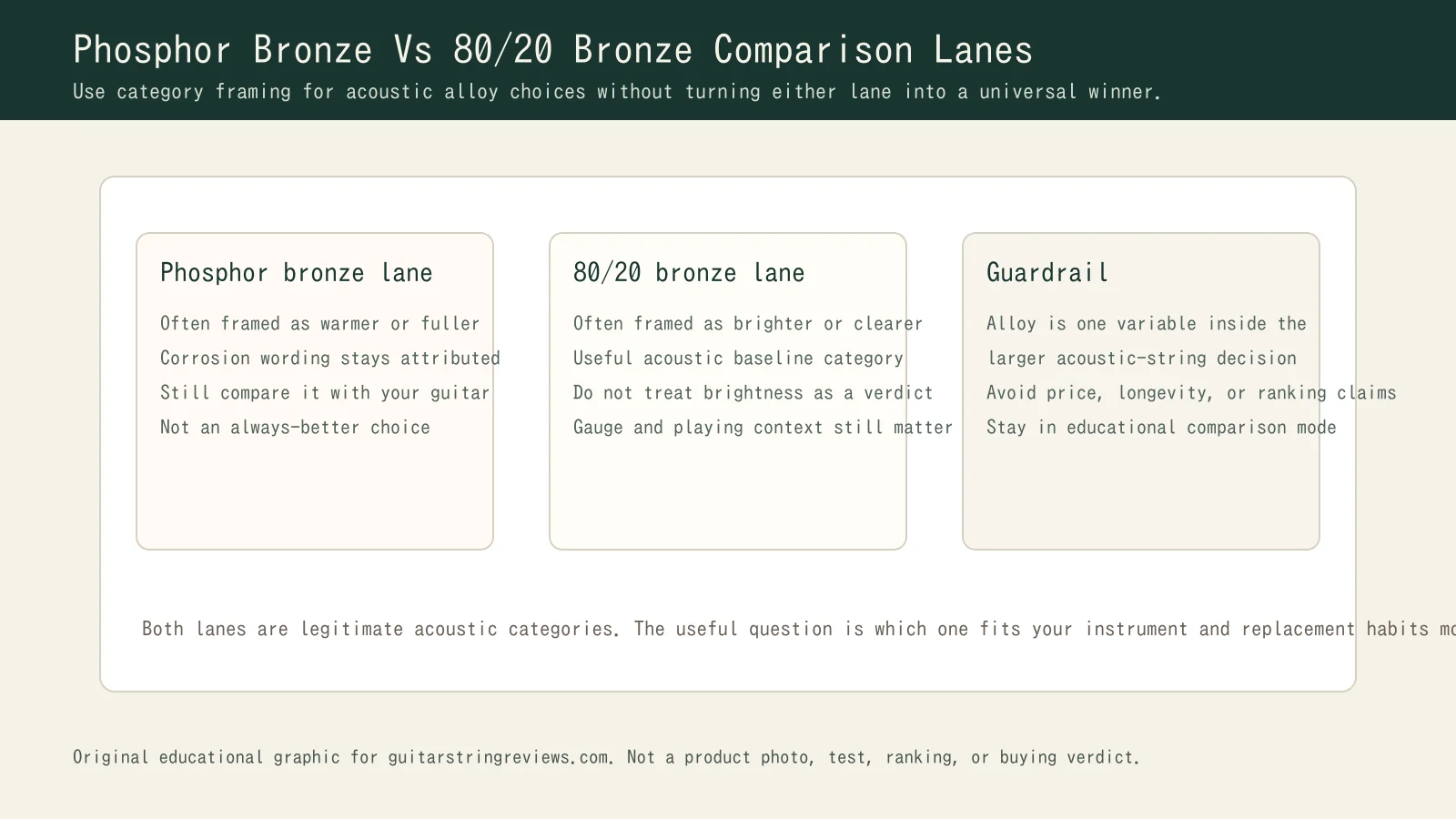
80/20 bronze is a well-established acoustic-string category. Official product and education pages commonly use it as a reference point for bright, clear, or articulate acoustic-string language.
That does not mean every 80/20 set sounds the same, or that every player who wants more brightness should automatically choose it. Guitar construction, pick attack, playing style, and how old the strings are all affect the result.
What Phosphor Bronze Strings Are
Phosphor bronze is another mainstream acoustic-string category. Manufacturer sources commonly position it as a warmer or darker alternative to 80/20 bronze, and some sources also frame it around corrosion resistance compared with older acoustic-alloy baselines.
That is still category framing, not a promise about how every phosphor-bronze set will behave on every acoustic guitar.
The Main Tradeoffs
1. Tone Preference
On brand pages, 80/20 bronze is often the category associated with a brighter or clearer acoustic presentation. Phosphor bronze is more often the category associated with a warmer or fuller direction.
That should be treated as guidance, not as a verdict. A player who likes a bright attack on one guitar may not get the same result on another. The category language helps narrow the choice, but it does not replace listening, fit, and context.
2. Replacement Habits
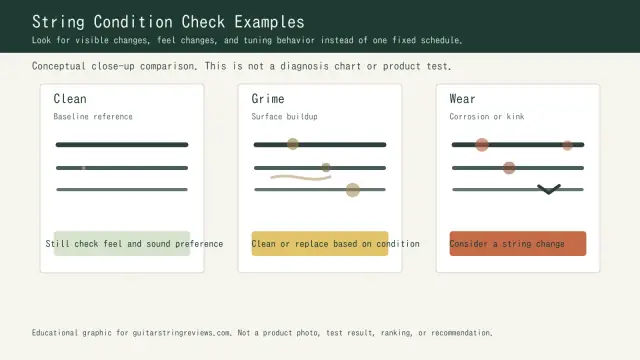
Phosphor bronze is often positioned with corrosion-resistance language in manufacturer material explainers. That makes it relevant if string condition over time is part of your decision. It still does not support a blanket claim that phosphor bronze lasts longer for everyone or is automatically the better value.
If replacement timing is the real question, read How Often Should You Change Guitar Strings?.
3. Playing Context
The better alloy can depend on what you want from the guitar right now. Some players care most about a bright, immediate response. Others care more about whether the strings stay in a tonal range they prefer over time. That does not produce one universal winner, but it does give you a cleaner way to think about the tradeoff.
4. The Rest Of The String Decision
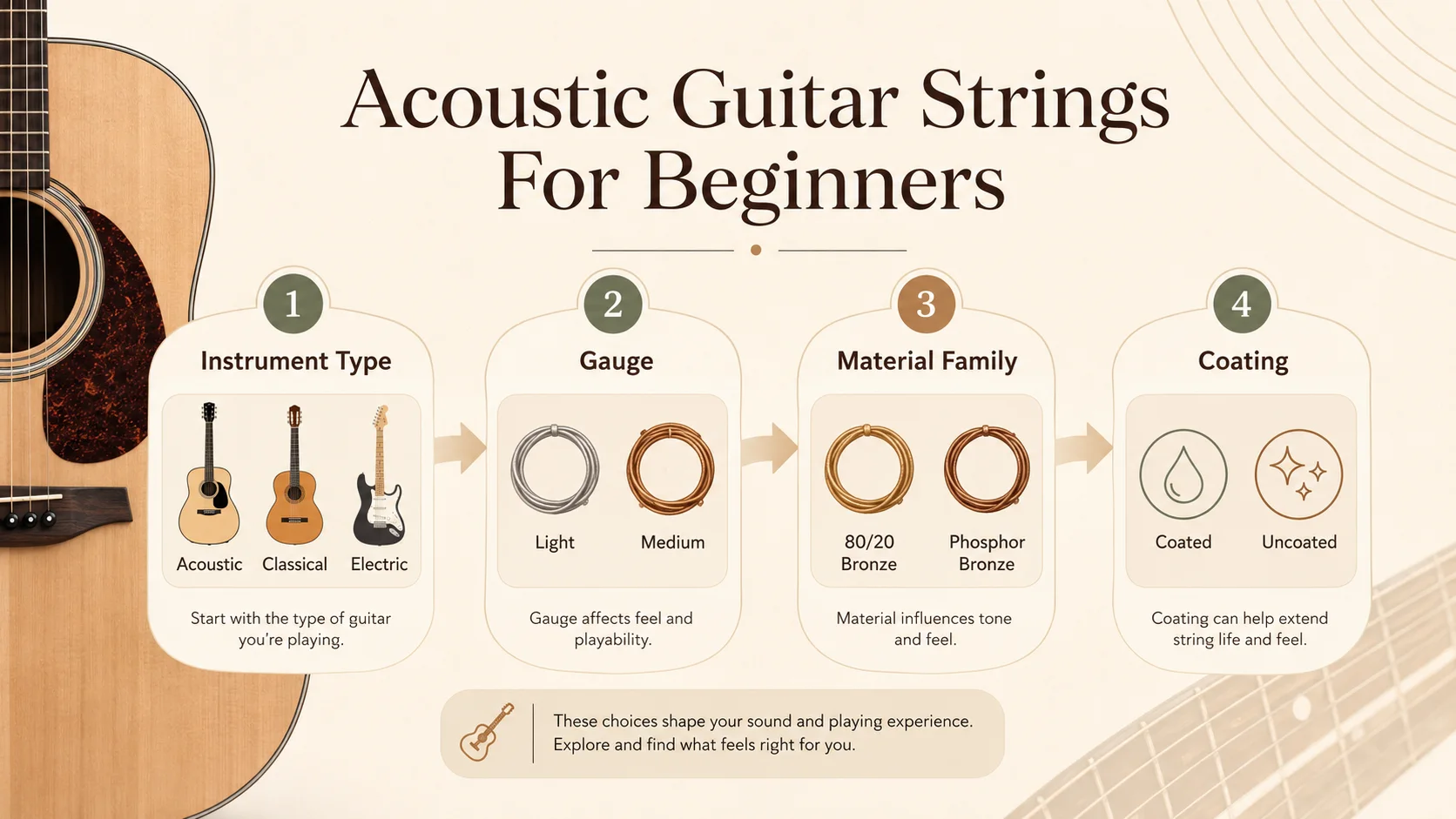
Alloy is only one part of the acoustic-string choice. Gauge, coating, instrument design, and setup all matter too. Changing alloy while also changing gauge can make it harder to tell what actually changed.
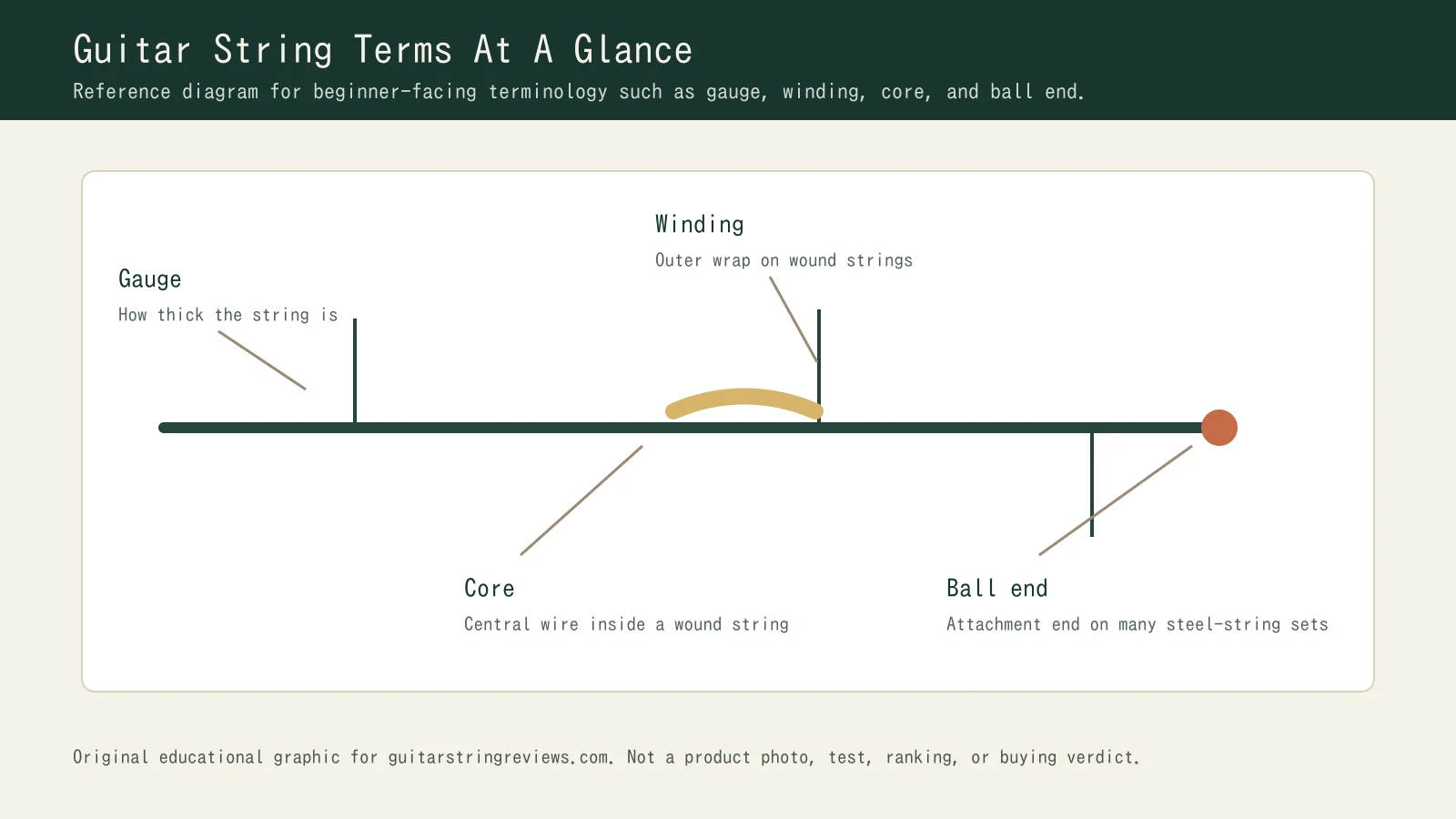
For terminology support while you compare categories, see Guitar Strings Glossary.
When 80/20 Bronze Often Makes Sense To Compare
80/20 bronze is a useful category to compare when:
- you want to start from the brighter side of common acoustic-alloy positioning
- you are trying to understand the baseline contrast against phosphor bronze
- you want an acoustic material comparison without drifting into product rankings
This is not a declaration that 80/20 is the best acoustic-string alloy. It is simply one of the clearest category reference points in official acoustic-string materials guidance.
When Phosphor Bronze May Be Worth Comparing
Phosphor bronze is worth comparing when:
- you want to explore the warmer side of common acoustic-alloy positioning
- corrosion tolerance is part of your string-choice process
- you want an alternative to 80/20 that is still widely available and easy to understand as a category
Again, that is not a winner statement. It is a decision aid.
A Practical Decision Framework
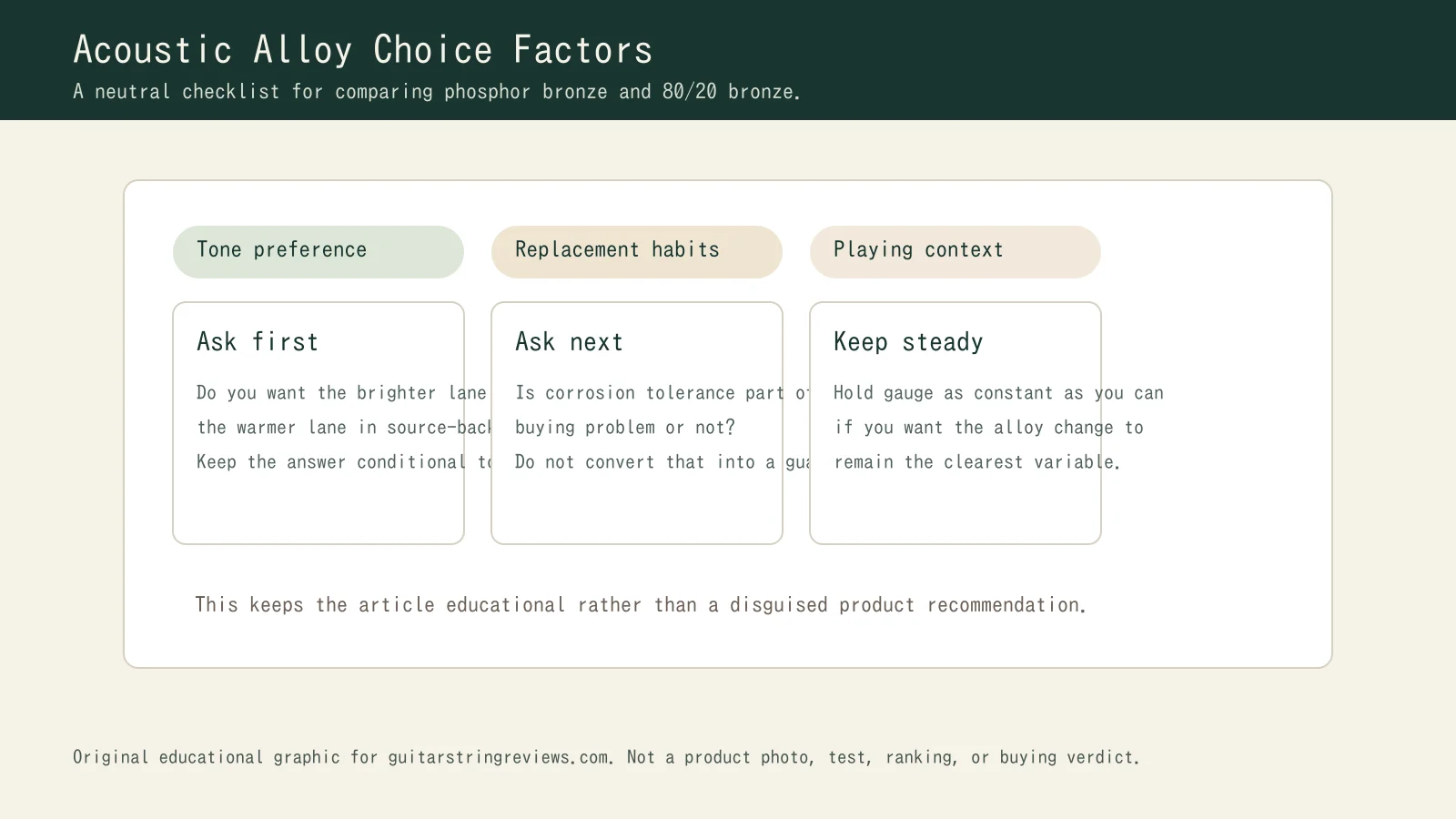
Use this sequence if you are deciding between the two:
- Start with the alloy category already on your guitar, if you know it.
- Decide whether your next change is really about alloy, or whether it is more about gauge, coating, or maintenance timing.
- Compare official manufacturer category language rather than retailer summaries.
- Keep your gauge class as steady as possible if you want the alloy comparison to stay meaningful.
- Reevaluate based on your guitar, your playing style, and how quickly the strings stop giving you the response you want.
This Is An Acoustic Comparison, Not A Buying Verdict
Phosphor bronze and 80/20 bronze are both legitimate acoustic categories. The goal is not to crown one alloy as best. The goal is to help you choose the category that fits your instrument, response preference, and replacement habits more closely.
If you need a beginner-friendly reference page for the terms in this article, use Guitar Strings Glossary.
Sources Used
Sources consulted for acoustic alloy and product-family context: D’Addario acoustic alloy guide, Fender beginner FAQ, Fender 80/20 Bronze acoustic strings, Fender phosphor bronze acoustic strings, and the Elixir Strings product catalog. Brightness, warmth, and corrosion language is treated as brand positioning or conditional context rather than a guaranteed result for every guitar.