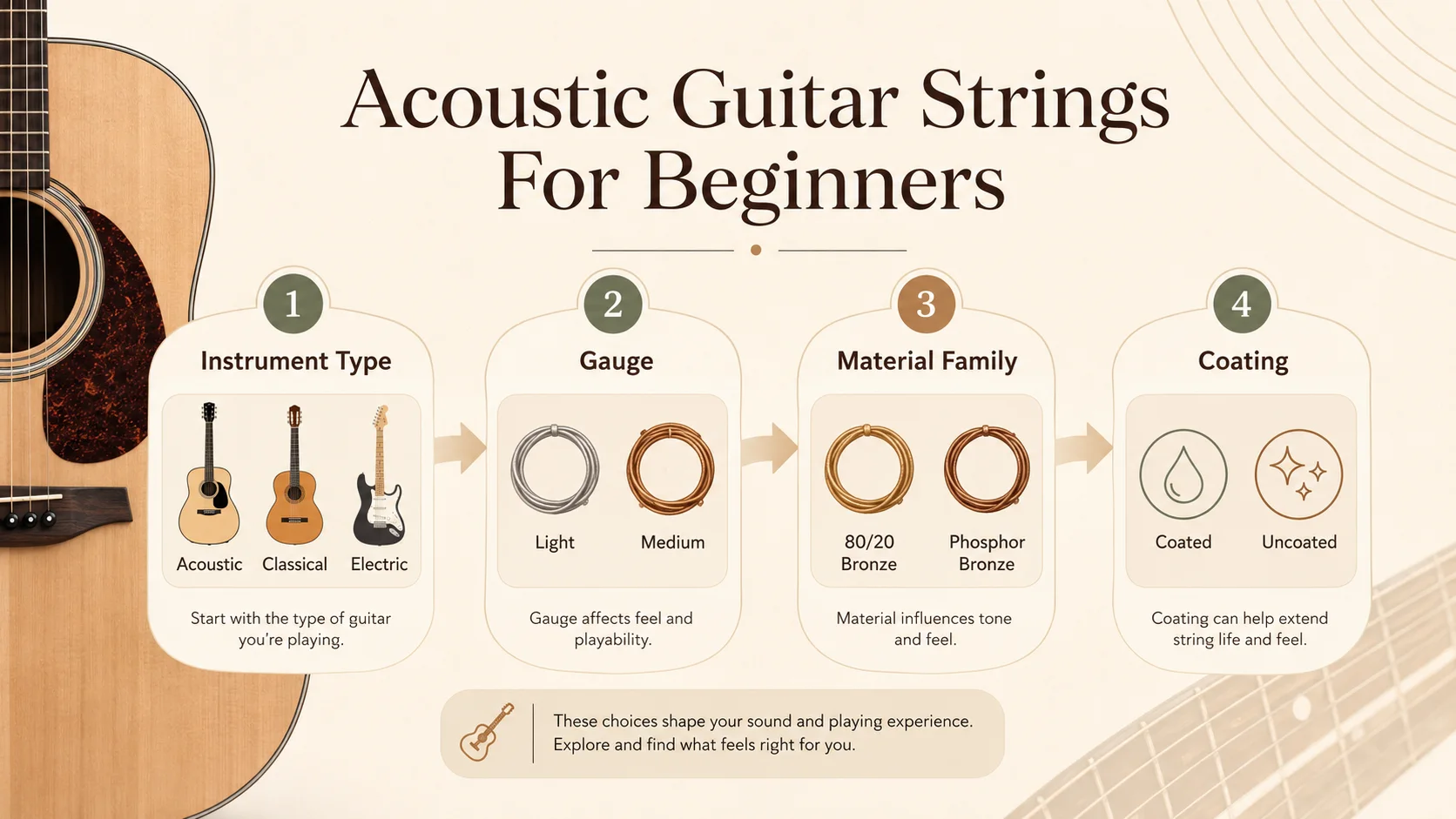
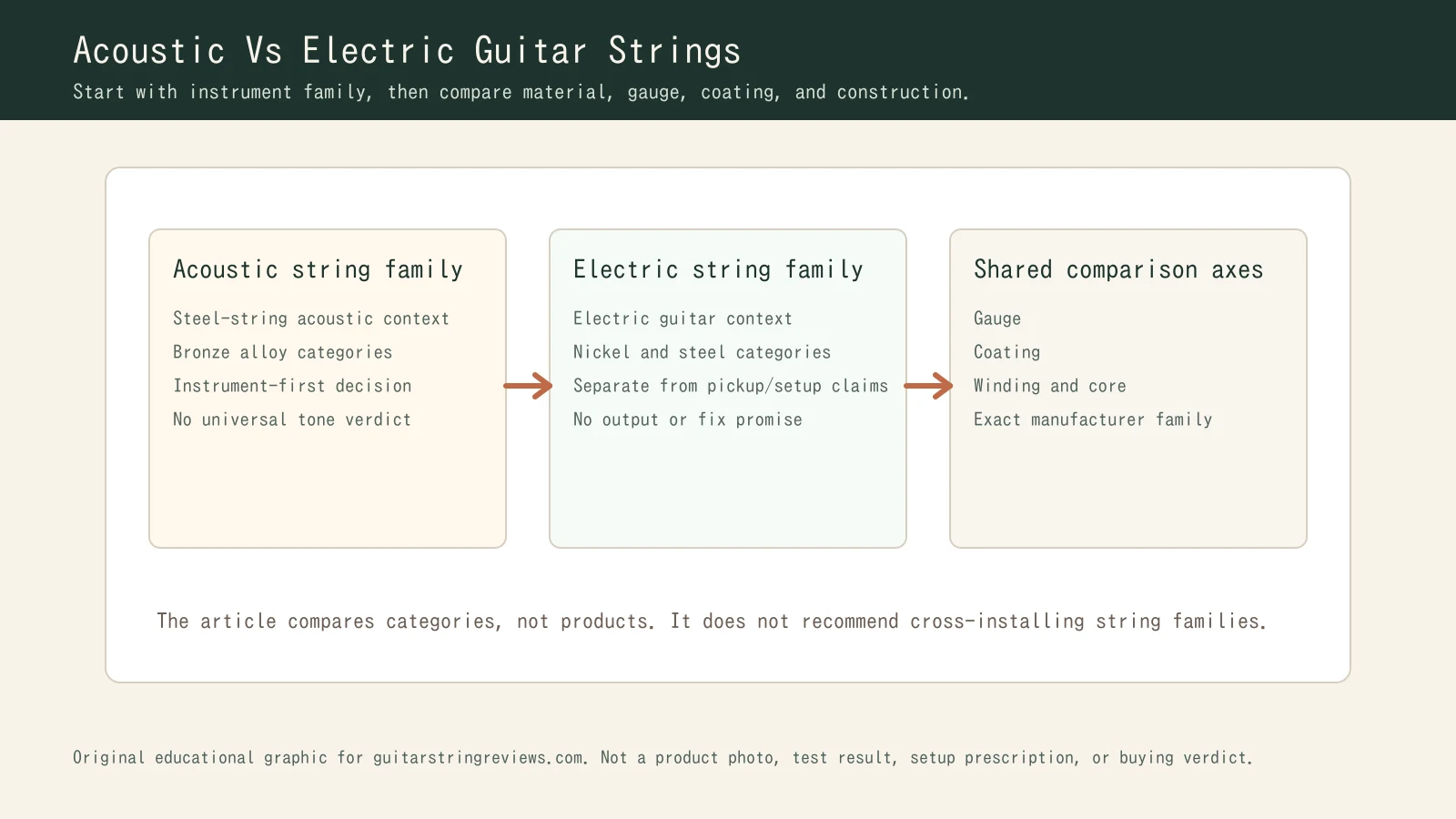
Acoustic and electric guitar strings are not just the same thing in different packages. They are different string families built around different instrument contexts. Start by matching the string family to the guitar type. Then compare material, gauge, coating, and construction inside that category.
That order keeps the decision practical. Acoustic steel-string sets often use acoustic alloy categories such as 80/20 bronze and phosphor bronze. Electric sets often use electric material categories such as nickel-plated steel and stainless steel. Those labels are not universal verdicts about tone, comfort, or quality. They are category signals that help you start in the right lane.

The Short Answer
Choose acoustic guitar strings for a steel-string acoustic guitar and electric guitar strings for an electric guitar. Then compare the details within the matching family.
For acoustic strings, the material conversation often starts with alloy categories such as 80/20 bronze and phosphor bronze. For electric strings, it often starts with nickel-plated steel and stainless steel. Gauge, coating, winding, and core construction are separate decisions from the instrument family itself.
This page is not a recommendation to experiment across instrument types. It is a beginner-facing map for understanding why the categories exist and how to compare them without blurring the lanes.
Why Acoustic And Electric Strings Are Different Categories
The words acoustic and electric matter on string packs and manufacturer tools. They tell you which instrument family the set is intended to serve before you get into narrower details such as gauge or coating.
That does not mean every acoustic set is the same or every electric set is the same. It means the comparison should happen in order:
- Identify the instrument family.
- Compare the material category.
- Compare gauge.
- Compare coating and construction.
- Check whether the exact set matches the guitar and playing context.
Skipping the first step can make the rest of the decision muddy. A light electric set and a light acoustic set may share the word light, but they are still built for different instrument-family contexts.
Acoustic Guitar String Basics
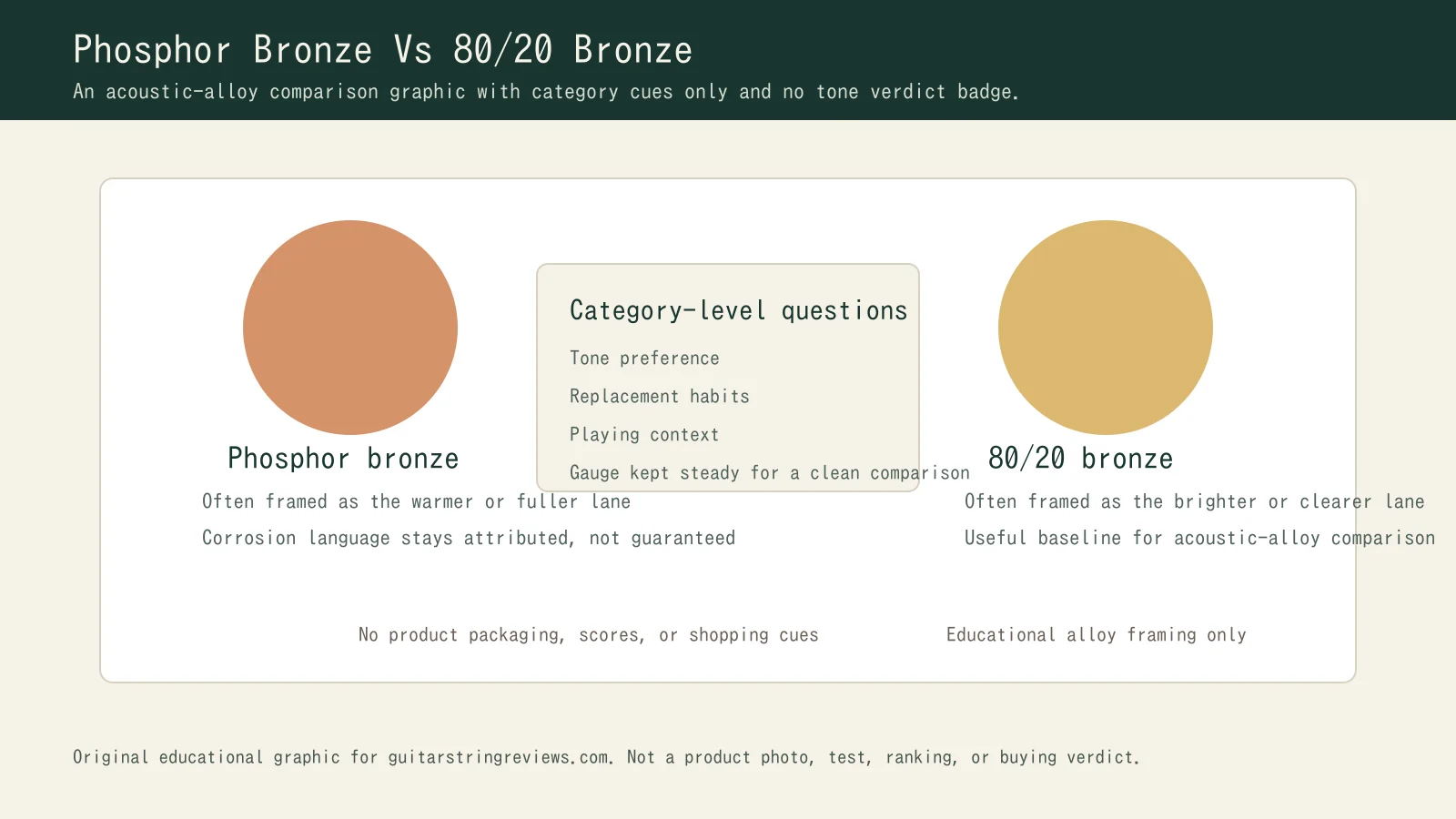
When players talk about acoustic steel-string sets, the material conversation often centers on bronze-family alloys. In manufacturer education and product sources, 80/20 bronze and phosphor bronze appear as common acoustic steel-string category examples.
Those material labels help you compare acoustic strings, but they should not be stretched into hard promises. If a source frames one alloy with brightness language or another with warmer language, treat that as manufacturer positioning and category context. It is not proof that every guitar, room, player, or recording will produce the same result.
For a deeper pairwise comparison, read Phosphor Bronze vs 80/20 Bronze Strings.
Electric Guitar String Basics
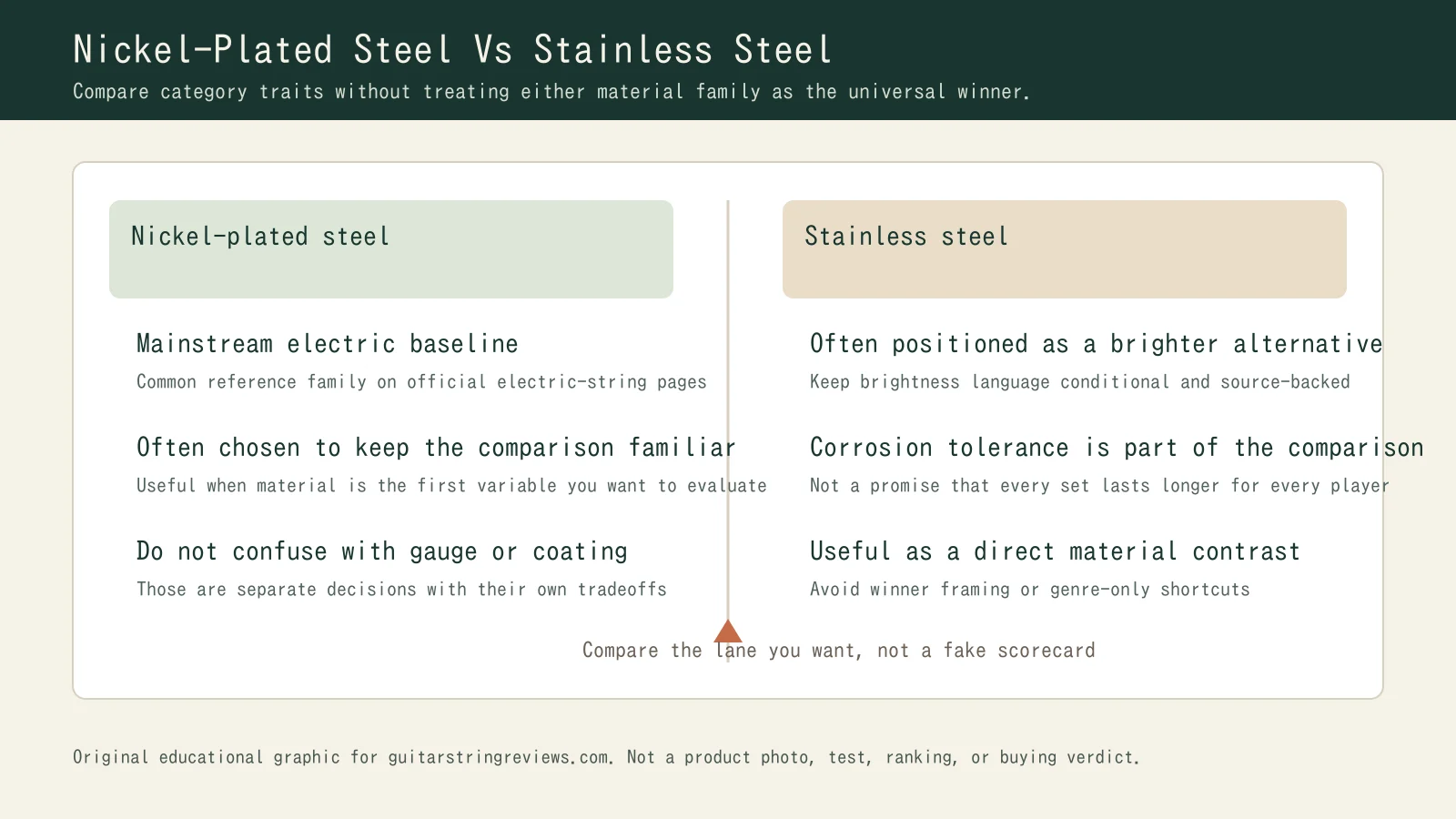
Electric guitar strings use a different material vocabulary. Manufacturer sources commonly present nickel-plated steel and stainless steel as electric-string material families. Those categories sit next to choices such as gauge, coating, winding style, and core construction.
Electric-string material should not be treated as a shortcut for pickup output, tuning stability, genre fit, or setup quality. A material family can give you a useful comparison lane, but it does not solve an instrument problem by itself.
For more detail on that material comparison, read Nickel vs Stainless Steel Guitar Strings.
The Main Variables After Instrument Type
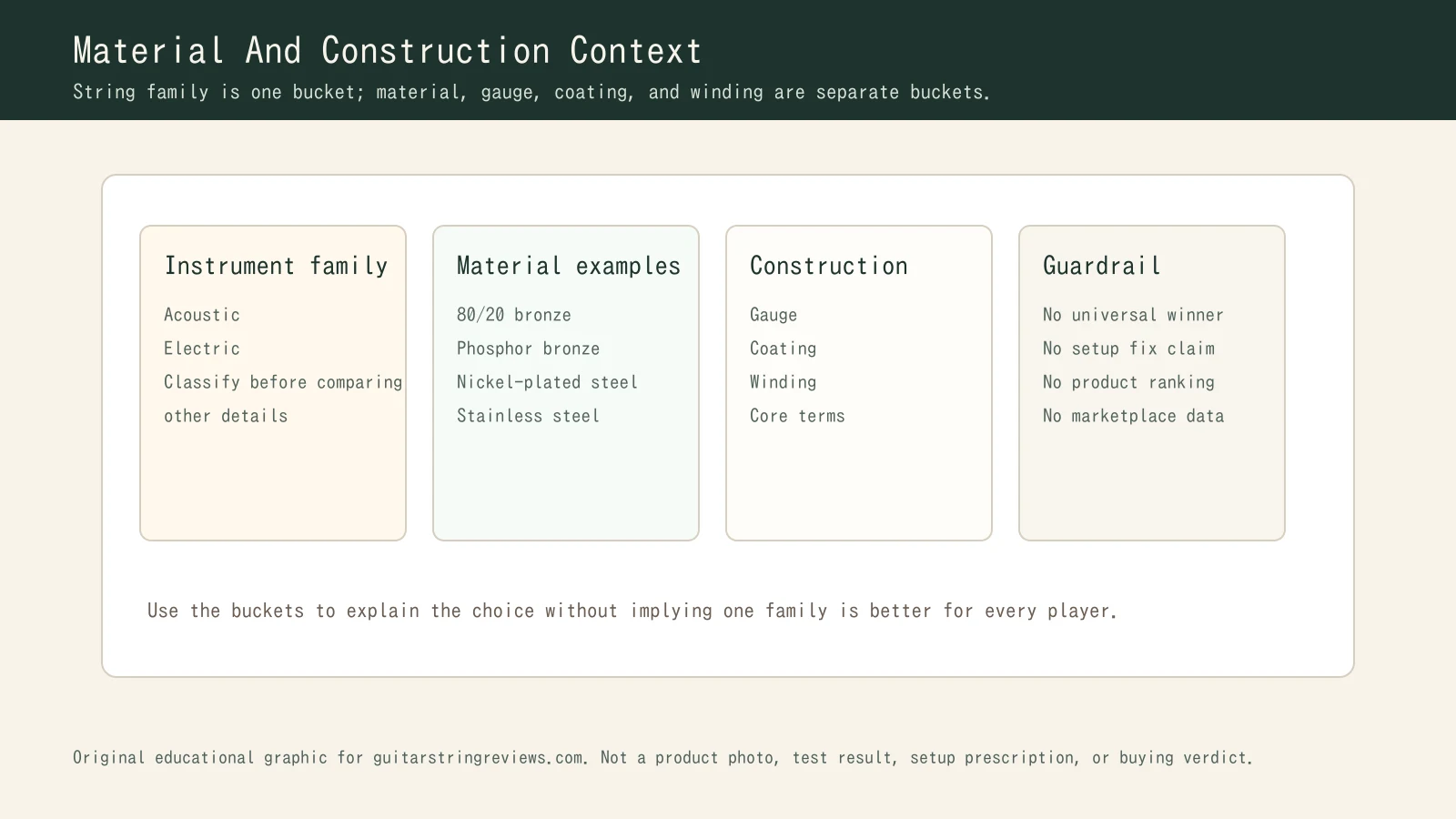
Once you are in the right string family, the next choices get easier to separate.
Material
Material tells you the broad category a string belongs to. On acoustic steel-string sets, that may mean comparing 80/20 bronze and phosphor bronze. On electric sets, that may mean comparing nickel-plated steel and stainless steel.
Material is one decision axis. It is not the whole decision.
Gauge
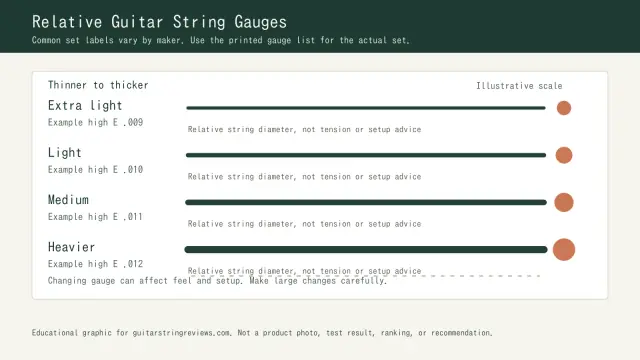
Gauge is string thickness. Manufacturer sources and previous site briefs use gauge as a separate comparison point from material and coating. A gauge change can affect the practical feel of a set, but this article does not turn gauge into setup advice.
For a full explanation, read Guitar String Gauge Guide.
Coating
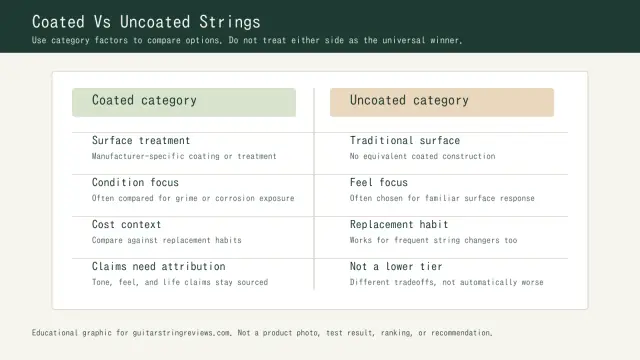
Coating describes whether a string uses a protective coating or treatment. It is separate from instrument family and base material, which is why you may see coated and uncoated options inside both acoustic and electric categories.
For more context, read Coated Vs Uncoated Guitar Strings.
Construction Terms
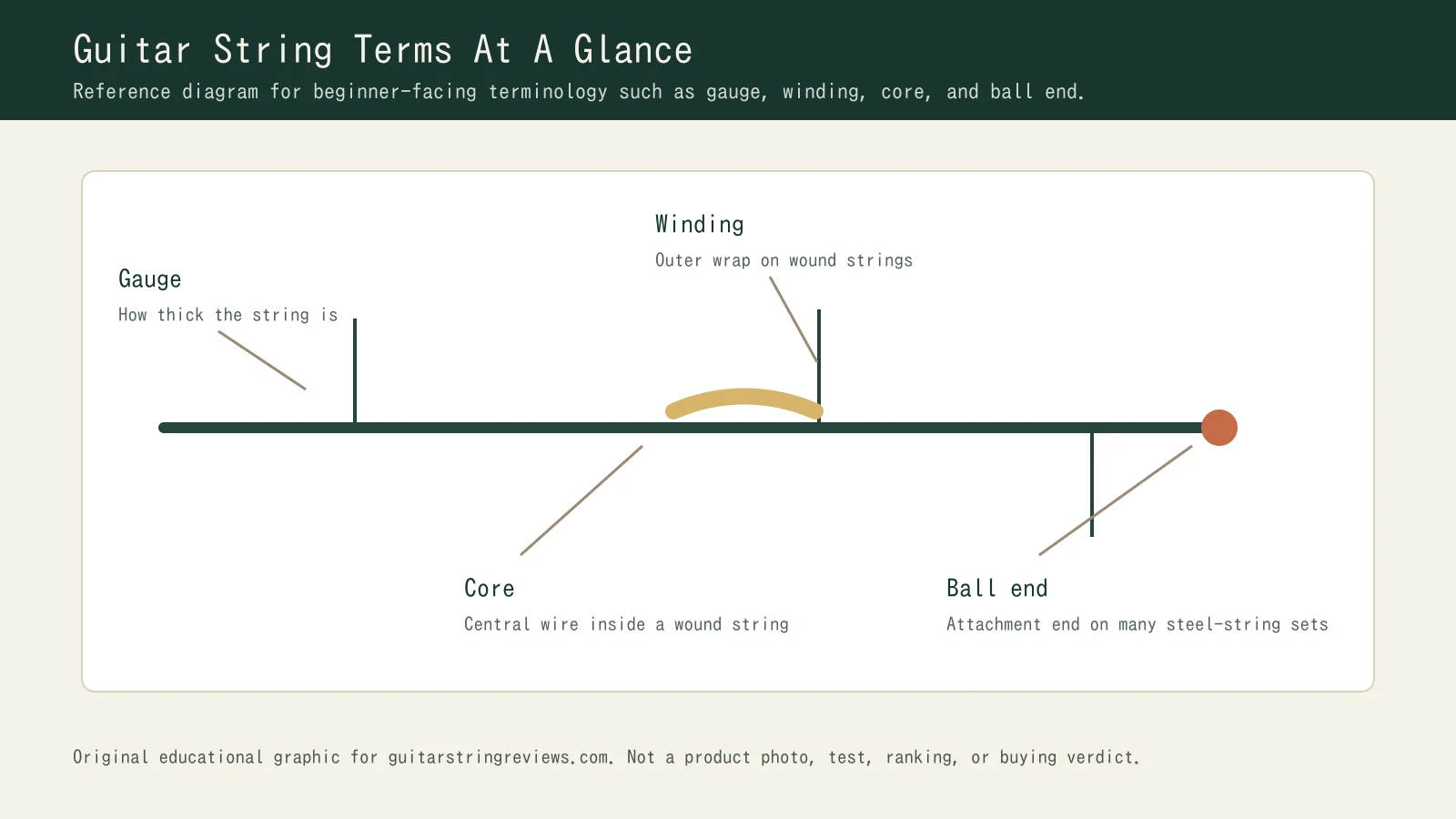
Terms such as roundwound, flatwound, core, winding, plain string, wound string, and ball end describe how strings are built. They are useful, but they do not replace the instrument-family decision.
If those terms are unfamiliar, use the Guitar Strings Glossary.
What Not To Conclude From This Comparison
This comparison should not be used to make claims the sources do not support.
- Acoustic strings are not automatically better, warmer, louder, or harder for every player.
- Electric strings are not a fix for tone, output, tuning, comfort, or setup problems.
- A material label is not a product ranking.
- A string family label is not an invitation to ignore the instrument type.
The useful takeaway is narrower: start with the right family, then compare the variables inside that family.
A Practical Selection Path
Use this order when you are choosing strings:
- Confirm whether the guitar is a steel-string acoustic or an electric guitar.
- Choose the matching string family.
- Compare material categories within that family.
- Compare gauge after you know the family and material lane.
- Decide whether coating or construction details matter for your use case.
- Use brand pages or product-family pages for exact details.
That path keeps the choice grounded in category fit rather than turning it into an unsupported buying verdict.
Related Guides
- Guitar String Gauge Guide
- Guitar Strings Glossary
- Phosphor Bronze vs 80/20 Bronze Strings
- Nickel vs Stainless Steel Guitar Strings
- Coated Vs Uncoated Guitar Strings
Sources Used
Sources consulted for instrument-family and material context: D’Addario String Finder, Fender electric guitar string guide, Fender beginner FAQ, D’Addario acoustic alloy guide, Fender 80/20 bronze acoustic strings, Fender phosphor bronze acoustic strings, and the Elixir Strings product catalog. This guide keeps the category language informational rather than turning it into product rankings.