If your current strings feel too stiff, too bright, too dull, or too quick to wear out, the next set should solve that specific problem. The best electric guitar strings are not one universal winner. They are the family that matches the sound, feel, and upkeep you actually want from the guitar.
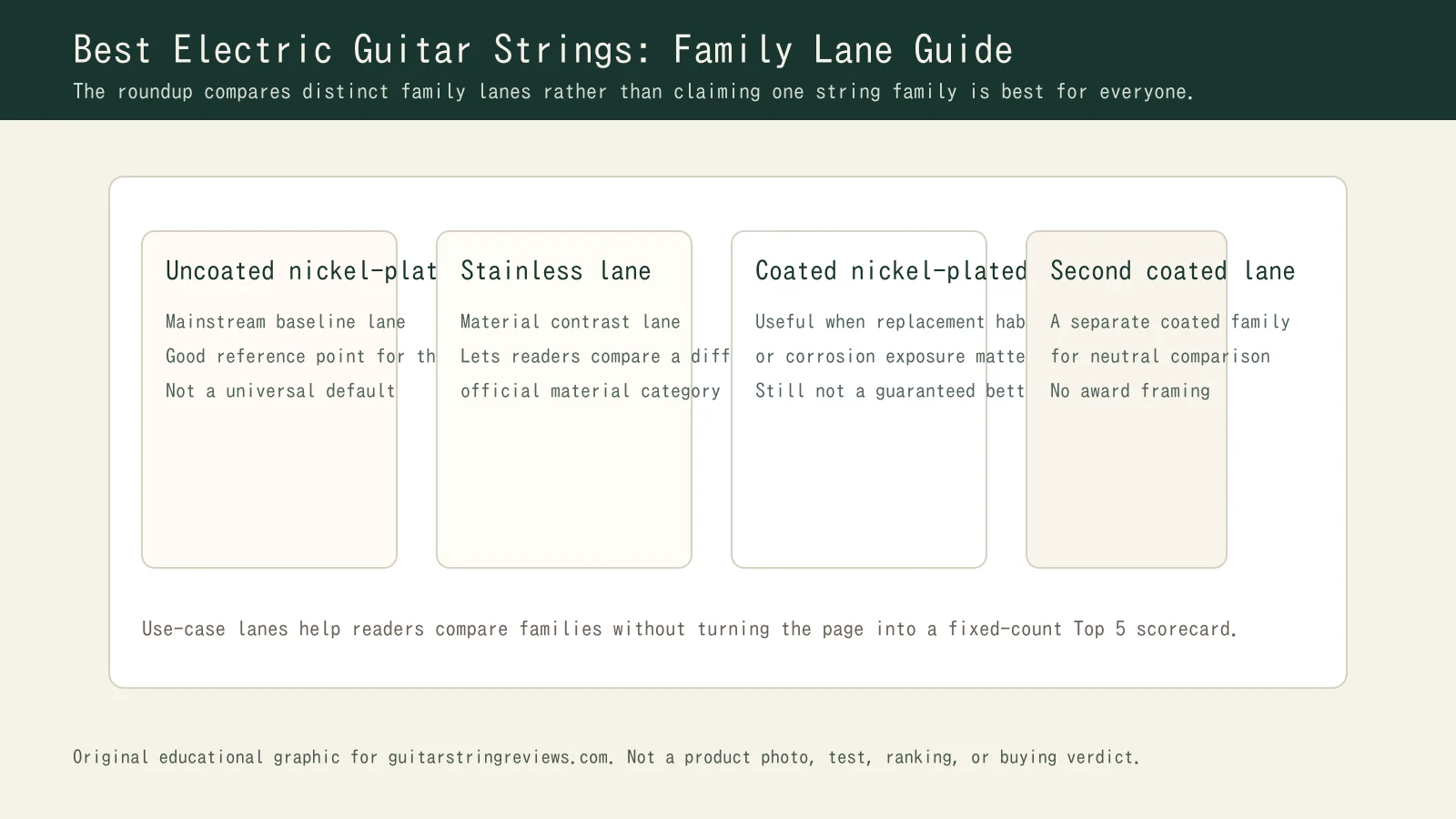
This page keeps the comparison simple: uncoated nickel-plated steel, stainless steel, and coated nickel-plated options. The picks below are based on current product-family information from the brands, not live prices, star ratings, review counts, or bestseller lists.
Before you choose a product family, it helps to understand two adjacent decisions:
What You Are Actually Choosing Between
Each option below has:
- a current brand page or catalog source
- clear electric-guitar family identity
- standard six-string availability
- enough material or construction detail to explain why a player might choose it
The goal is to compare stable product families, not to chase temporary sale prices or unsupported performance claims.
Quick Comparison
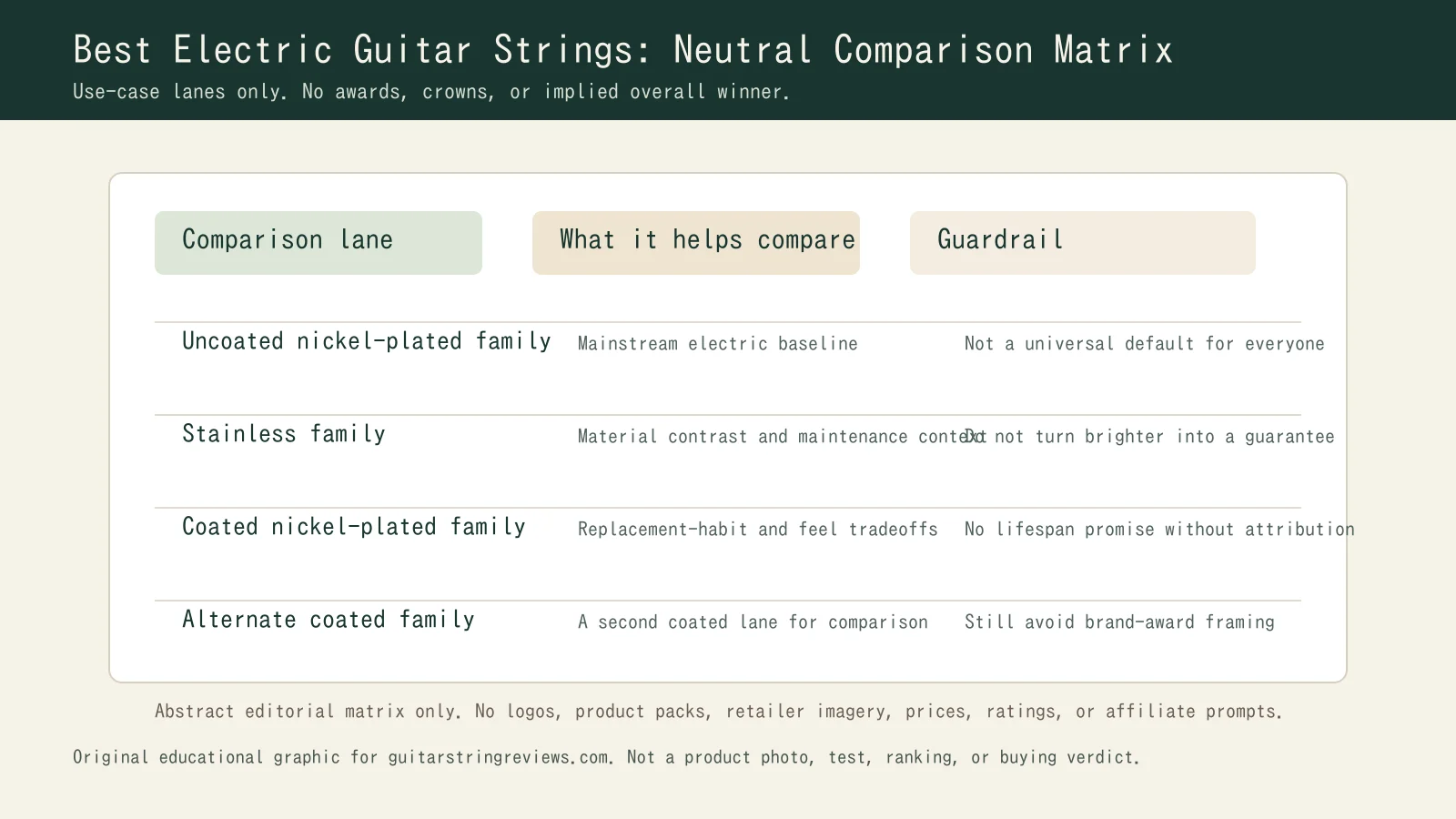
This table uses neutral comparison categories, not editorial awards. Each row marks out a different type of electric string so readers can compare material and coating choices without treating any one set as a universal winner.
| String type | String family | Material/coating snapshot | Why a player might look at it | What to watch |
|---|---|---|---|---|
| Mainstream uncoated nickel-plated reference | Ernie Ball Slinky Nickel Wound | Nickel-plated steel, uncoated | Clear mainstream electric family with broad gauge availability and straightforward specs | If you specifically want coated construction or stainless positioning, another family may fit better |
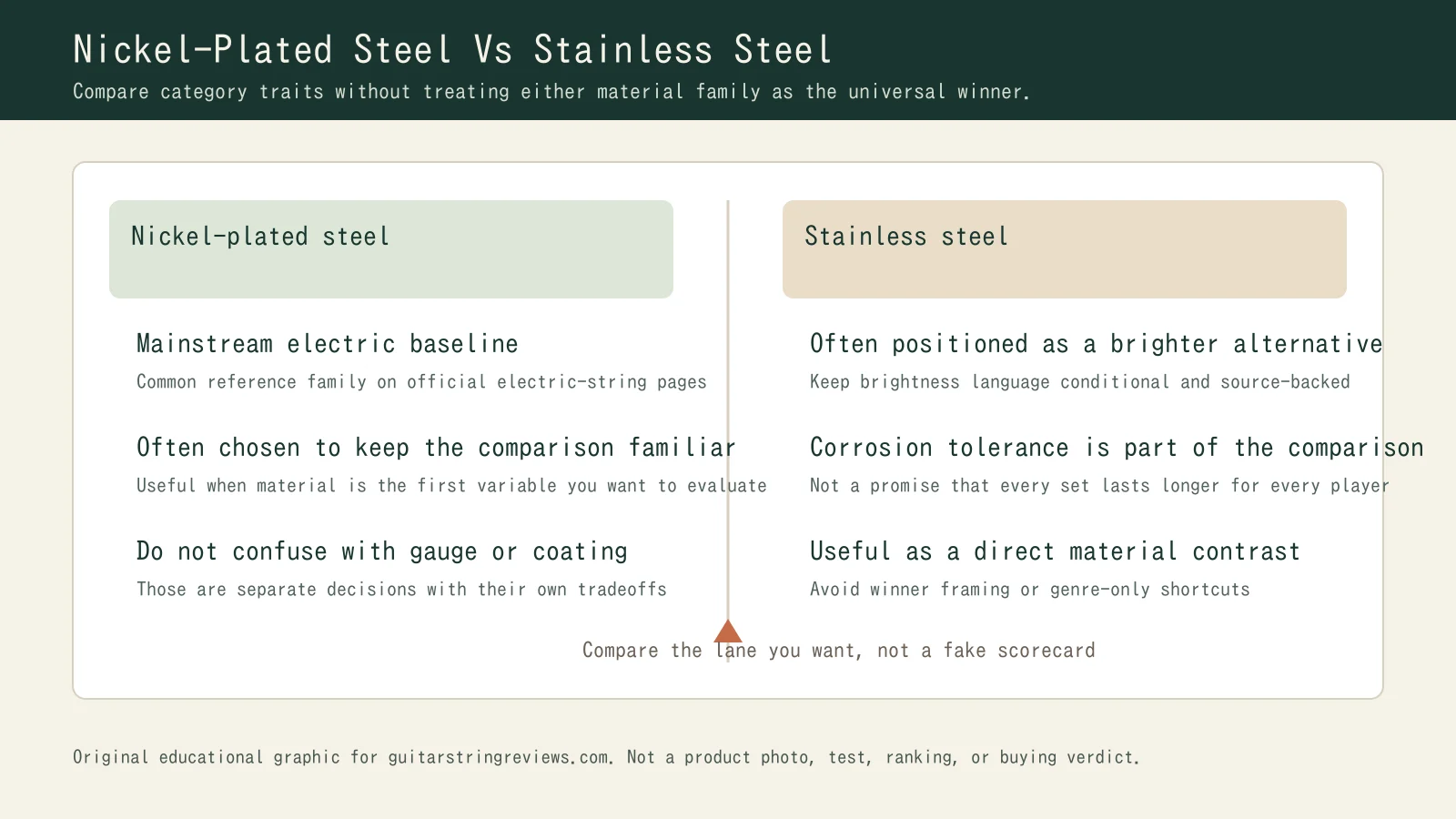
| Stainless steel option | Ernie Ball Slinky Stainless Steel | Stainless steel, uncoated | Direct stainless alternative with explicit official material framing | Brightness and longevity language should stay conditional rather than treated as a universal outcome |
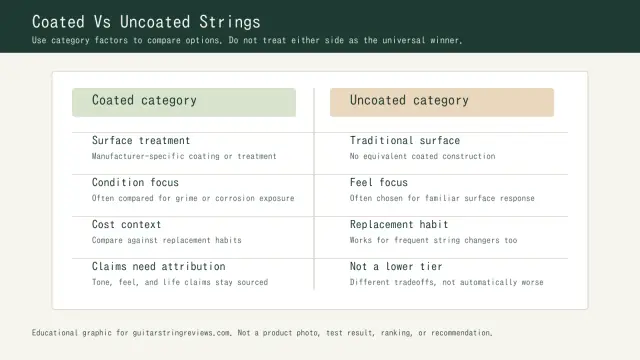
| Coated nickel-plated option | D’Addario XS Nickel Electric Guitar Strings | Nickel-plated steel with XS coating | Coated mainstream family that directly addresses the coated category in a familiar electric format | Check the exact gauge before buying |
| Fender mainstream nickel-plated option | Fender Super 250’s Nickel-Plated Steel | Nickel-plated steel, uncoated | Broad-market Fender family with clear gauge range and family identity | If you want coated strings or stainless material, this is not the right fit |
| Second coated option | Elixir OPTIWEB Electric Nickel Plated Steel | Nickel-plated steel with OPTIWEB coating | Major coated electric family with current catalog support | Compare the exact coating family and gauge you want |
Mainstream Uncoated Nickel-Plated Reference: Ernie Ball Slinky Nickel Wound
Ernie Ball Slinky Nickel Wound works as the central uncoated nickel-plated reference because it is a broad-market electric family with clear material identity and standard six-string gauge variants.
Why it belongs in this comparison:
- nickel-plated steel is a mainstream electric-string baseline
- the family is easy to compare without leaning on retailer rankings
- it works well as the center reference point for the rest of the roundup
Who this may suit: players who want a familiar uncoated nickel-plated-steel starting point before branching into stainless or coated families.
Stainless Steel Option: Ernie Ball Slinky Stainless Steel
Ernie Ball Slinky Stainless Steel earns its place here because it gives readers a clear stainless-steel contrast against a mainstream nickel-plated family.
Why it belongs in this comparison:
- stainless steel is the defining material distinction
- the official family page makes the category difference easy to explain
- it gives the roundup a non-coated alternative for players who want a different material direction
Who this may suit: players who want to compare stainless against a familiar nickel-plated baseline instead of swapping brands inside the same material class.
Coated Nickel-Plated Option: D’Addario XS Nickel Electric Guitar Strings
D’Addario XS Nickel Electric Guitar Strings belongs here because it is a coated mainstream electric family. That lets the page include a coated option without turning coating into a universal durability promise.
Why it belongs in this comparison:
- clear electric-family identity
- coated construction is part of the product-family identity
- useful for readers deciding whether coated construction belongs in their shortlist
Who this may suit: players whose buying decision includes corrosion exposure or replacement habits and who still want a familiar nickel-plated electric category.
Fender-Branded Mainstream Nickel-Plated Option: Fender Super 250’s
Fender Super 250’s belongs in this comparison because it is a straightforward uncoated nickel-plated-steel family with a clear official product page and visible gauge coverage. It strengthens the roundup by giving the reader another defensible mainstream nickel-plated option without forcing an unsupported value or popularity claim.
Why it belongs in this comparison:
- official source clearly identifies the family and gauge options
- fits the roundup without relying on retailer rankings
- offers a clean Fender entry in the mainstream uncoated category
Who this may suit: players who want a direct Fender-branded nickel-plated option in the same broad class as the other mainstream uncoated sets.
Alternate Coated Family: Elixir OPTIWEB Electric Nickel Plated Steel
Elixir OPTIWEB belongs in this comparison because it is a current coated electric nickel-plated family. It gives the page a second coated reference point without turning the article into a coated-only comparison.
Why it belongs in this comparison:
- major coated electric family with current catalog support
- useful contrast against uncoated mainstream families
- helps the roundup cover players who want coated options without collapsing everything into one material story
Who this may suit: players who know they want a coated electric family and want a different coated option from D’Addario XS.
How To Choose Between These Families
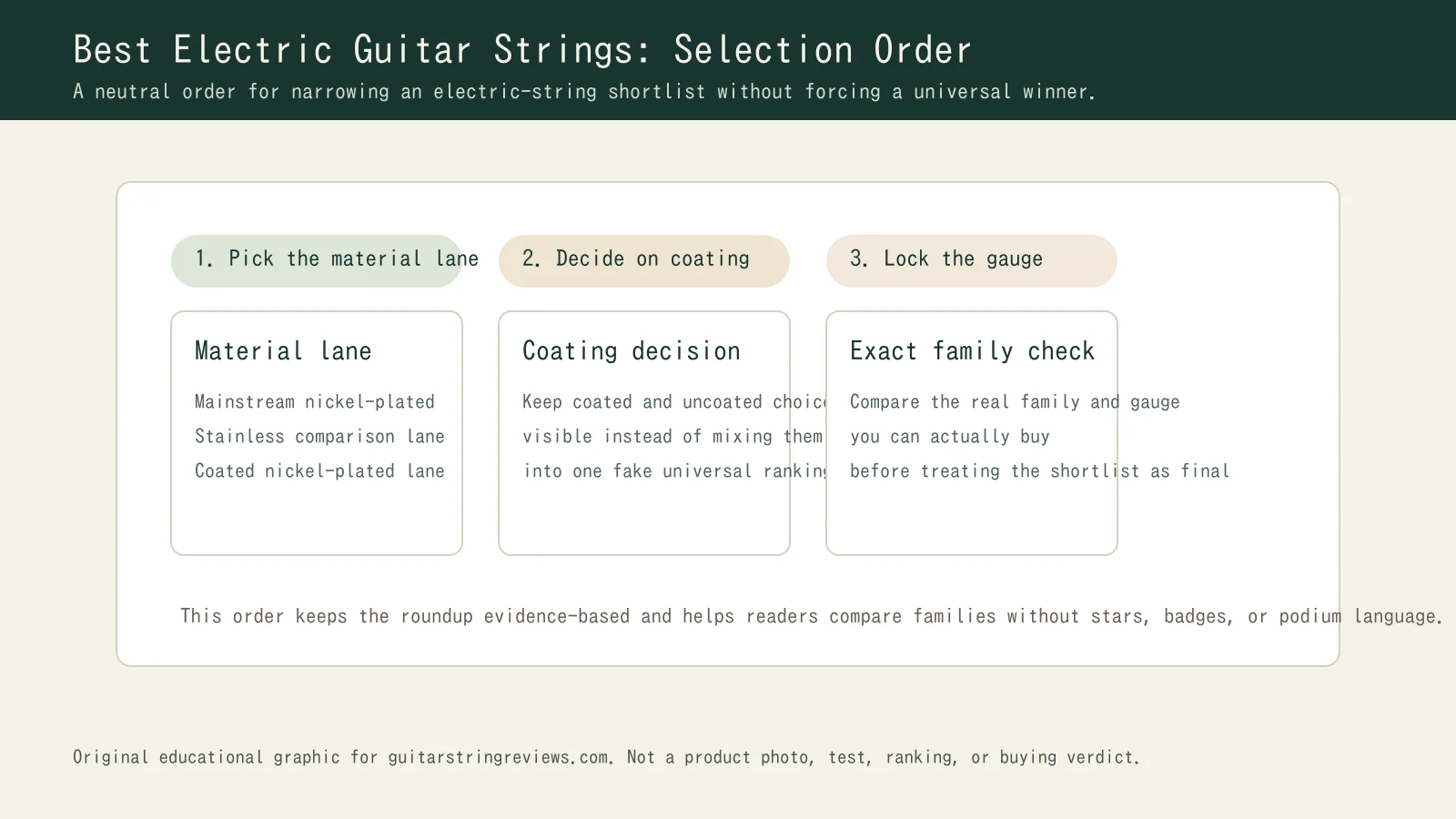
If you are not sure which option fits you, use this order:
- Choose the material family first: mainstream nickel-plated steel, stainless steel, or coated nickel-plated steel.
- Decide whether corrosion tolerance is part of the buying problem.
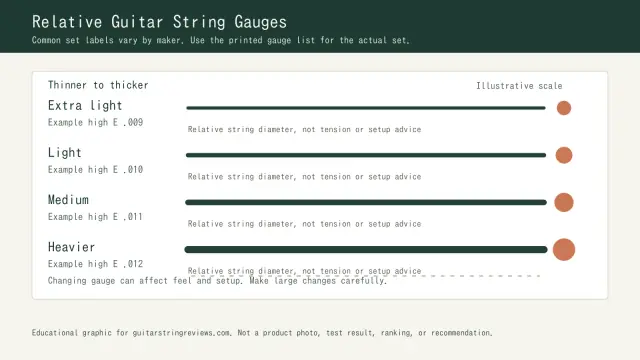
- Choose your gauge separately instead of assuming the material page solves that decision.
- Compare the exact family and gauge combination you can actually buy, not just the family name alone.
- Avoid switching material, coating, and gauge all at once unless you are comfortable evaluating multiple changes at the same time.
Common Buying Mistakes To Avoid
- Treating “best” as if there is one universal winner for every guitar.
- Mixing gauge decisions into a material or coating comparison without noticing.
- Assuming coated automatically means better value or longer life for every player.
- Letting retailer rankings or temporary marketplace copy replace product-family details.
- Choosing a family before checking whether the exact gauge and six-string set you need is actually the one being compared.
Related Guides
Use the rest of the string cluster before you make the final purchase call:
- Nickel vs Stainless Steel Guitar Strings
- Guitar String Gauge Guide
- How Often Should You Change Guitar Strings?
- Coated Vs Uncoated Guitar Strings
Sources Used
Sources consulted for product-family details: D’Addario XS electric guitar strings, Ernie Ball electric guitar strings, Ernie Ball Slinky Nickel Wound, Ernie Ball Slinky Stainless Steel, Fender Super 250’s, and the Elixir Strings product catalog. Product-family recommendations are based on stable specs and category fit rather than live prices, retailer reviews, bestseller labels, star ratings, or stock status.