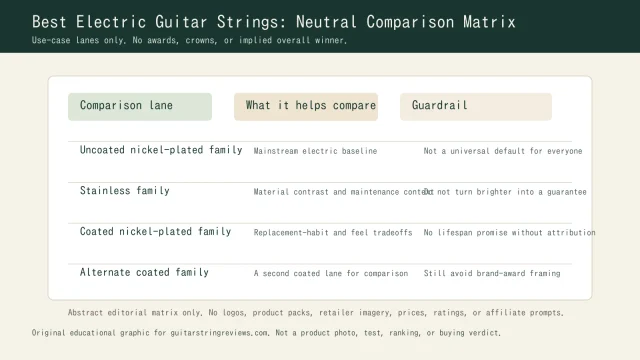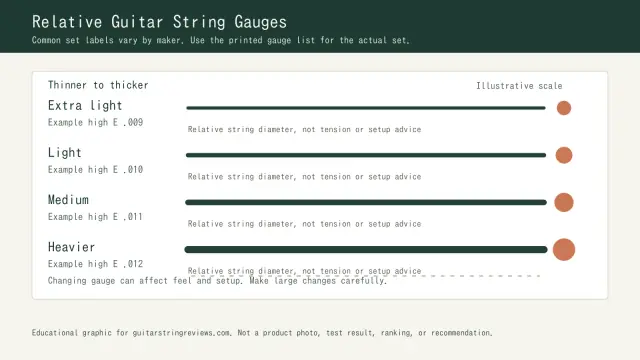
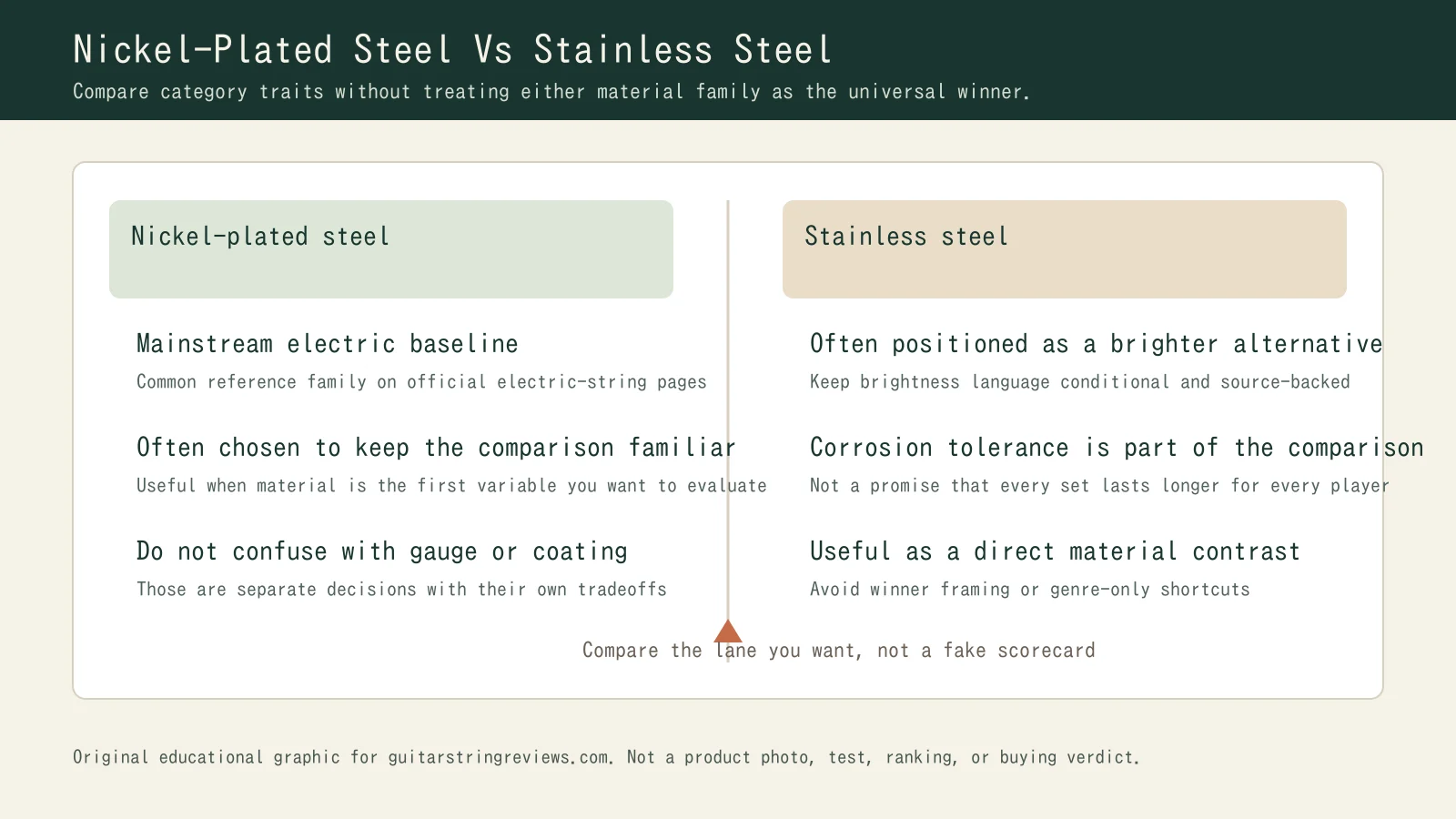
Nickel-plated steel and stainless steel are two common electric-guitar string material families. The difference is not about one material being right for everyone. It is about what kind of response, feel, and maintenance tradeoffs make the most sense for your guitar and the way you play.
In plain terms, nickel-plated steel is a common mainstream electric-string category, while stainless steel is often positioned by manufacturers as a brighter and more corrosion-tolerant alternative. That does not make stainless steel an automatic upgrade, and it does not make nickel-plated steel outdated. The better fit depends on what you want from the strings on your own instrument.
What This Comparison Actually Covers
This article is only about electric-string material families. It does not answer every part of the buying decision.
- Material tells you what wrap family the string belongs to.
- Gauge tells you how thick the string set is.
- Coating tells you whether the string uses a protective coating or treatment.
- Setup context still matters if you are changing more than one variable at a time.
If you want help with those adjacent choices, read Guitar String Gauge Guide and Coated Vs Uncoated Guitar Strings.
What Nickel-Plated Steel Strings Are
Nickel-plated steel is a standard electric-guitar string family on current manufacturer pages from brands such as Ernie Ball and Fender. In practical terms, that means it is not a niche material choice. It is one of the baseline categories many players compare against when they shop for electric strings.
That matters because nickel-plated steel often becomes the reference point for the rest of the decision. If you already know you are comfortable with a mainstream nickel-plated-steel set, the next question is usually whether you want to stay in that category or move to something positioned differently.
What Stainless Steel Strings Are
Stainless steel is another established electric-string family, not a novelty material. Manufacturer pages commonly position it with language around brighter response and better resistance to corrosion compared with nickel-plated alternatives.
Those descriptions are useful as buying context, but they should stay in that lane. They are manufacturer positioning statements, not a measured promise that every stainless set will behave the same way on every guitar.
Main Decision Factors
The nickel vs stainless question usually comes down to a small set of practical factors.
1. Sound Preference
Manufacturer pages commonly frame stainless steel as the brighter option. Nickel-plated steel is more often treated as the familiar mainstream baseline for electric strings.
That does not mean stainless is always the right move if you want more cut, or that nickel is always the right move if you want a more familiar feel. Pickup voicing, amp settings, playing attack, and the guitar itself all shape the result.
2. Feel Preference
Players often describe string materials in feel terms, but feel is not a clean universal rule. The exact family, gauge, winding, setup, and even how worn the strings are can change the experience. A useful way to approach the choice is to ask whether you want to stay close to a mainstream nickel-plated baseline or try a material category that manufacturers position differently.
3. Corrosion Tolerance And Maintenance
Stainless steel is often positioned as more resistant to corrosion-related wear than nickel-plated steel. That can matter if your strings tend to show condition changes quickly. It is still not a guarantee about lifespan for every player, and it should not be turned into a promise that one material will solve every maintenance problem.
If replacement timing is part of the question, read How Often Should You Change Guitar Strings?.
4. Your Current Baseline
If you already use nickel-plated steel and like the way your guitar responds, you may not need to switch materials just because stainless exists. If you want to experiment, treat it as a controlled change rather than changing material, gauge, and coating all at once.
When Nickel-Plated Steel Often Makes Sense
Nickel-plated steel is a sensible category to keep on the table when:
- you want a mainstream electric-string baseline to compare against
- you already like the feel and response of common nickel-plated families
- you want to keep the material decision simple before changing gauge or coating
- you are shopping across multiple major brands and want broadly comparable categories
This is not a verdict that nickel-plated steel is better. It is simply the more familiar reference category on many official electric-string family pages.
When Stainless Steel May Be Worth Considering
Stainless steel is worth comparing when:
- you want to explore a material category that manufacturers position as brighter
- corrosion tolerance is part of your buying decision
- you want a direct alternative to the nickel-plated families you already know
Again, that is not the same as saying stainless is the better material for every player or every electric guitar.
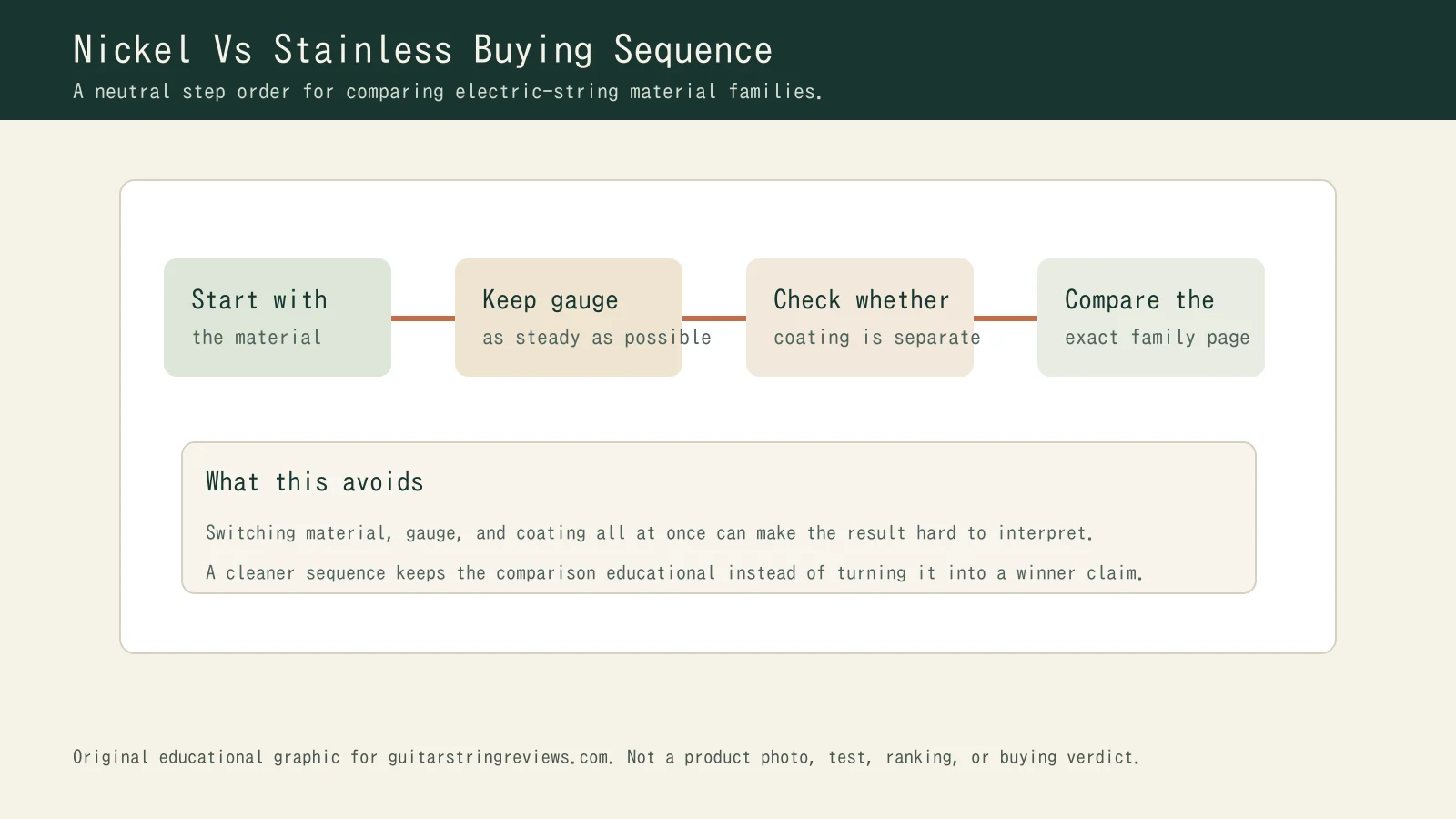
A Practical Way To Choose
Use this sequence if you are deciding between the two:
- Start with the material family currently on your guitar, if you know it.
- Decide whether the change you want is really about material, or whether it is actually about gauge, coating, or setup.
- Compare brand family pages rather than retailer blurbs or review summaries.
- If you try a different material, keep the gauge class as close as possible so the comparison stays clear.
- Reevaluate after normal playing rather than assuming the material category alone explains every difference you notice.
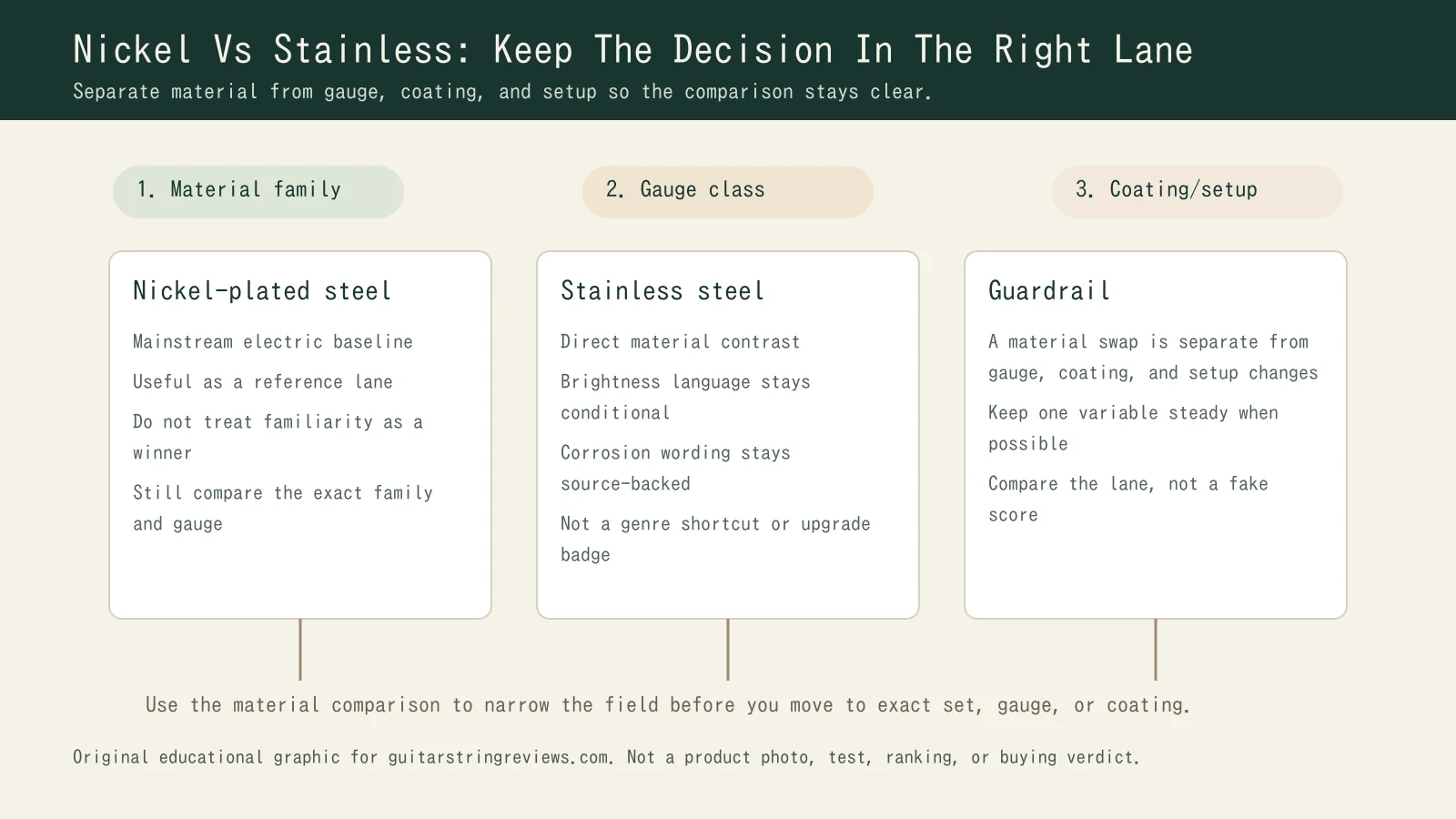
Nickel, Stainless, Gauge, And Coating Are Not The Same Decision
It is easy to blur these choices together when shopping, but they solve different problems.
- Material comparison helps you choose between electric-string families such as nickel-plated steel and stainless steel.
- Gauge comparison helps you choose string thickness.
- Coating comparison helps you decide whether a protective coating or treatment matters to you.
For product-level next steps after you understand the material tradeoff, see Best Electric Guitar Strings.
Sources Used
Sources consulted for material and product-family context: Ernie Ball electric guitar strings, Ernie Ball Slinky Nickel Wound, Ernie Ball Slinky Stainless Steel, Fender beginner FAQ, Fender electric guitar string guide, and Fender Super 250’s. Brightness, feel, and corrosion language is treated as brand positioning or conditional context rather than a guaranteed result for every player.