This glossary explains common guitar-string terms in plain language. Use it when you run into a word on a string pack, manufacturer page, or buying guide and want a quick definition before you keep reading.
This is a reference page, not a buying guide. Definitions stay short, beginner-readable, and tied to common terminology used by string brands.
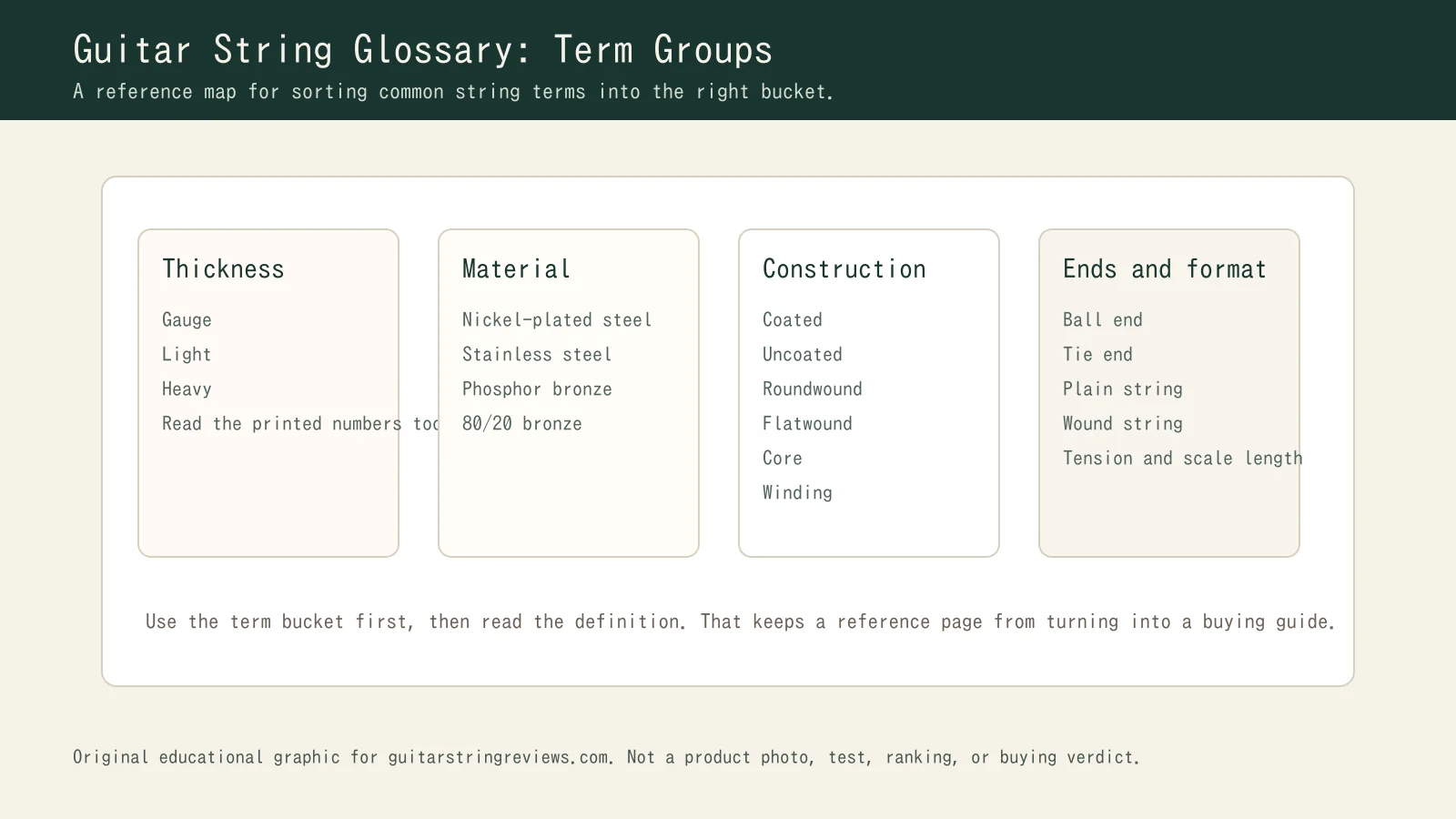
Gauge
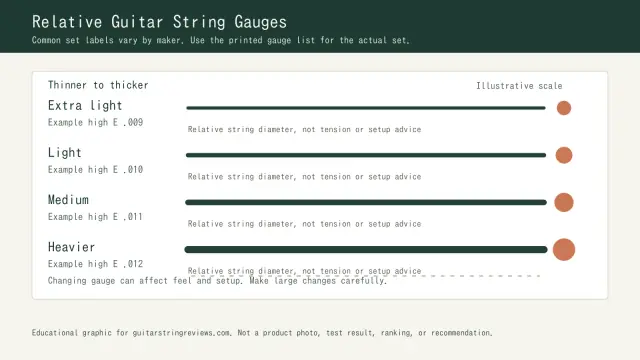
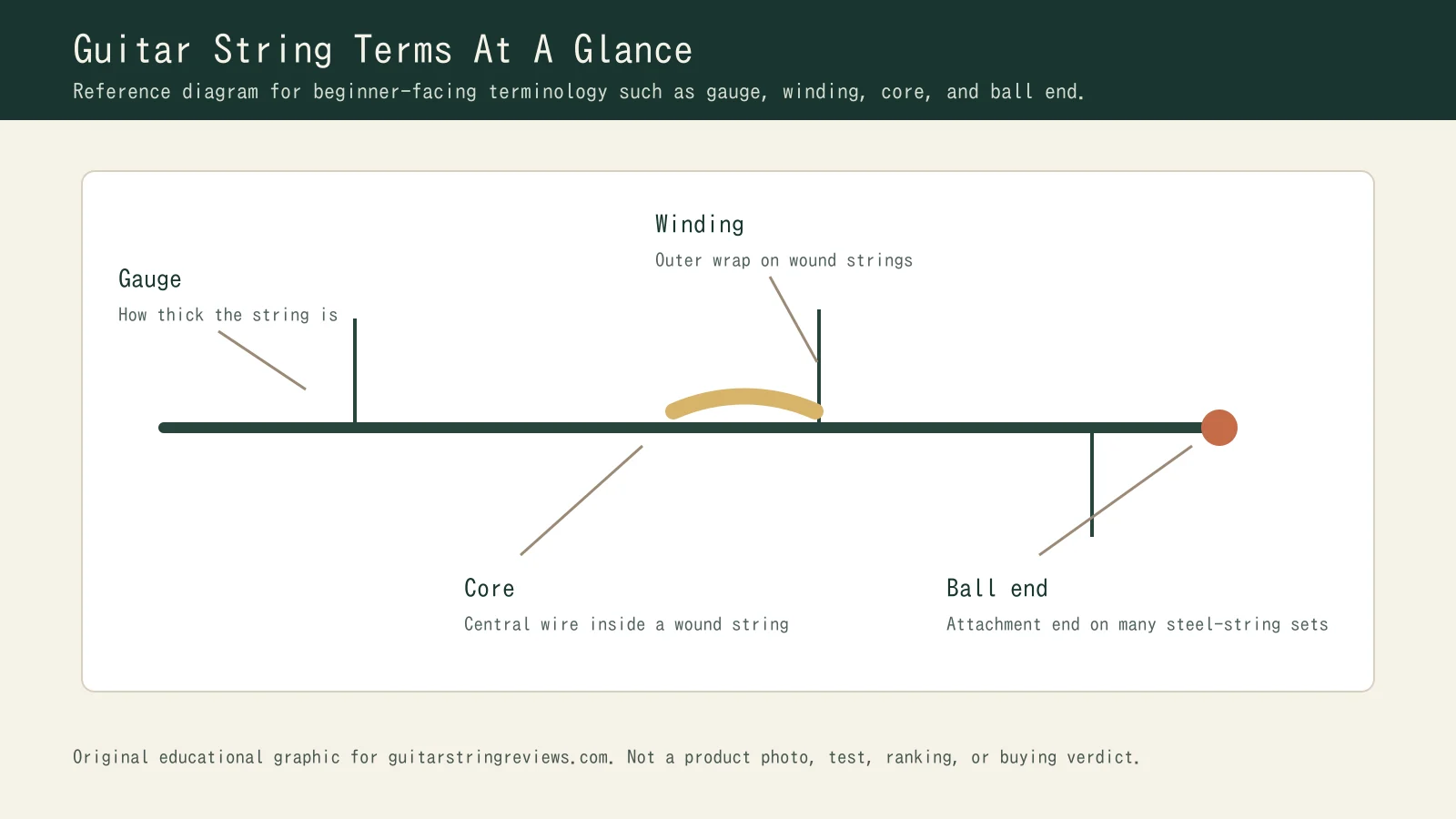
Gauge is string thickness. On guitar-string packaging and manufacturer guides, gauge is commonly shown in thousandths of an inch, such as .009, .010, or .012. That is why a set may be referred to as 9s, 10s, or 12s.
Why it matters: gauge affects how a set is labeled and compared. For a deeper explanation, read Guitar String Gauge Guide.
Light And Heavy
Light and heavy are category labels used for string sets. The exact gauges behind those labels can vary by manufacturer and by instrument family, so the printed gauge numbers matter more than the adjective by itself.
Why it matters: two sets described as light are not always identical.
Nickel-Plated Steel
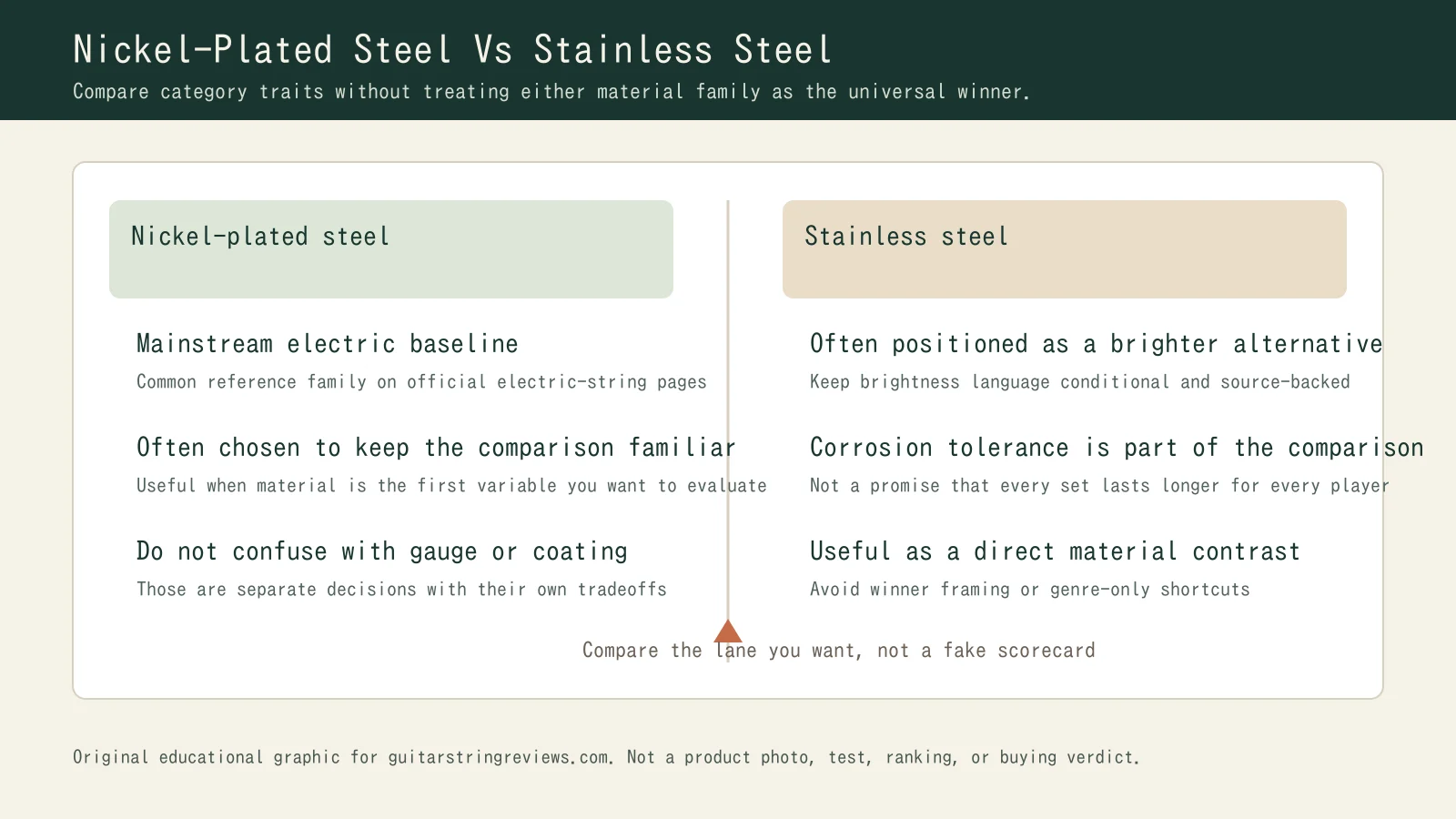
Nickel-plated steel is a common electric-guitar string material family on official manufacturer pages. In practical terms, it is one of the mainstream electric-string baselines players compare against.
Why it matters: this is one of the core material categories in Nickel Vs Stainless Steel Guitar Strings.
Stainless Steel
Stainless steel is another electric-guitar string material family. Manufacturer pages commonly position it differently from nickel-plated steel, especially in brightness and corrosion-related language.
Why it matters: it gives electric players another material category to compare without changing the rest of the buying question.
Phosphor Bronze
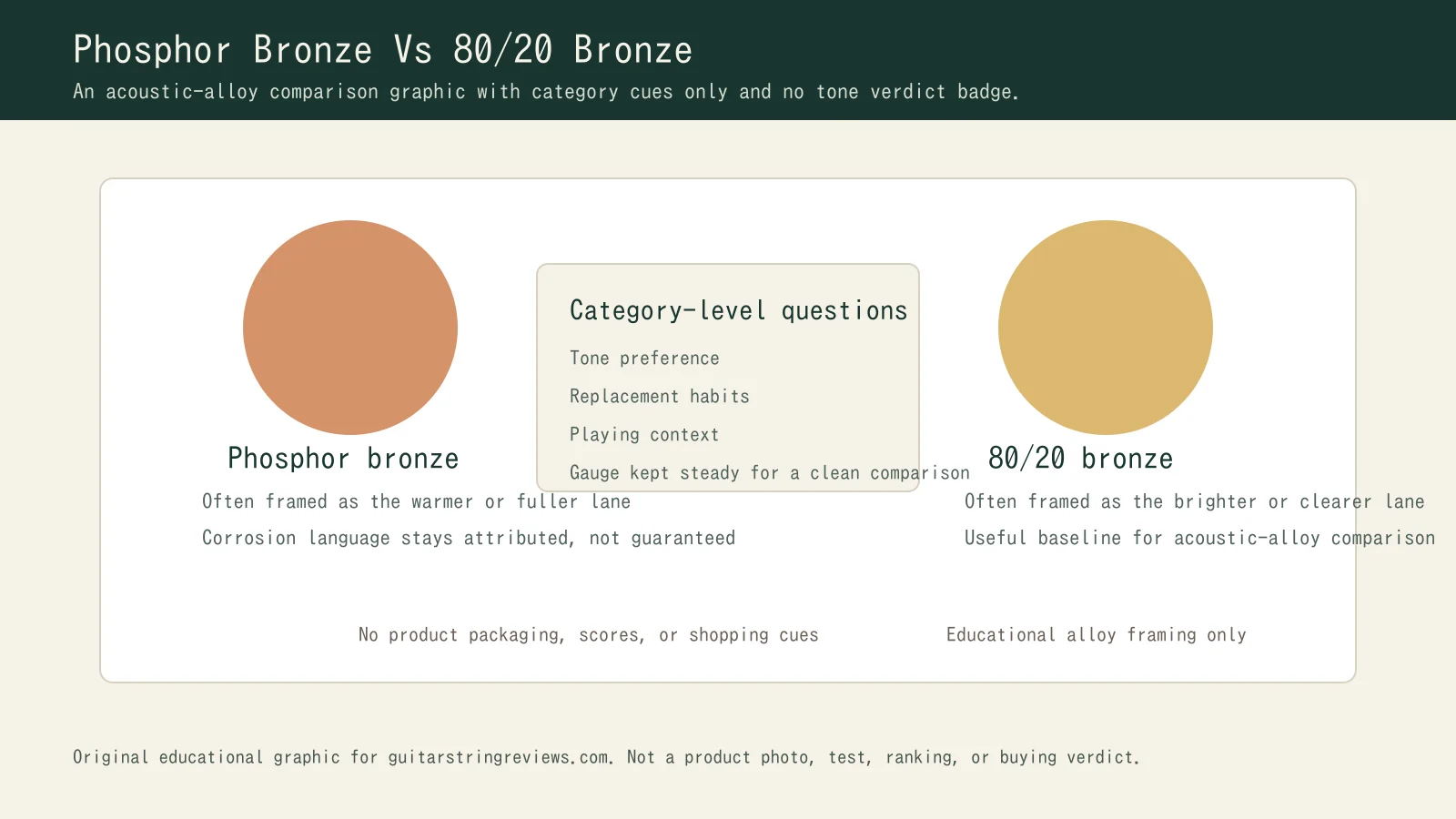
Phosphor bronze is a common acoustic-guitar string alloy category. Manufacturer education and product pages often frame it differently from 80/20 bronze.
Why it matters: it is one of the main acoustic categories in Phosphor Bronze Vs 80/20 Bronze Strings.
80/20 Bronze
80/20 bronze is another acoustic-guitar string alloy category. Official sources commonly present it as a separate acoustic material choice from phosphor bronze.
Why it matters: it helps acoustic players compare alloy categories rather than treating all bronze strings as the same thing.
Coated
Coated describes a string category that uses a protective coating or treatment. The exact construction depends on the manufacturer and product family.
Why it matters: coating is a separate decision from gauge and base material. For more context, read Coated Vs Uncoated Guitar Strings.
Uncoated
Uncoated describes strings that do not use the same coated construction category. It is not a lower-quality label. It is simply the comparison category against coated strings.
Why it matters: this helps you separate surface treatment questions from gauge or alloy questions.
Winding
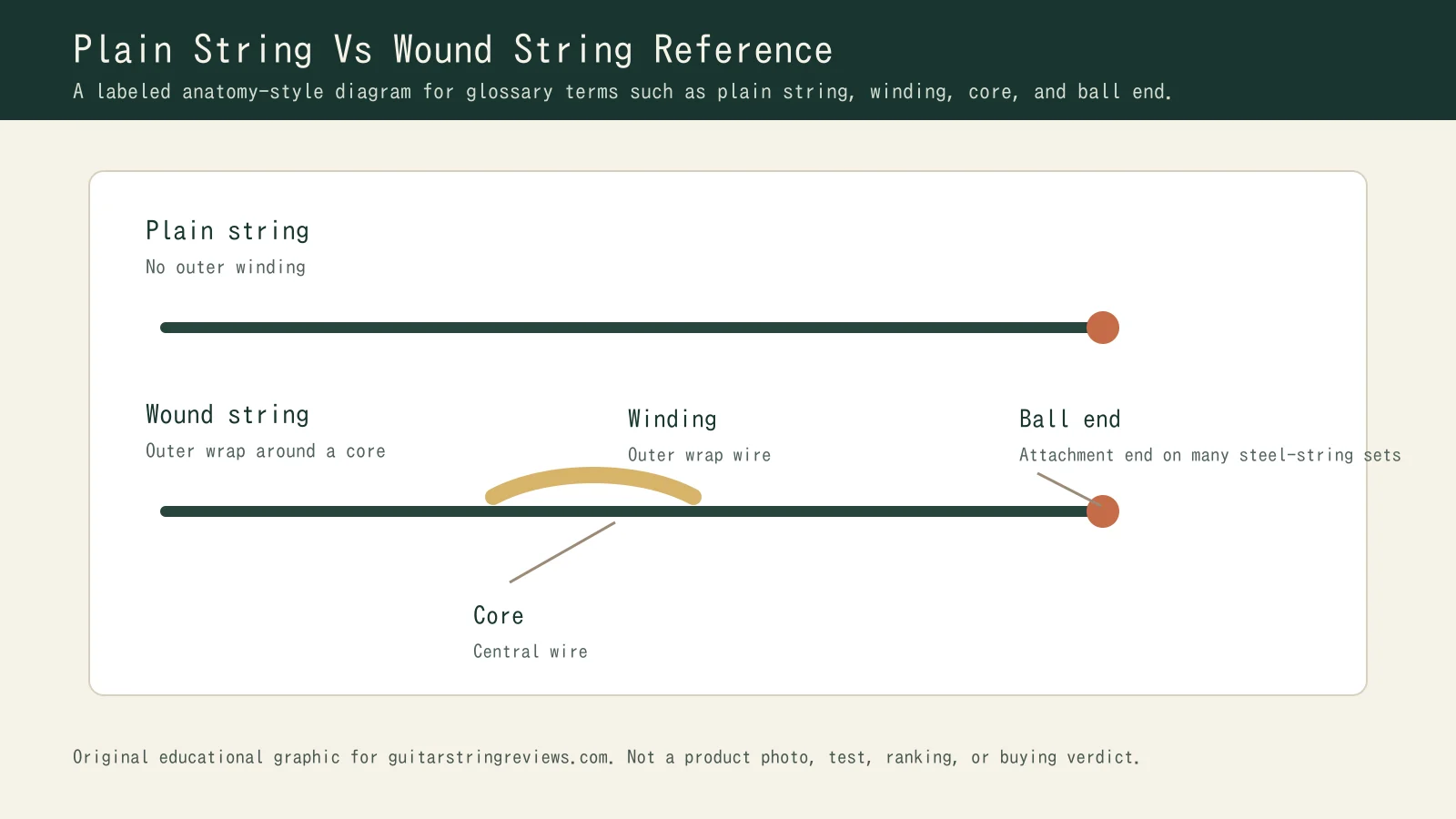
Winding refers to the outer wire wrapped around the core of a wound string. Official education pages use winding terminology to explain how wound strings differ from plain strings.
Why it matters: winding is part of the construction language used on electric and acoustic string pages.
Roundwound
Roundwound is a winding category used on guitar strings. The term describes a common wound-string construction style in manufacturer education guides.
Why it matters: when you see roundwound on a pack or guide, it is describing construction, not directly naming the gauge or alloy.
Flatwound
Flatwound is another winding category. It is useful as a glossary term because it helps readers understand that string construction labels can differ from gauge or material labels.
Why it matters: it keeps you from confusing winding style with the rest of the string decision.
Core
Core refers to the central wire structure inside a wound string. Manufacturer terminology often pairs core and winding when explaining string construction.
Why it matters: core language appears in family pages and helps explain why two strings may belong to different construction categories even if the gauge looks similar.
Ball End
Ball end is the fitted end found on many steel-string guitar sets. Official manufacturer terminology uses it to distinguish the attachment style at the end of the string.
Why it matters: if you are comparing strings for different instrument types, the end style can be one of the first practical differences you notice.
Tie End
Tie end is a string-end term commonly associated with certain classical-string contexts. It is useful here as a comparison term against ball end.
Why it matters: this helps readers decode basic string-format language without turning the glossary into an instrument setup guide.
Plain String
Plain string usually refers to a string that is not wound with an outer wrap wire. On guitar sets, the thinner treble strings are commonly the plain strings.
Why it matters: it helps explain why not every string in a set looks or feels the same.
Wound String
Wound string refers to a string that uses an outer winding around the core. Lower strings in a set are commonly wound.
Why it matters: it explains why terms such as winding, roundwound, and flatwound matter in the first place.
Tension
Tension is the pull associated with a string at pitch under defined conditions. Manufacturer technical charts use tension context to compare string sets and to show why gauge and scale length matter when reading specs.
Why it matters: tension helps explain why gauge changes should be treated carefully, even though this glossary is not a setup tutorial.
Scale Length
Scale length is the vibrating string length used as part of string specification and tension context. It belongs in the glossary because technical charts and manufacturer resources use it when explaining how strings are measured and compared.
Why it matters: scale length affects how you interpret spec charts, but this page does not treat it as a repair or setup lesson.
How To Use This Glossary With The Rest Of The Site
If you started here because a buying or comparison guide used a term you did not know, the next step is usually one of these pages:
- Guitar String Gauge Guide
- Coated Vs Uncoated Guitar Strings
- Nickel Vs Stainless Steel Guitar Strings
- Phosphor Bronze Vs 80/20 Bronze Strings
Sources Used
Sources consulted for terminology context: Fender electric guitar string guide, D’Addario tension chart PDF, D’Addario String Finder, Fender classical nylon strings, and the Elixir Strings product catalog. The glossary defines terms for reader orientation and does not replace instrument-specific setup or repair guidance.