Roundwound and flatwound describe winding construction, not gauge, price, or overall quality. If you are comparing them, the useful question is not which one wins for everyone. The useful question is what changes when the wrap wire changes and how to compare that change without mixing in other variables at the same time.
String brands treat both terms as real product-family labels inside the electric-string market. They also make it clear that construction is only one part of the string choice. Gauge, coating, material family, and the instrument itself still matter.
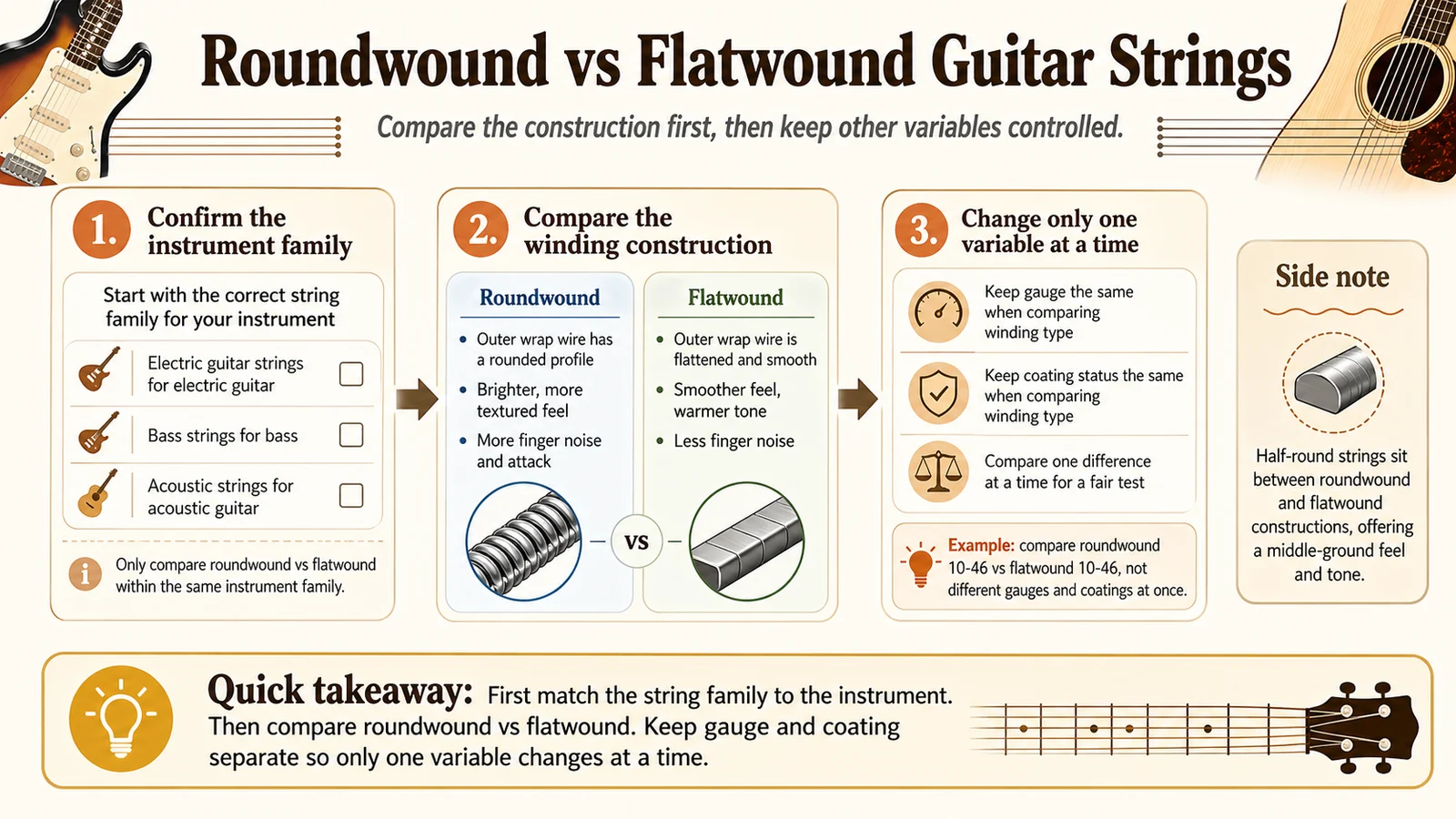
The Short Answer
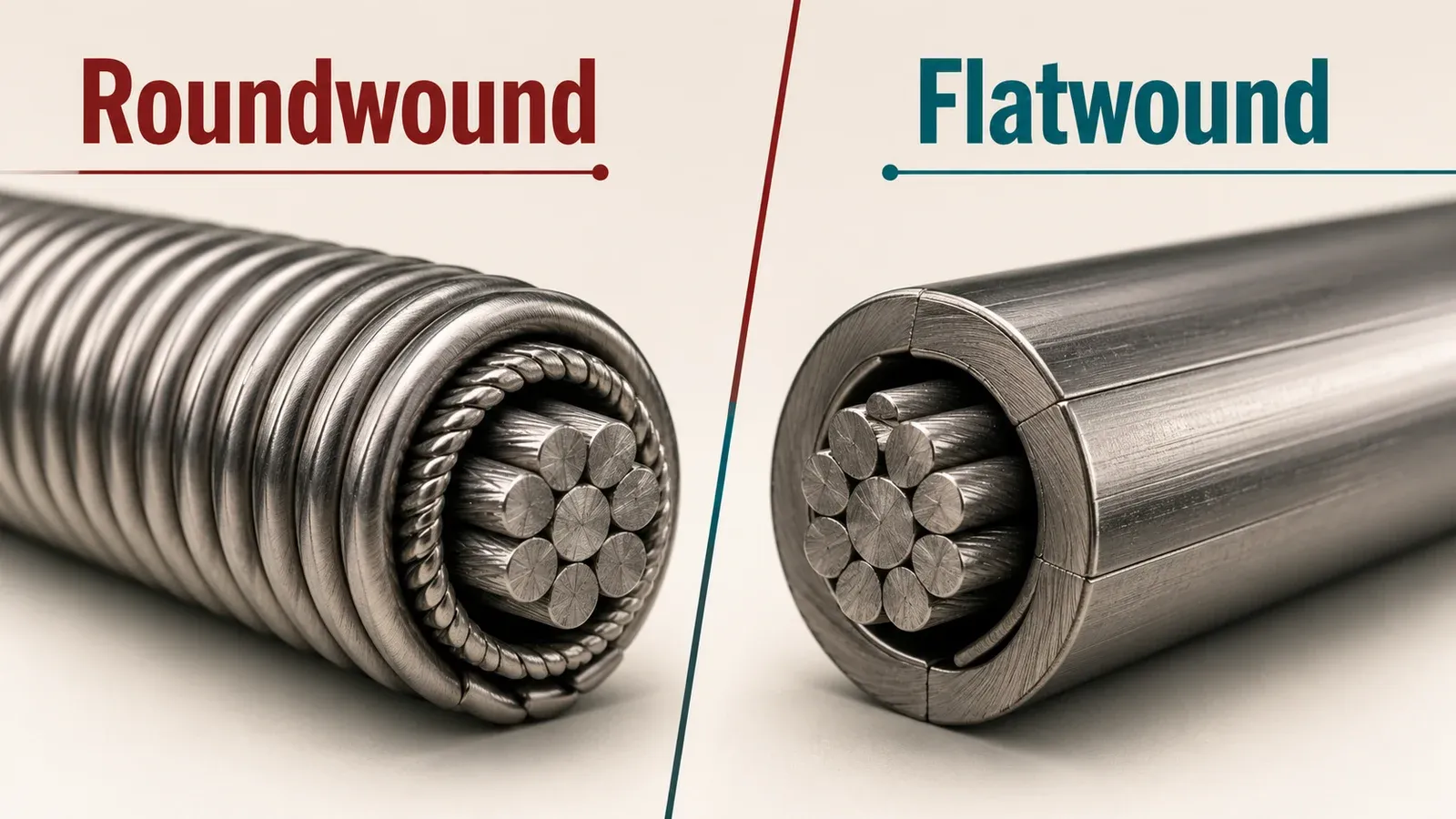
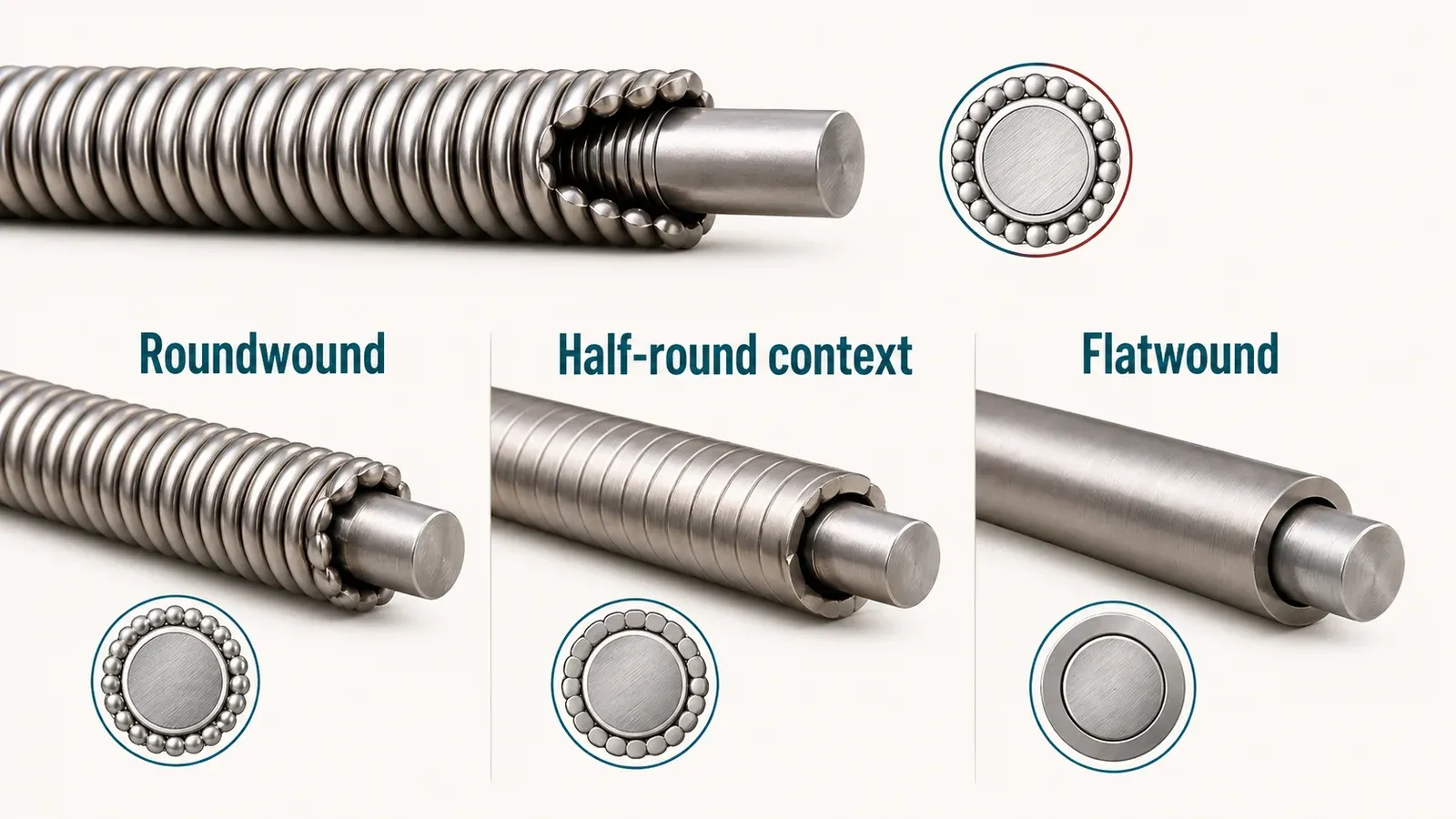
Roundwound strings use a rounded outer wrap wire on the wound strings. Flatwound strings use a flatter ribbon-style outer wrap. That construction difference is the core comparison.
Everything else should stay separate while you compare. Roundwound versus flatwound is not the same decision as light versus heavy gauge, coated versus uncoated, or nickel-plated steel versus stainless steel. If you change all of those at once, it becomes hard to tell what the winding change actually did.
What Roundwound Means
Roundwound is the more familiar winding label in mainstream electric-string lineups. In category pages and family pages, manufacturers present roundwound families as a standard lane rather than as a niche exception.
That does not make roundwound universally better. It only means it is widely available and easy to find across common electric-string product families. When you see the word roundwound, read it as a construction label first.
What Flatwound Means
Flatwound is a separate winding construction label. Manufacturer family pages present it as a distinct product-family choice rather than just a different gauge or coating option inside the same baseline family.
That difference matters because the comparison is structural. Flatwound does not simply mean “more expensive,” “higher quality,” or “better for every player.” It means the wound strings are built with a different outer wrap shape, so the construction lane changes before any personal preference questions enter the discussion.
Why This Is A Construction Comparison, Not A Gauge Comparison
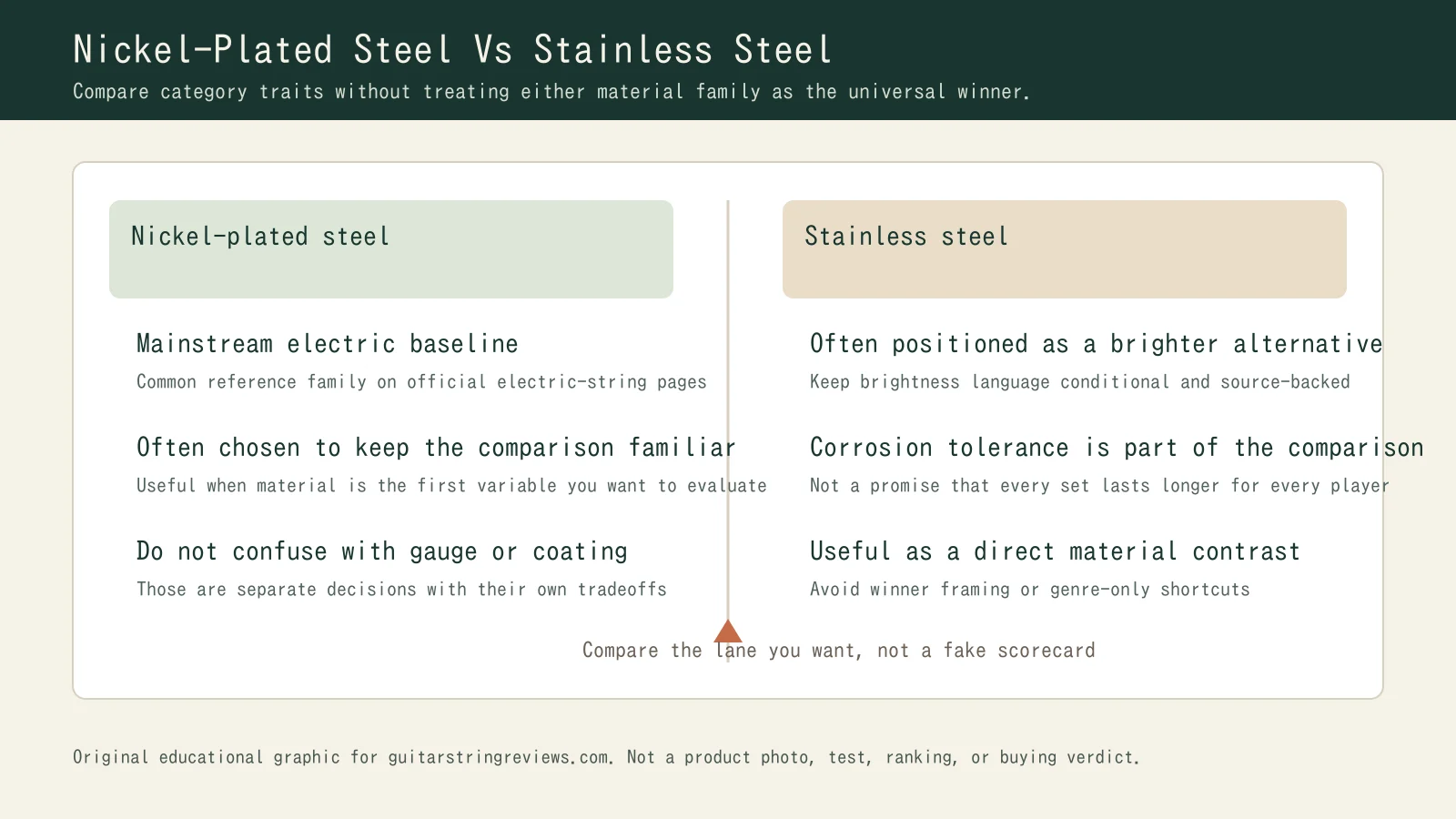
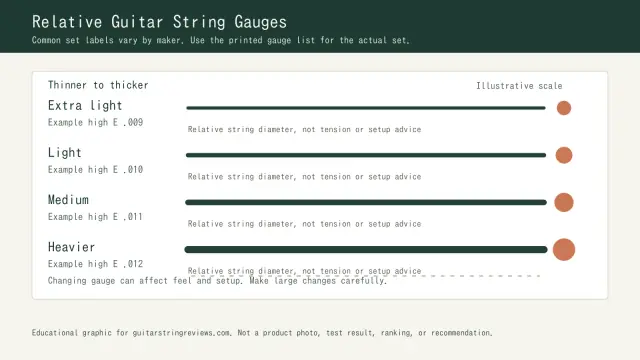
Gauge and winding are different buckets. A set can be light or heavy and still be roundwound or flatwound. The same is true for other variables such as coating or material family.
That is why the cleanest comparison path is:
- Match the string family to the instrument.
- Choose whether you are comparing roundwound or flatwound construction.
- Keep gauge as steady as possible.
- Keep coating and other variables separate unless you have a reason to change them too.
This avoids turning one string change into several overlapping changes at once.
What Changes In Practical Terms
The most defensible way to describe the difference is to stay with the construction itself and keep any feel or tone language conditional.
- Roundwound gives you the standard winding baseline seen across many electric-string families.
- Flatwound gives you a distinct winding alternative that manufacturers break out as its own family choice.
- Half-round exists as related context, which is useful because it shows the market does not treat winding as a simple on/off switch.
Those points are enough to explain the choice without drifting into unsupported promises about comfort, lifespan, output, or genre fit.
Availability Usually Differs Too
D’Addario category and family pages make another practical point clear: roundwound options are easier to find across the broad electric-string catalog, while flatwound options tend to appear as more specific family lines.
That does not make one choice more correct. It only affects how a player shops. If you want the broadest family map, roundwound lines are common. If you want flatwound, it helps to look for an explicitly labeled flatwound family instead of assuming every standard product line includes one.
A Better Way To Compare Them
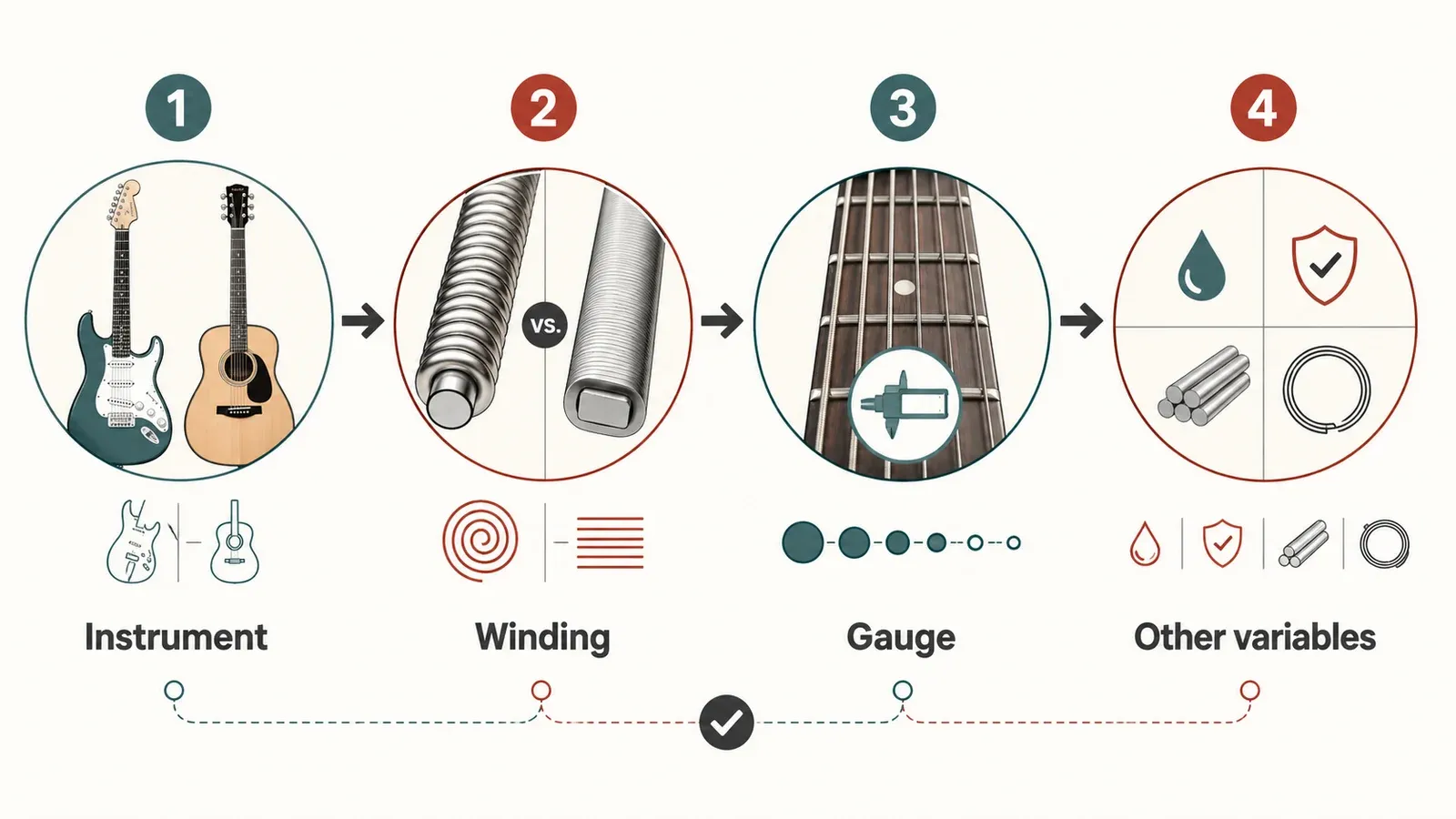
Use a narrow comparison path instead of a winner-take-all mindset:
- Start with the instrument family.
- Identify the exact winding label on the product family page.
- Keep gauge as close as possible between the options.
- Check whether coating or material changed too.
- Treat any tone or feel language as conditional or manufacturer-positioned, not as a guaranteed outcome.
That keeps the comparison honest and easier to interpret.
Where Half-Round Fits
Half-round is useful context because it shows winding construction can sit on a spectrum rather than in only two hard camps. It belongs in the conversation as a bridge term, but it does not erase the distinction between roundwound and flatwound.
If the only thing you need right now is the main comparison, keep half-round as a footnote. If you are shopping more deeply, it is a reminder to read the family page carefully instead of assuming every winding label means the same thing.
Common Mistakes To Avoid
- Treating roundwound and flatwound as if they automatically answer the gauge question.
- Assuming one winding type is the winner for every player.
- Turning manufacturer positioning into a site-wide promise about feel, brightness, warmth, or longevity.
- Comparing strings where winding, gauge, coating, and material all changed at once.
Sources Used
Sources consulted for construction and product-family context: Fender electric guitar string guide, D’Addario electric guitar category, D’Addario XL strings, and D’Addario how electric guitar strings are made. The comparison stays focused on construction terms, not live prices, ratings, or universal winner claims.