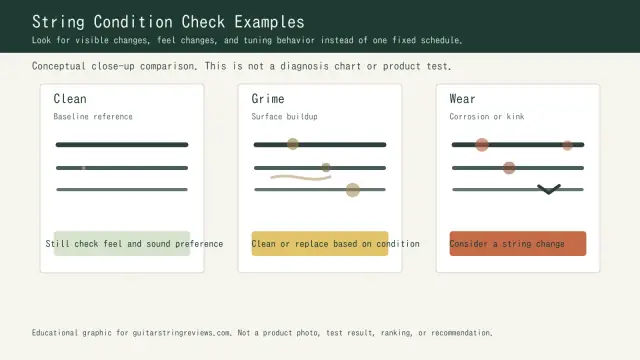
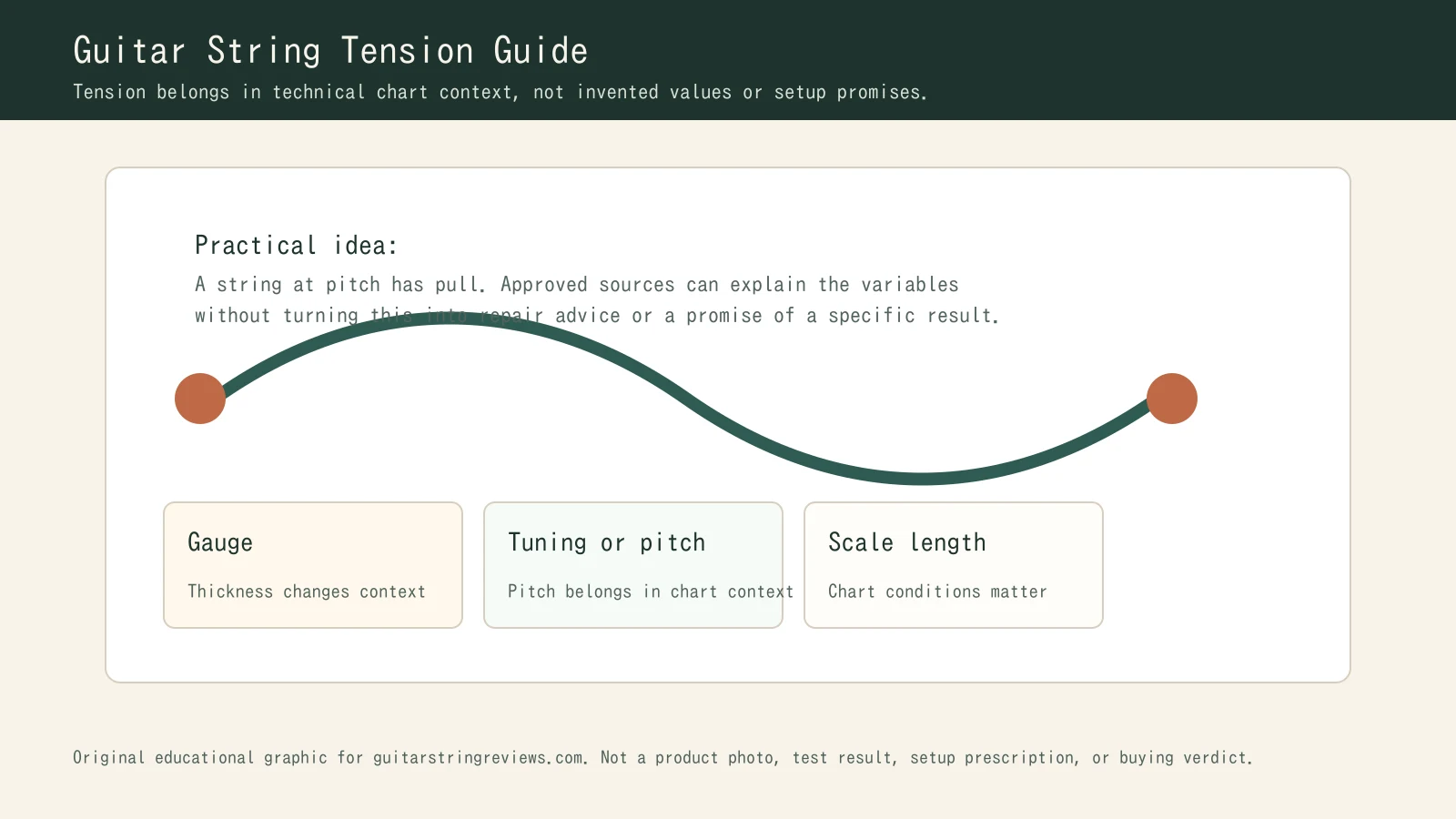
If you have ever changed strings and felt the guitar push back more under the fretting hand or settle into a looser feel, tension is part of what you noticed. It is one of the technical ideas behind string choice, and manufacturer charts talk about it alongside gauge, pitch, scale length, and string construction.
This guide keeps that discussion practical. It explains what those variables mean in chart context and where tension fits in a string choice, without turning the article into a repair tutorial or publishing invented tension targets.
The Short Answer
Guitar string tension is the pull associated with a string when it is brought to pitch under defined conditions. Manufacturer chart sources use tension context to compare strings and show why details such as gauge and scale length matter.
For everyday string shopping, tension is one selection factor, not the whole decision. Instrument type, tuning, gauge, material family, coating, and feel preference all remain part of the picture.
Why Tension Comes Up When Comparing Strings
Tension comes up because string sets are not only labeled by material or instrument family. They are also labeled by gauge, tuning assumptions, and sometimes technical chart data. When a brand mentions thickness, pitch, or scale length, tension is usually sitting in the background of that explanation.
Here, tension is discussed only as a technical property shown in manufacturer charts. This guide does not use invented values, formulas, pseudo-lab graphics, or unsupported setup claims.
That boundary matters because understanding tension terms can help you read a chart more clearly, but it does not replace instrument-specific setup guidance.
The Main Variables In Tension Context
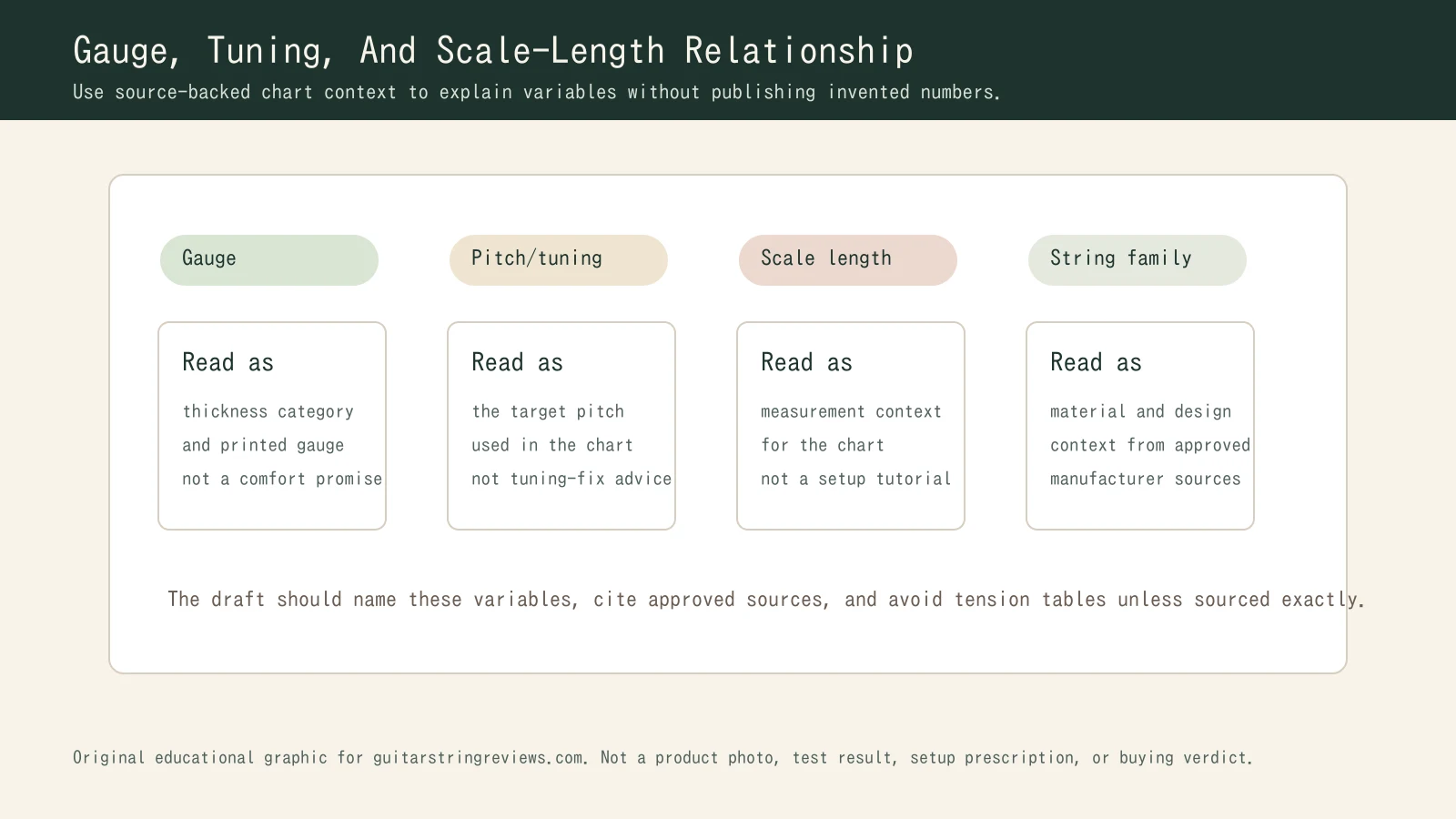
Manufacturer chart context usually brings several variables together. This guide keeps them descriptive so the explanation stays useful without drifting into unsupported advice.
Gauge
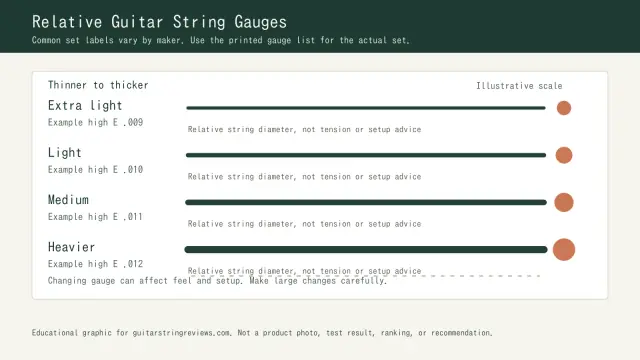
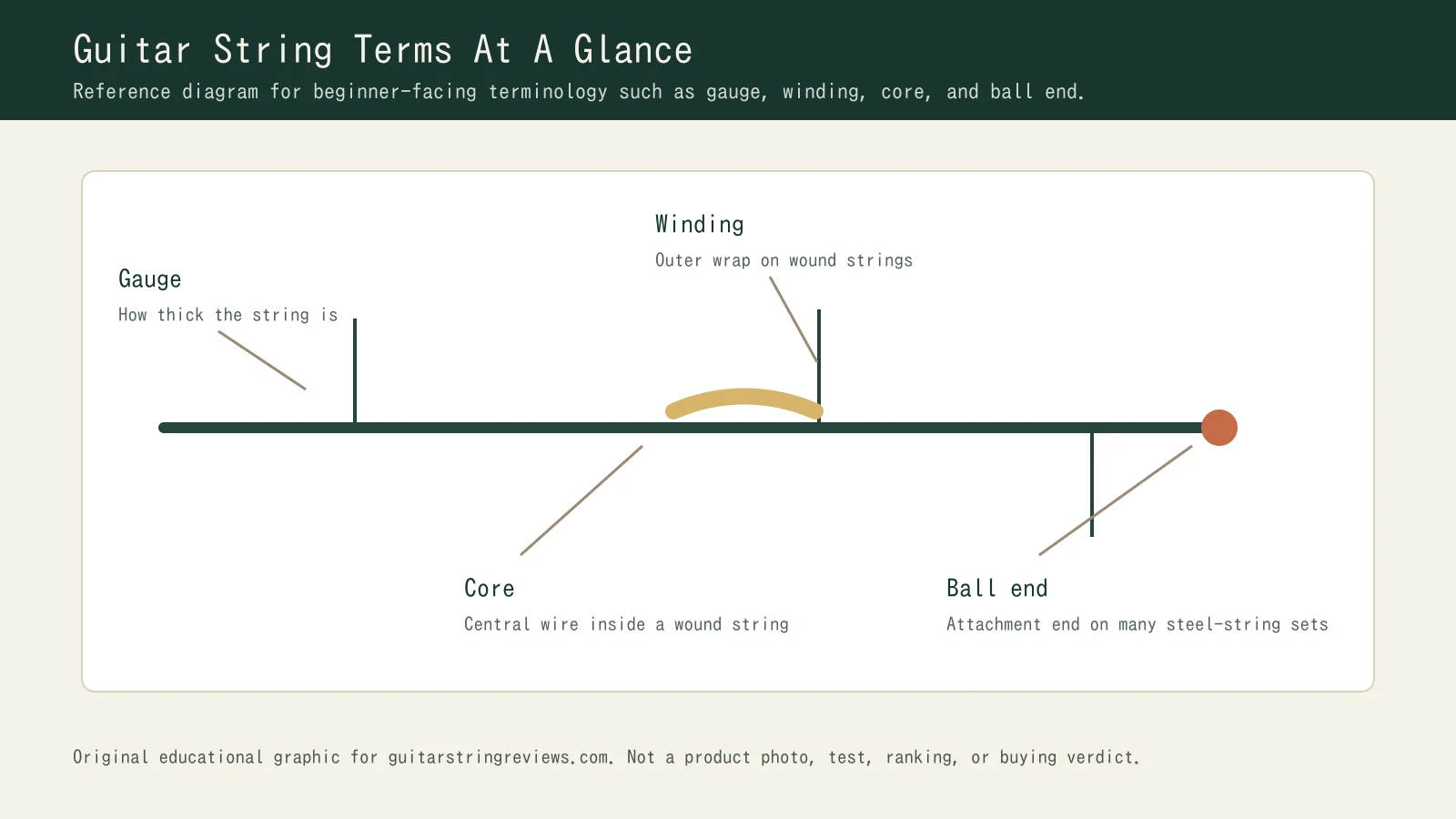
Gauge is string thickness, usually shown in thousandths of an inch. It is one of the first variables players notice because it is printed on string packs and used throughout manufacturer guides.
Gauge belongs in a tension discussion, but it is not a one-variable answer to every playing or setup question.
Pitch Or Tuning
Tension context depends on the pitch a string is tuned to. A string discussed at one pitch is not the same comparison as the same string discussed under a different pitch assumption.
This guide mentions tuning as chart context only. It does not turn tension into a promised fix for tuning instability.
Scale Length
Scale length is the vibrating string length used in technical context. Manufacturer chart notes include it as part of how specs are interpreted.
That is different from giving setup instructions. The point here is to explain chart context, not to walk through truss-rod, action, nut, saddle, or neck-relief adjustments.
String Family And Construction
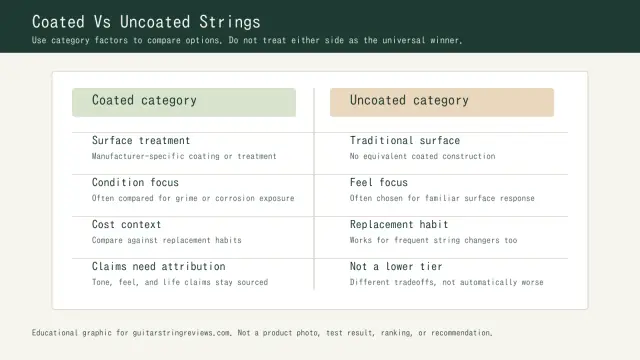
Material family, construction, coating, and winding can all appear in string resources from brands. They help explain why strings are compared as complete products, not just abstract thickness numbers.
For related terminology, use the Guitar Strings Glossary.
What This Guide Can Help With
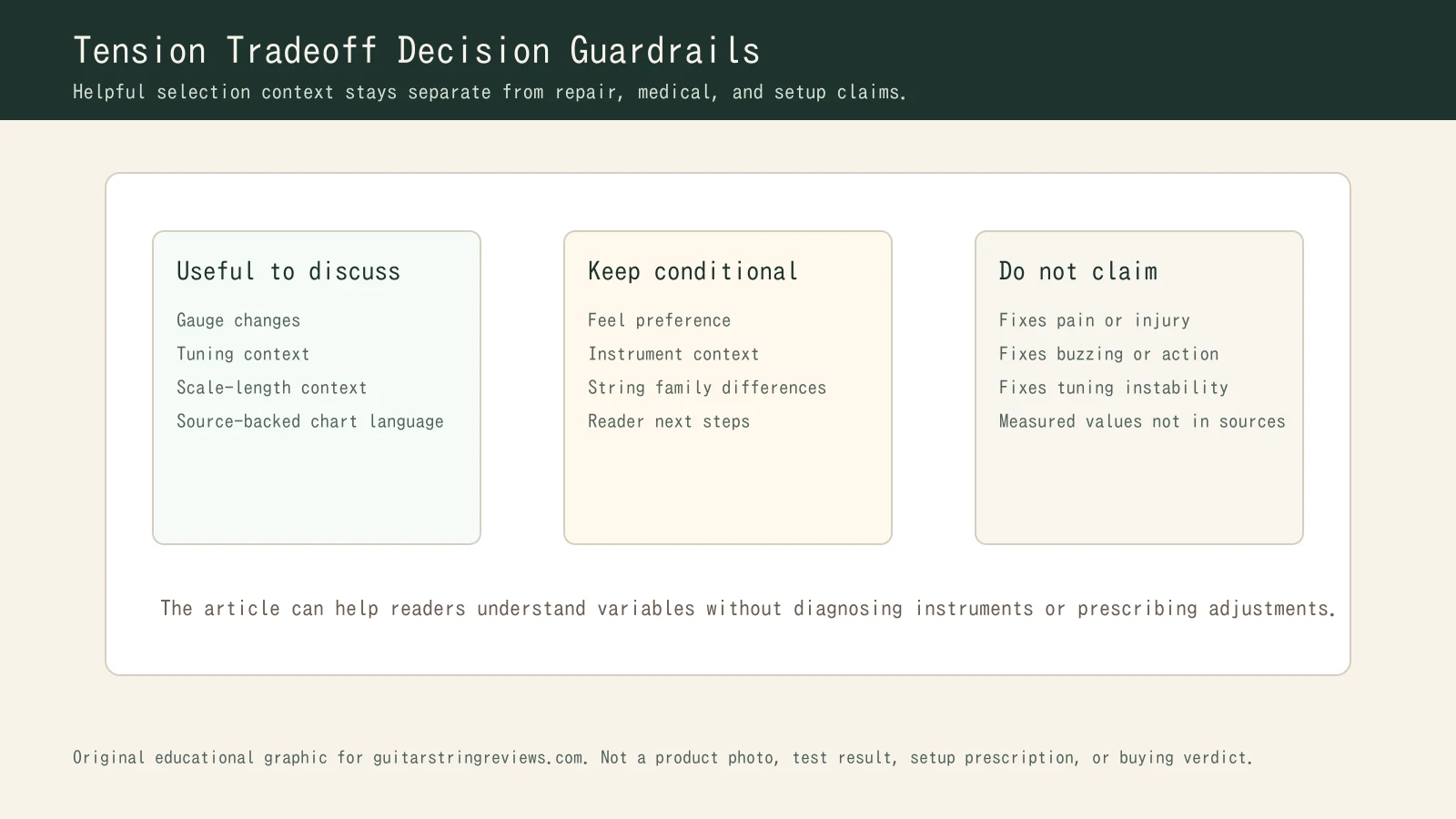
This guide can help you:
- understand why gauge is connected to tension context
- recognize why pitch and scale length appear in technical string resources
- separate tension language from material, coating, and construction labels
- read brand charts and product pages with fewer assumptions
- avoid treating tension as a magic fix for unrelated guitar problems
It is a reference guide, not a diagnosis or repair workflow.
Keep Tension In Context
Several common guitar problems sit outside the job of a tension explainer.
A tension discussion does not tell you that one string choice will automatically fix:
- tuning instability
- hand pain or injury
- buzzing
- neck relief
- action
- intonation
- breakage
- any other setup problem
It also does not provide home-made tension tables, formulas, or exact values. If an exact number matters, use a brand chart or another technical source for that exact string and tuning context.
How To Use Tension As One Selection Factor
Treat tension as a context layer after the basic string choice is clear.
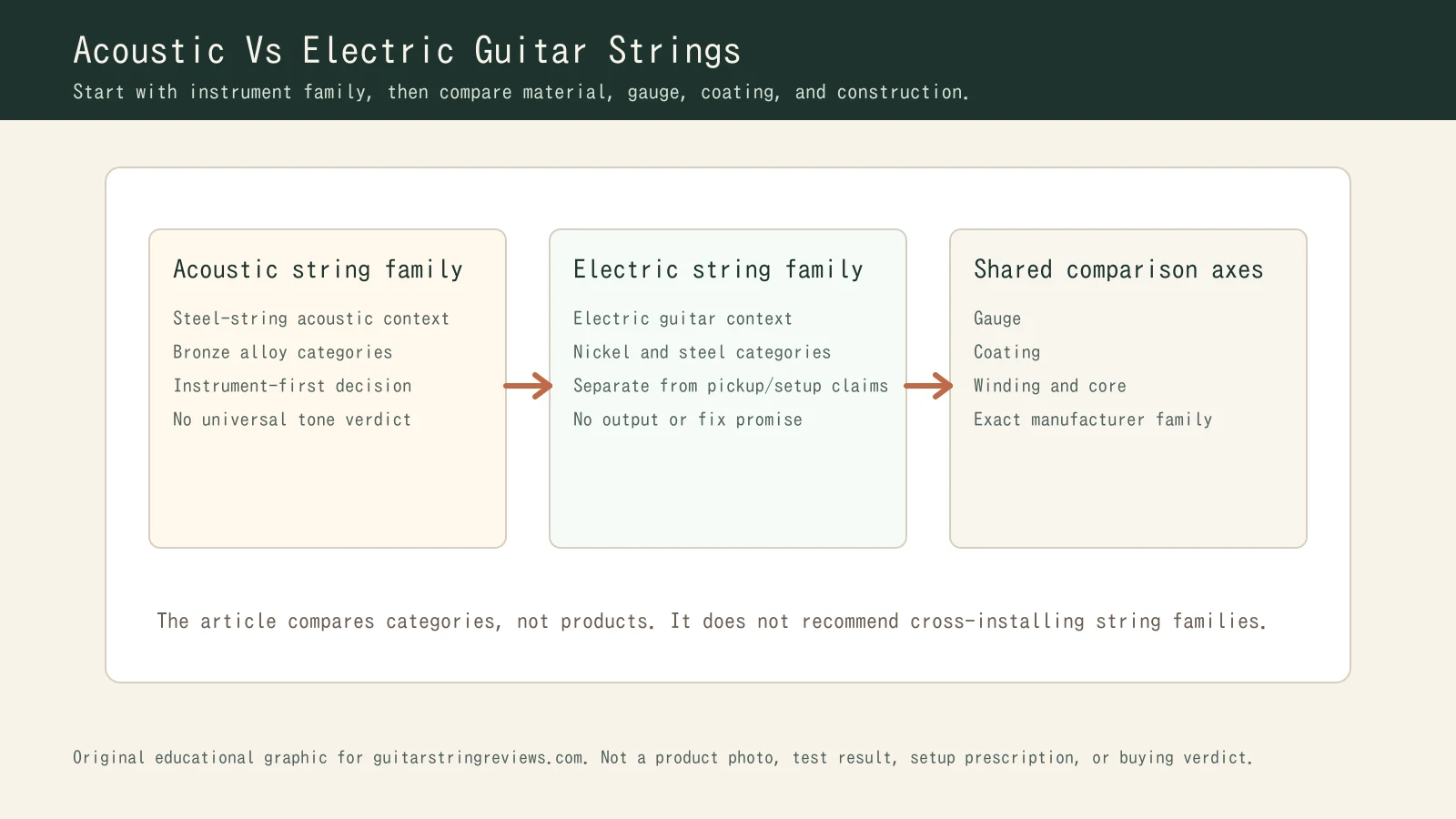
- Start with the instrument family: acoustic, electric, or another category.
- Confirm the tuning context you actually use.
- Compare gauge within that context.
- Read manufacturer chart notes rather than guessing tension values.
- Keep material, coating, and construction separate from gauge.
- Treat instrument problems as instrument-specific, not as guaranteed string-selection fixes.
That sequence keeps the topic useful without drifting into unsupported technical advice.
How Tension Relates To Gauge
Gauge is often the easiest visible starting point because it appears directly on string packaging and in guides. A player comparing 9s, 10s, or 12s is comparing thickness categories, but thickness alone is not the whole technical story.
Gauge is connected to tension context, but the actual technical result depends on chart conditions such as pitch, scale length, and string construction. That is why this article does not create its own tension chart.
For broader gauge help, read Guitar String Gauge Guide.
How Tension Relates To Tuning
Tuning or pitch is part of the technical context because tension is discussed for a string at pitch. A string discussed at one pitch cannot be casually treated as the same technical case under a different pitch without source-backed context.
That does not mean readers should change gauges or chase a tension target to solve tuning problems. The article only explains why pitch belongs in the tension conversation.
How Tension Relates To Scale Length
Scale length appears in technical resources because it helps define the conditions behind the comparison. If two instruments have different scale lengths, the chart context can matter when interpreting strings.
This article does not turn scale length into repair advice. It is included only as part of tension and spec interpretation.
Related Guides
- Guitar String Gauge Guide
- Guitar Strings Glossary
- Acoustic Vs Electric Guitar Strings
- Coated Vs Uncoated Guitar Strings
- How Often Should You Change Guitar Strings?
Sources Used
Sources consulted for tension and string-choice context: D’Addario tension chart PDF, D’Addario String Finder, Fender electric guitar string guide, Fender beginner FAQ, and the Elixir Strings product catalog. This guide explains chart context and does not provide invented tension values, formulas, repair advice, medical advice, live pricing, or product rankings.